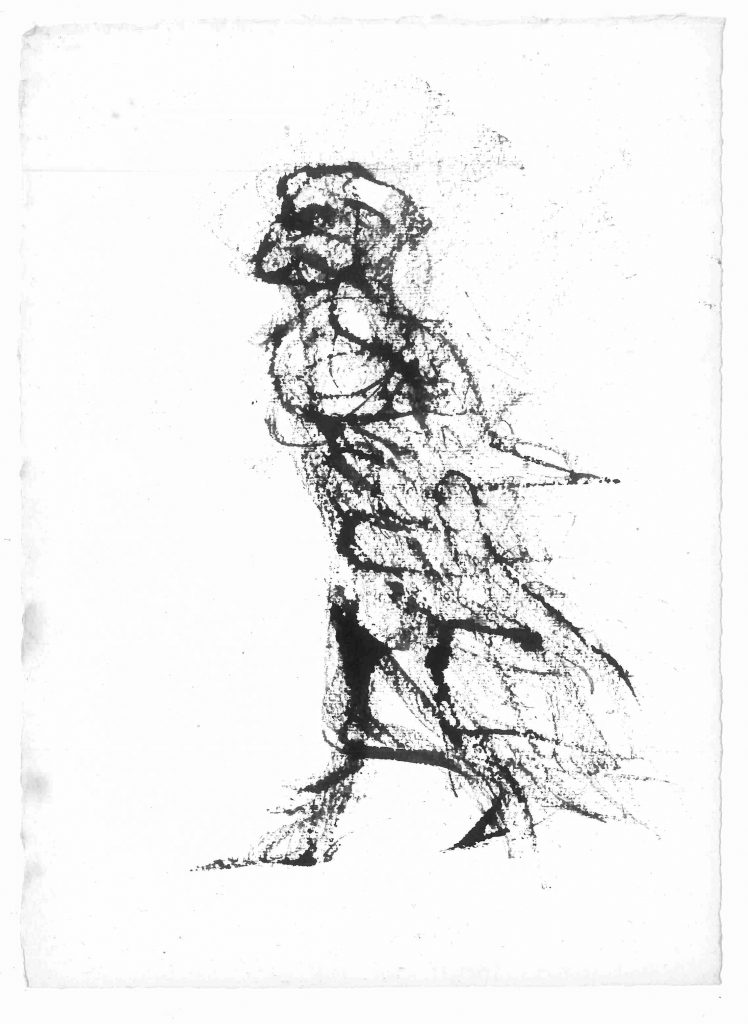
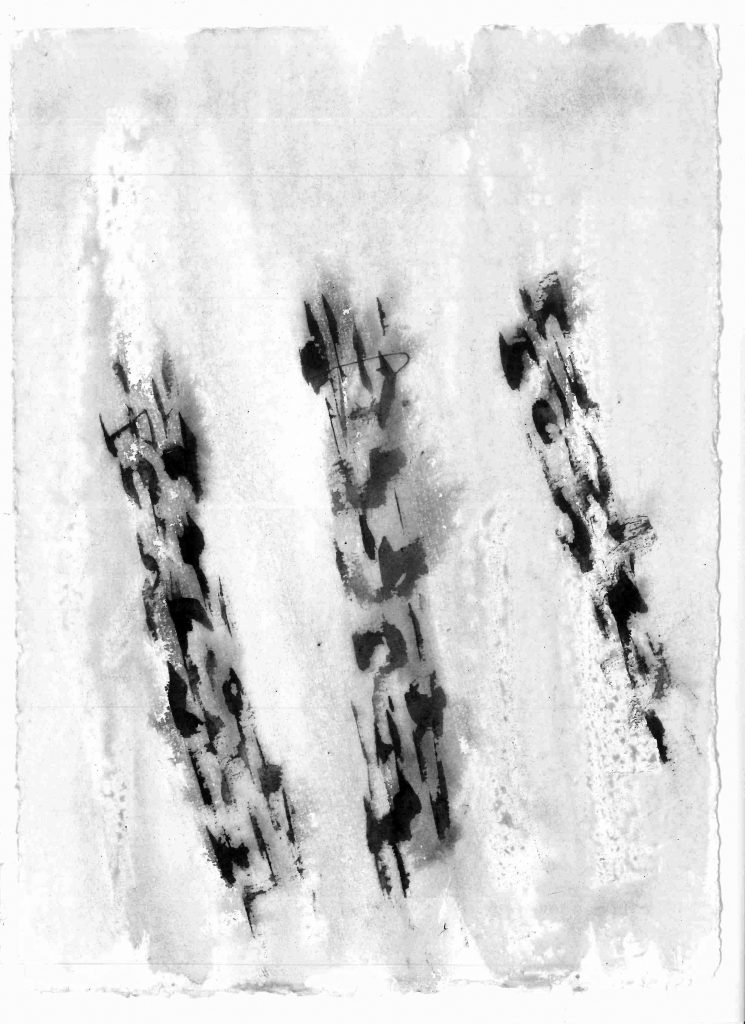
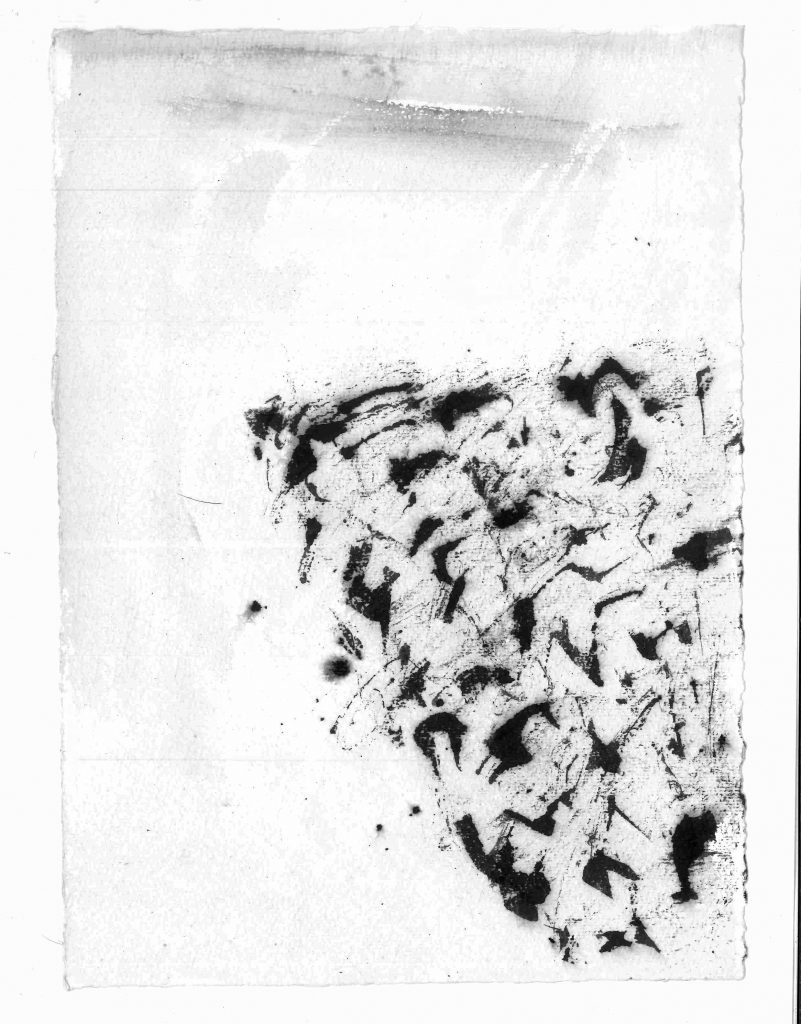
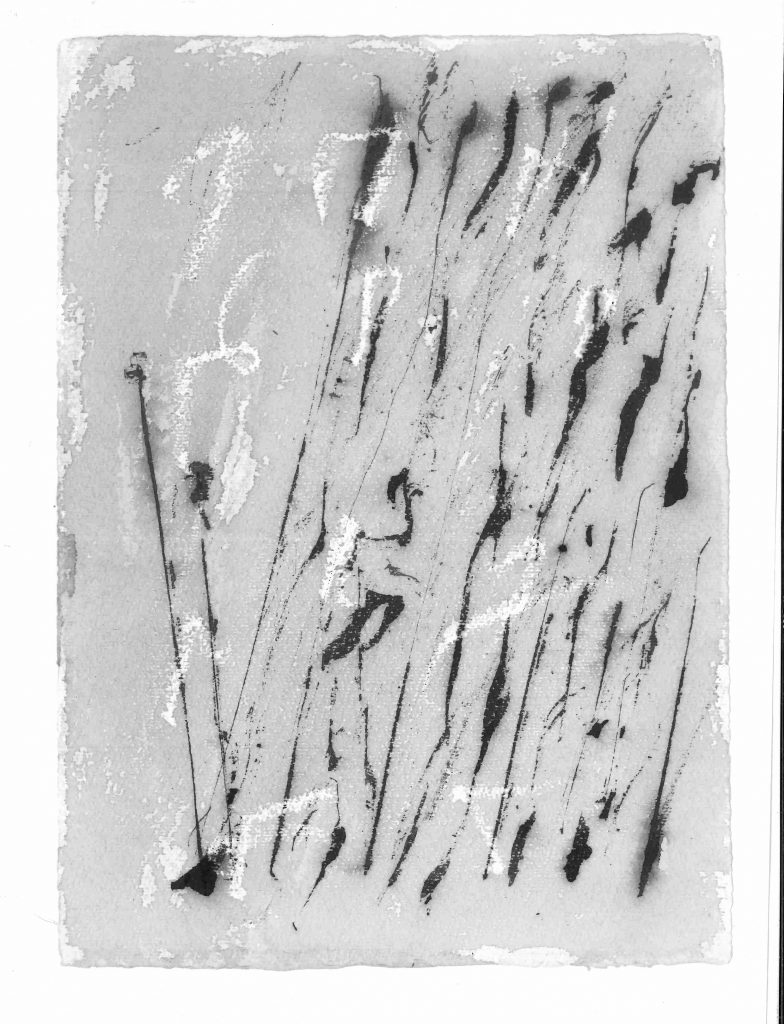
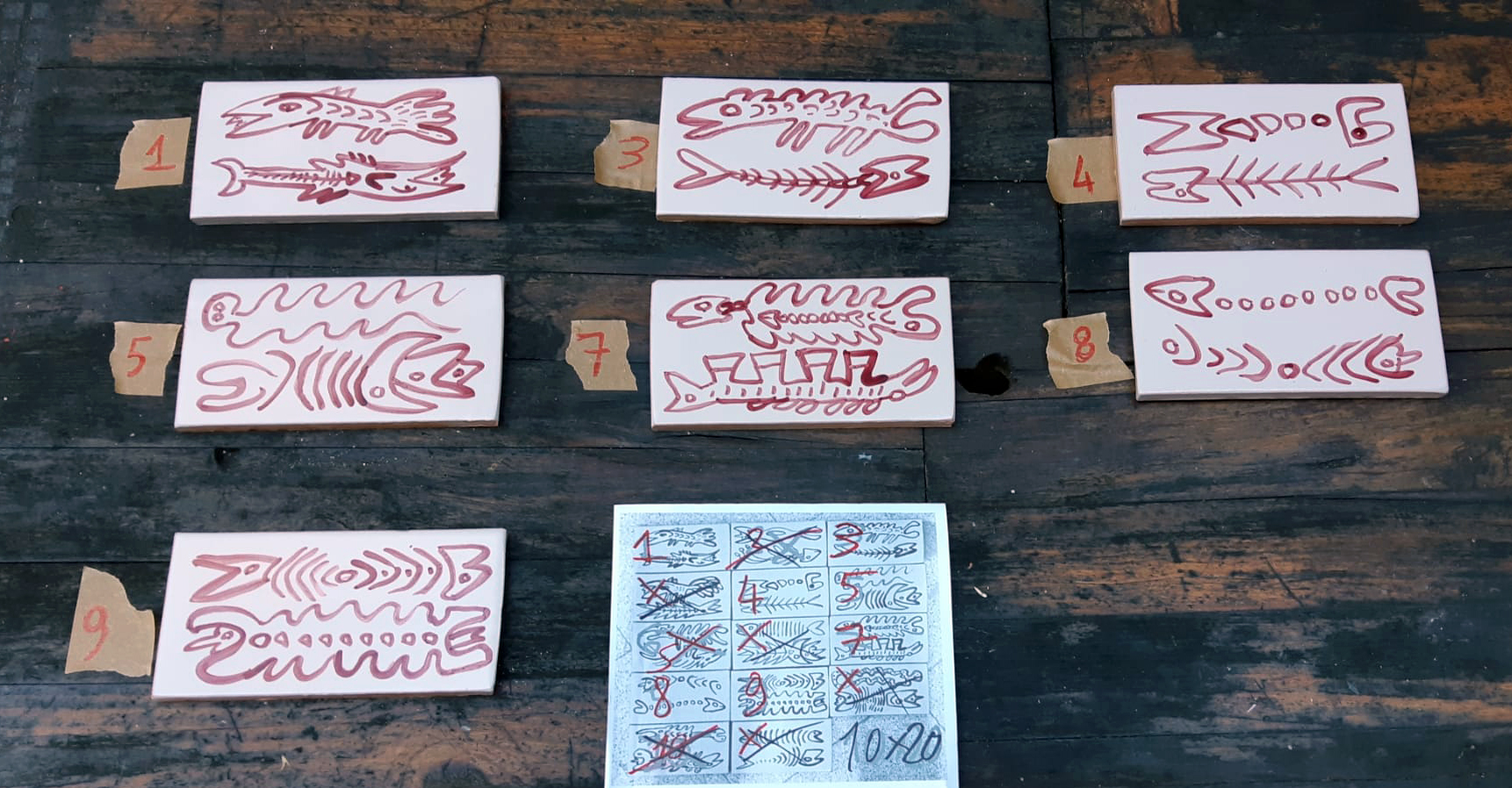
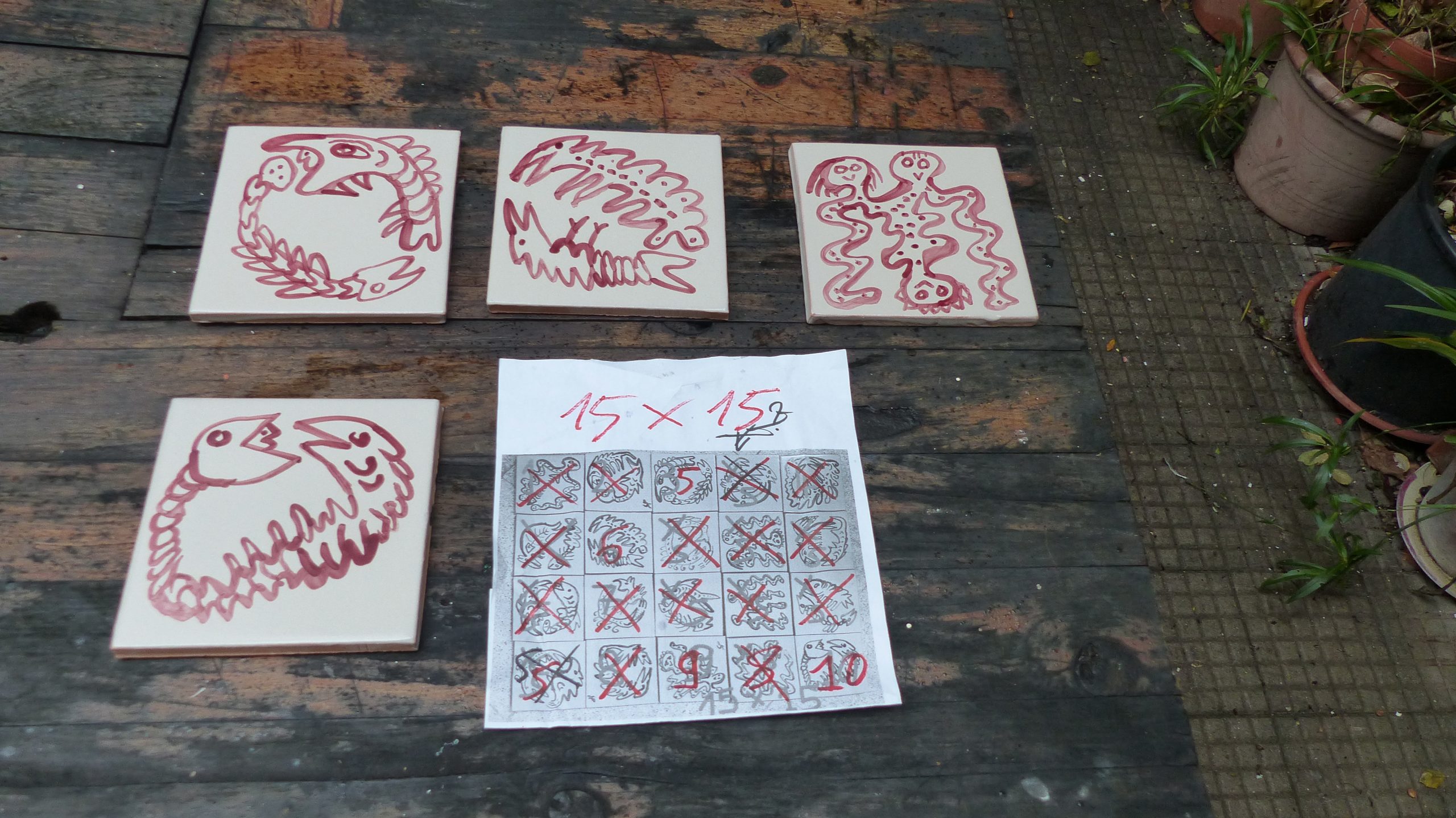
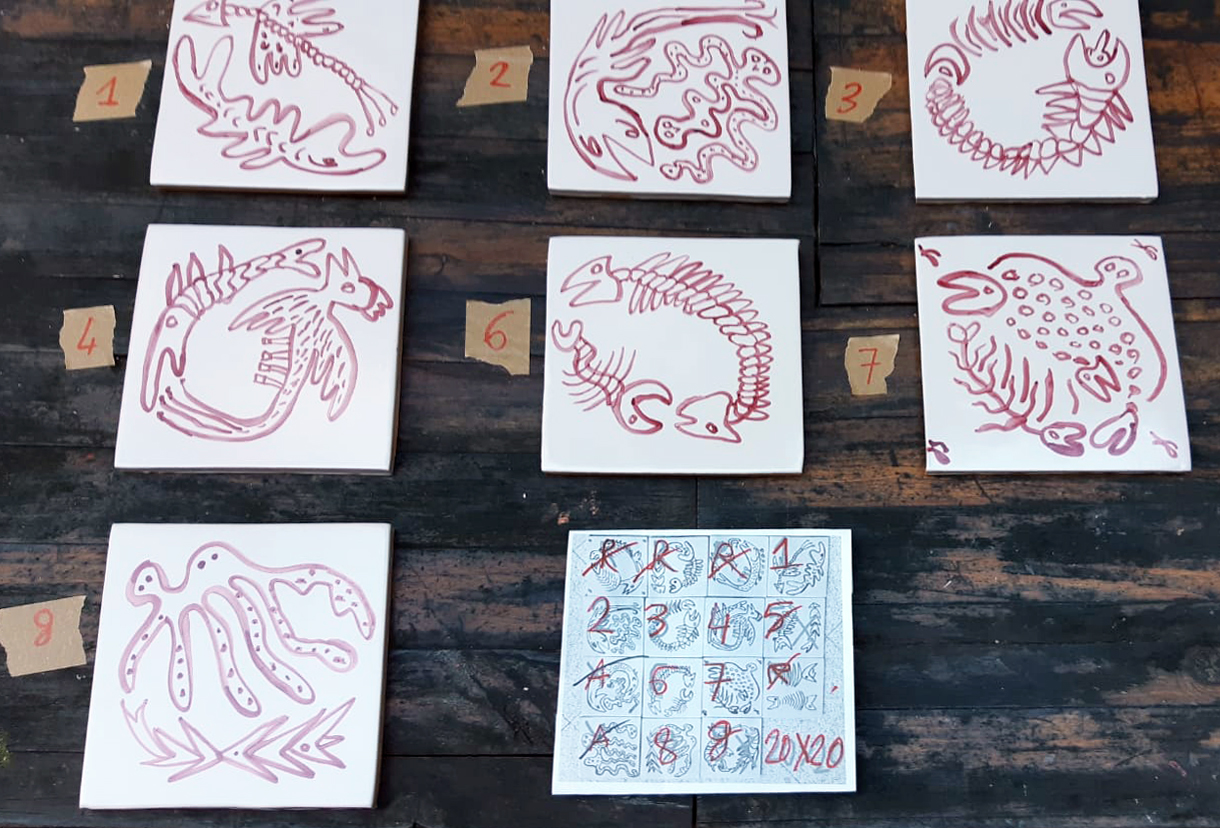
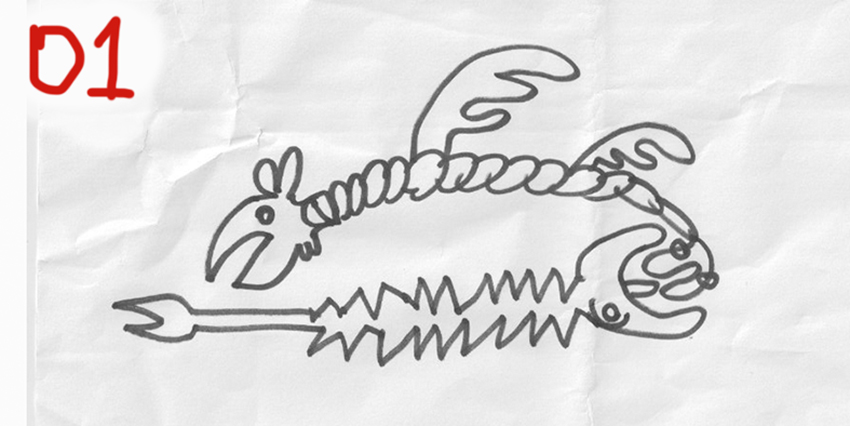
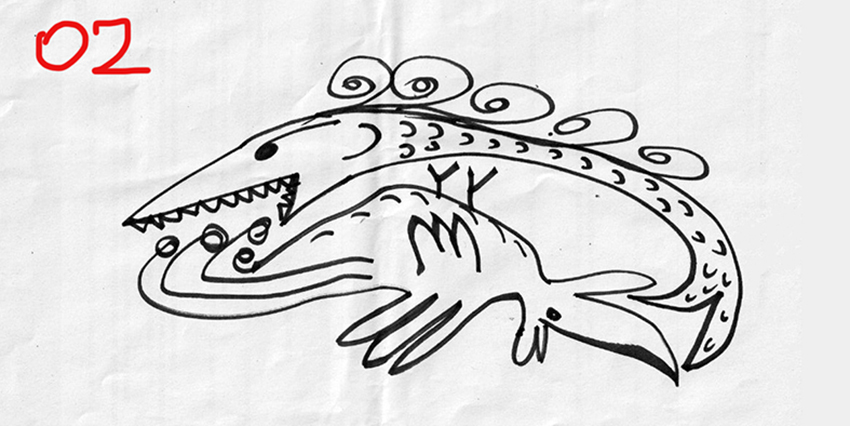
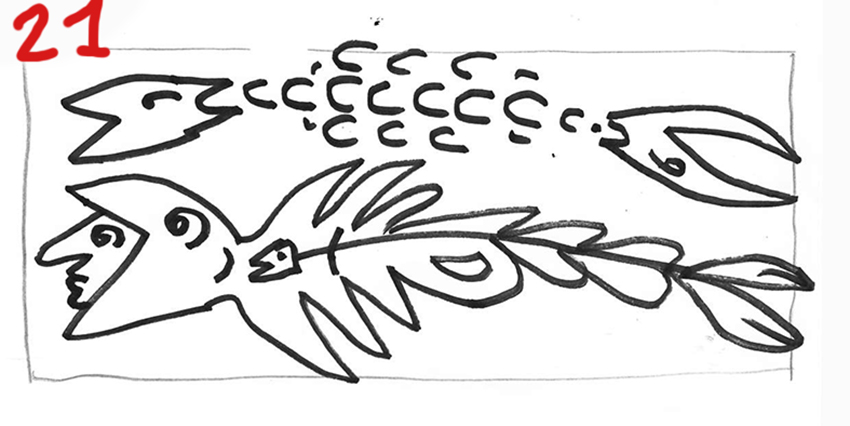
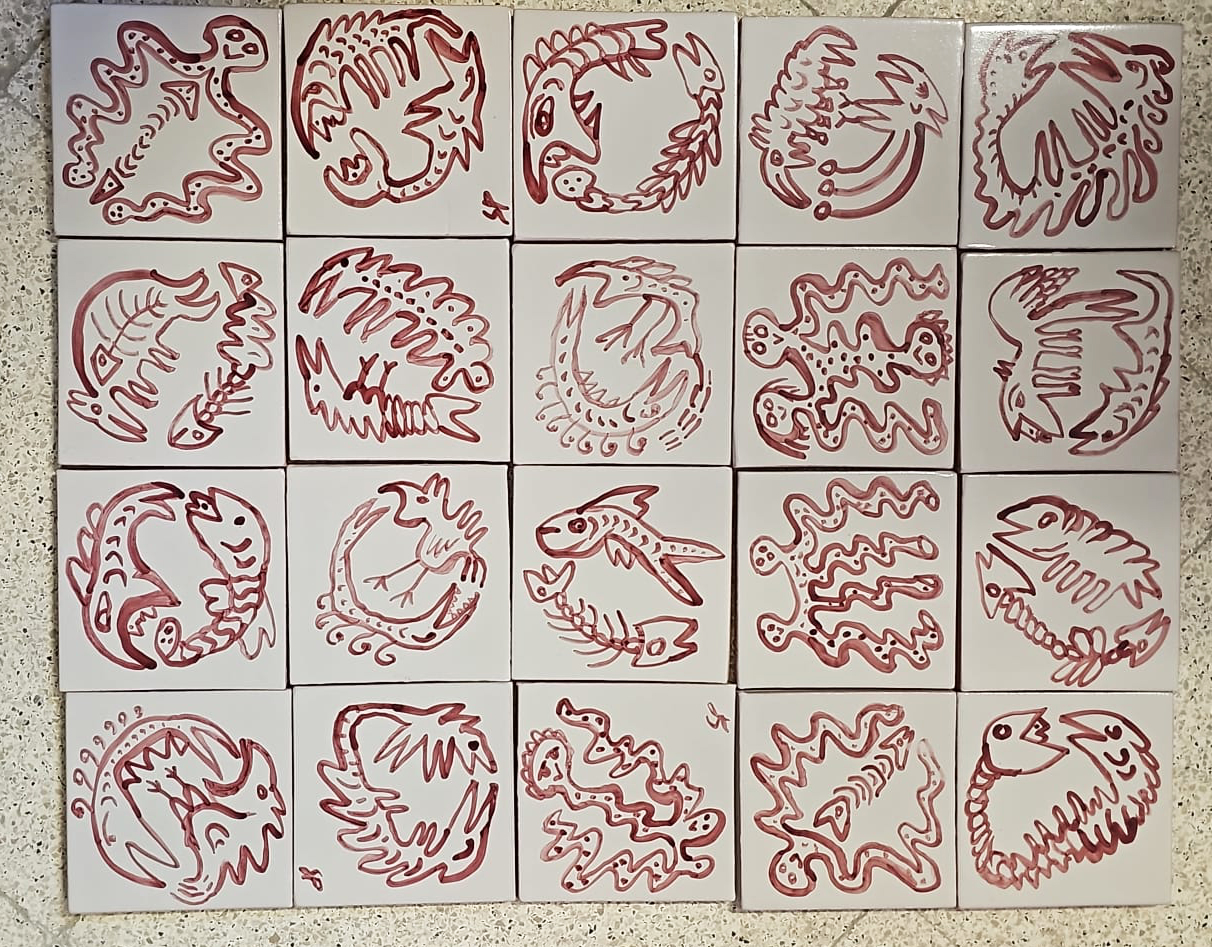
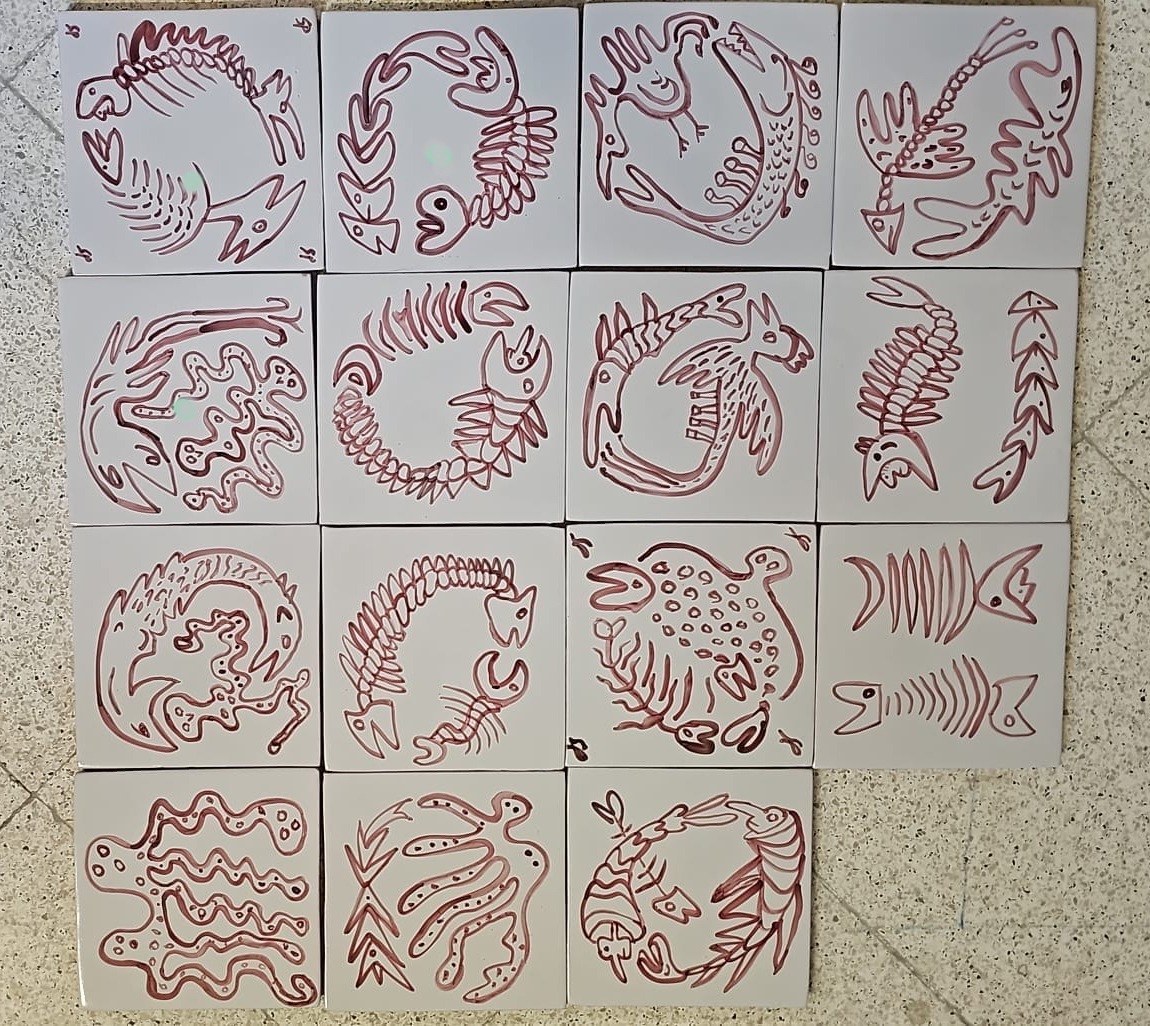
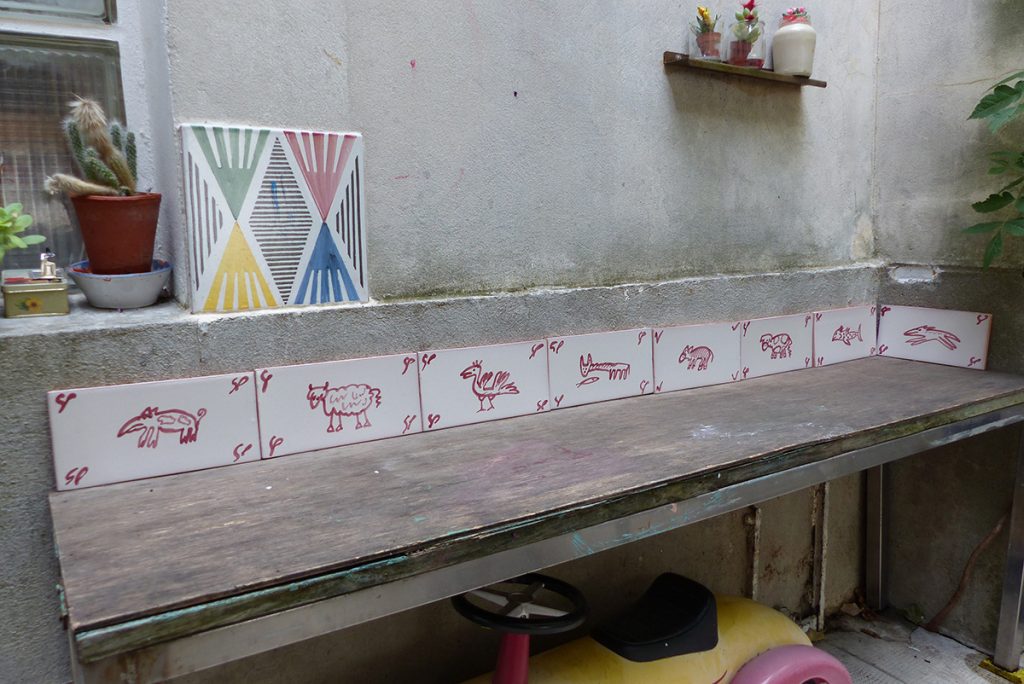
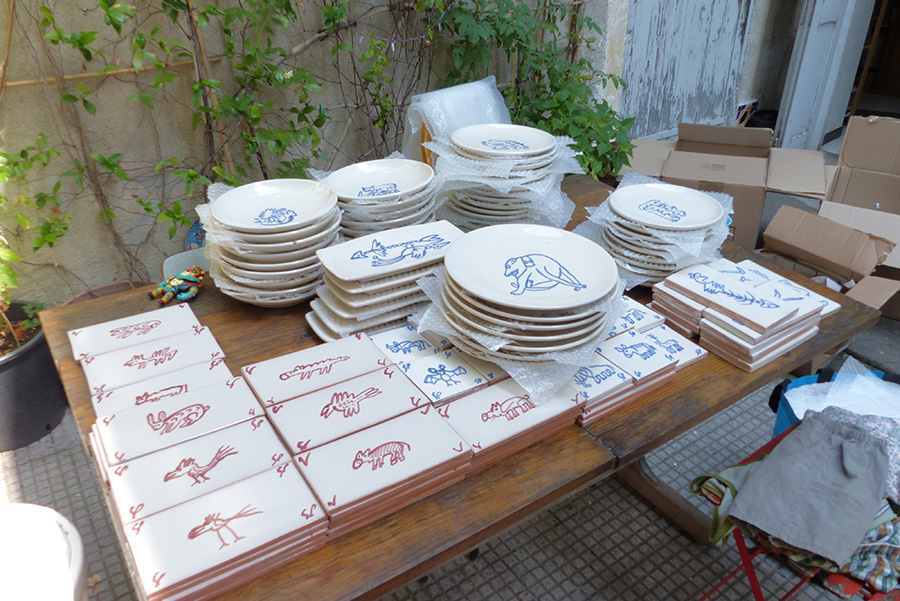
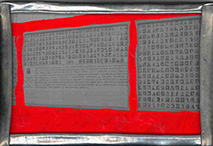
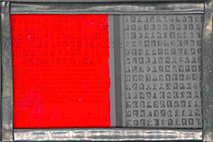
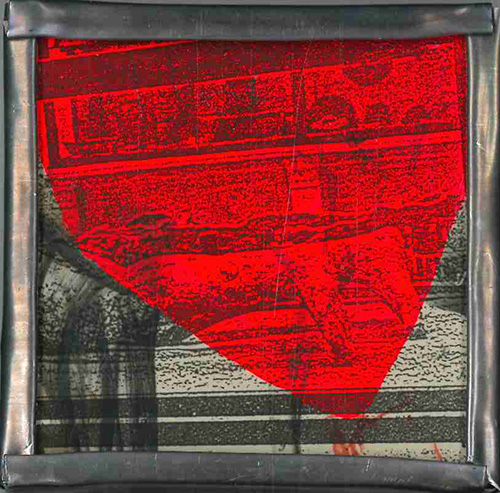
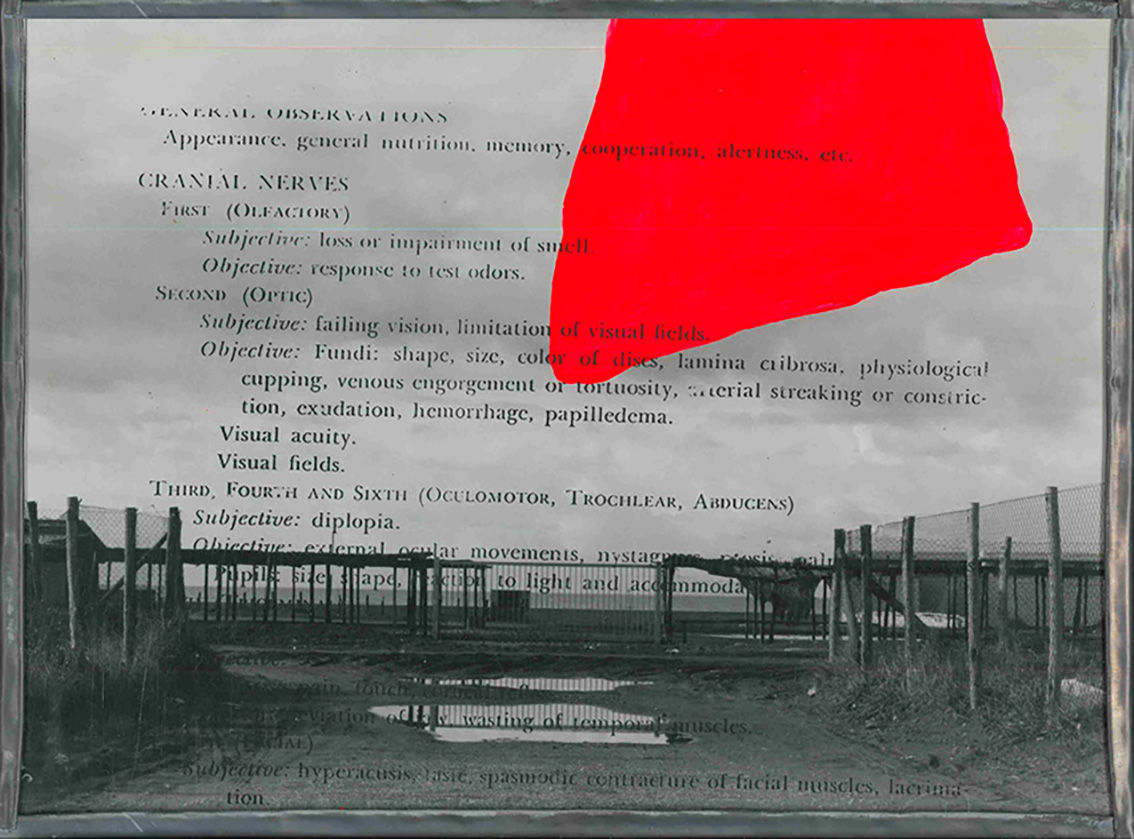
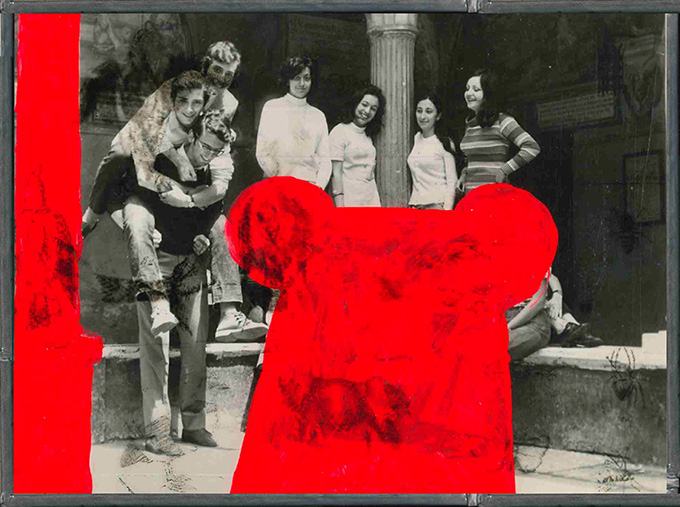
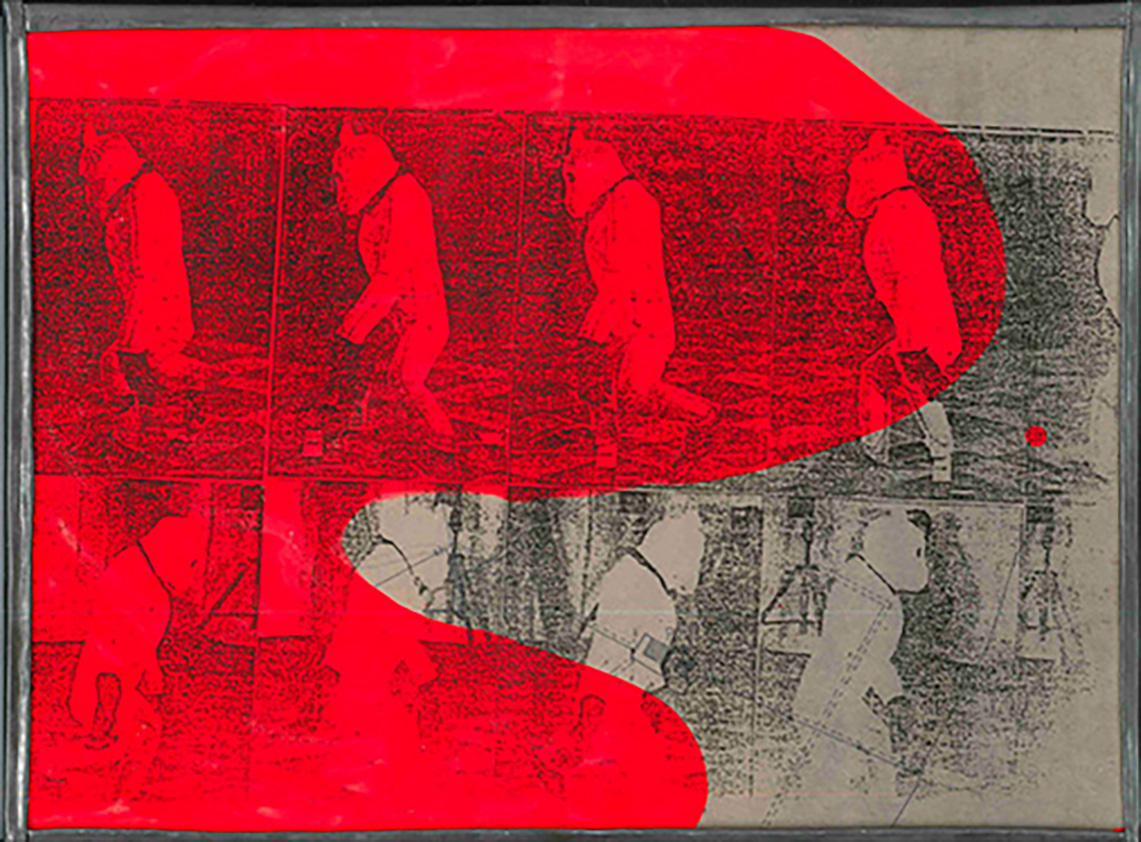
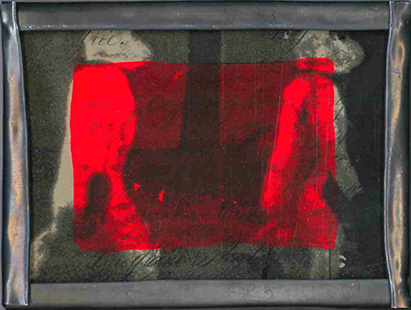
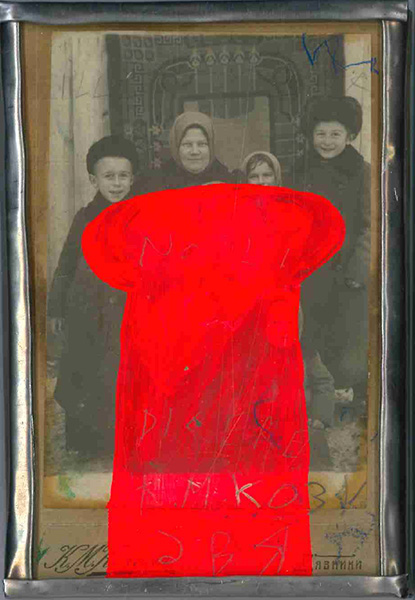
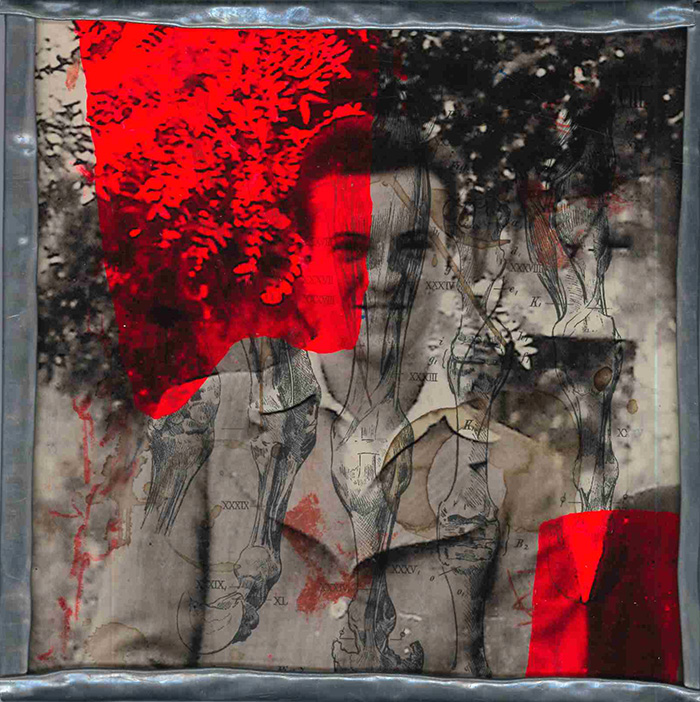
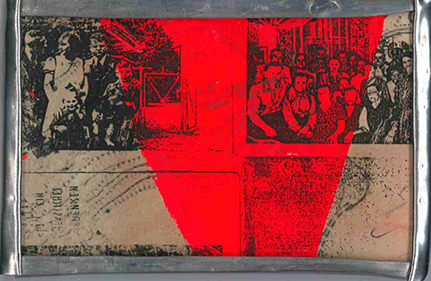
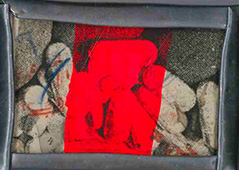
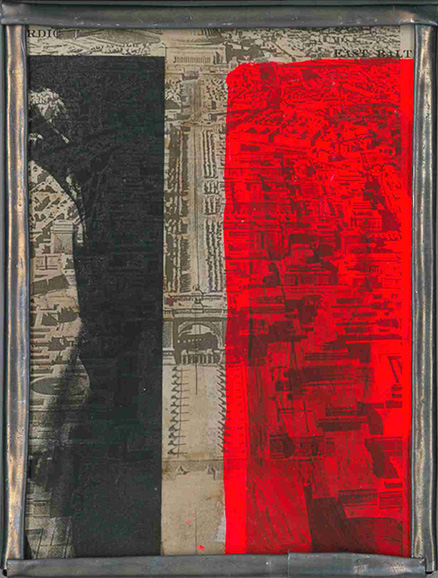
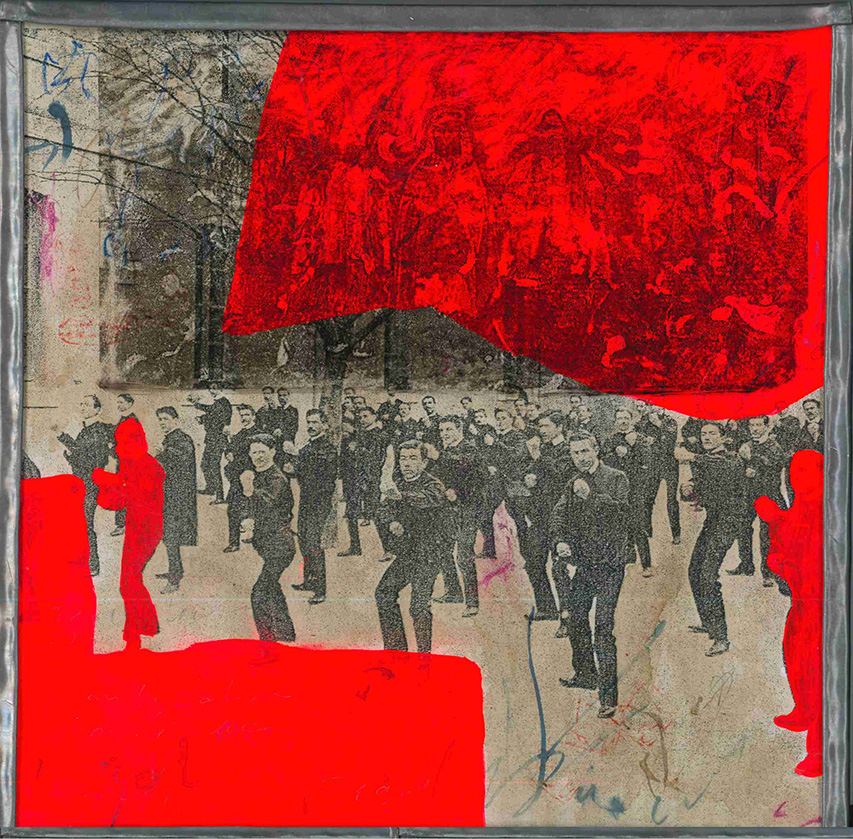
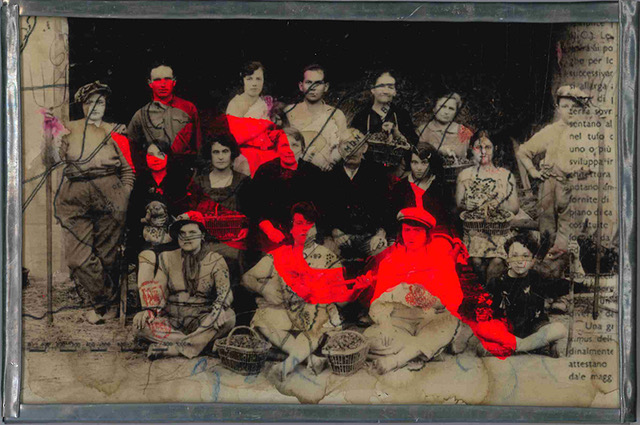
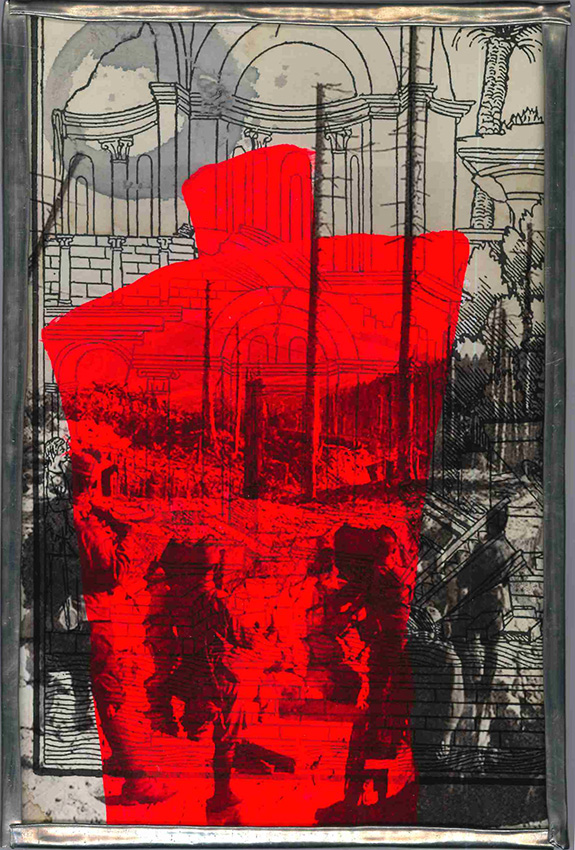
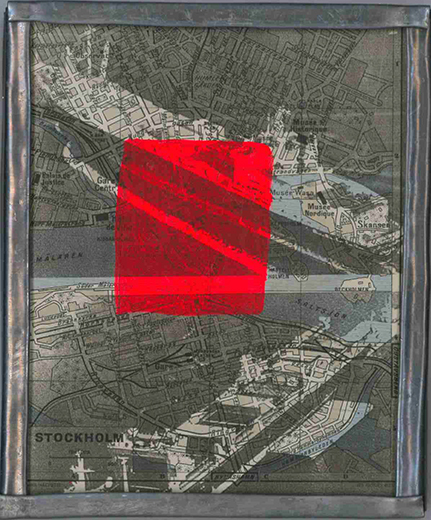
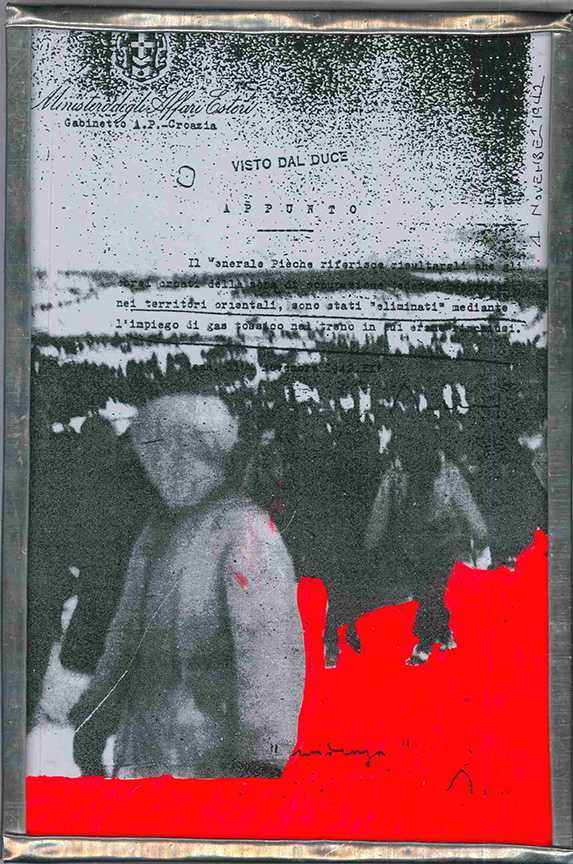
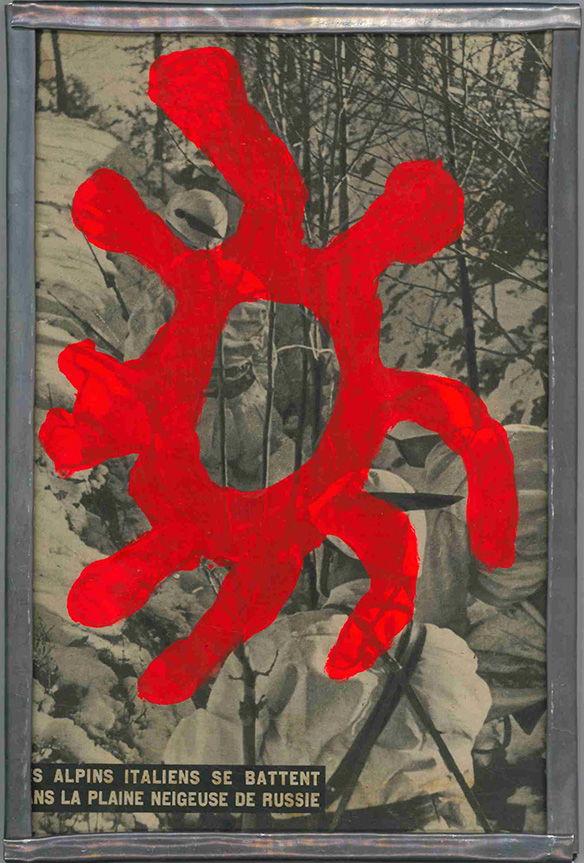
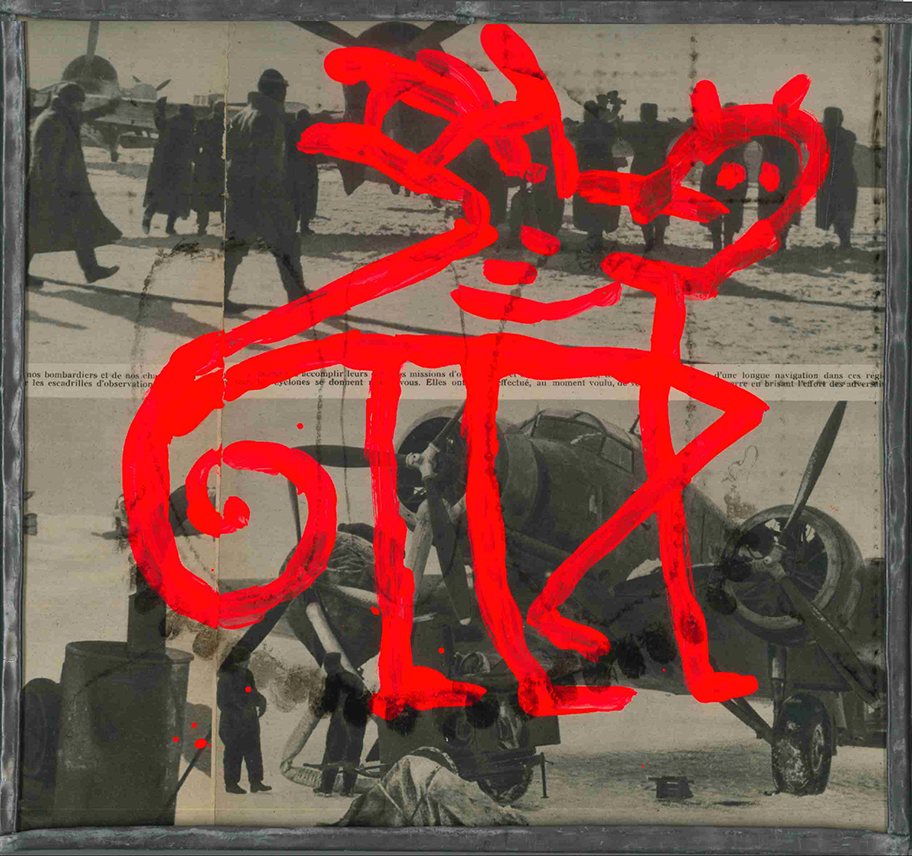
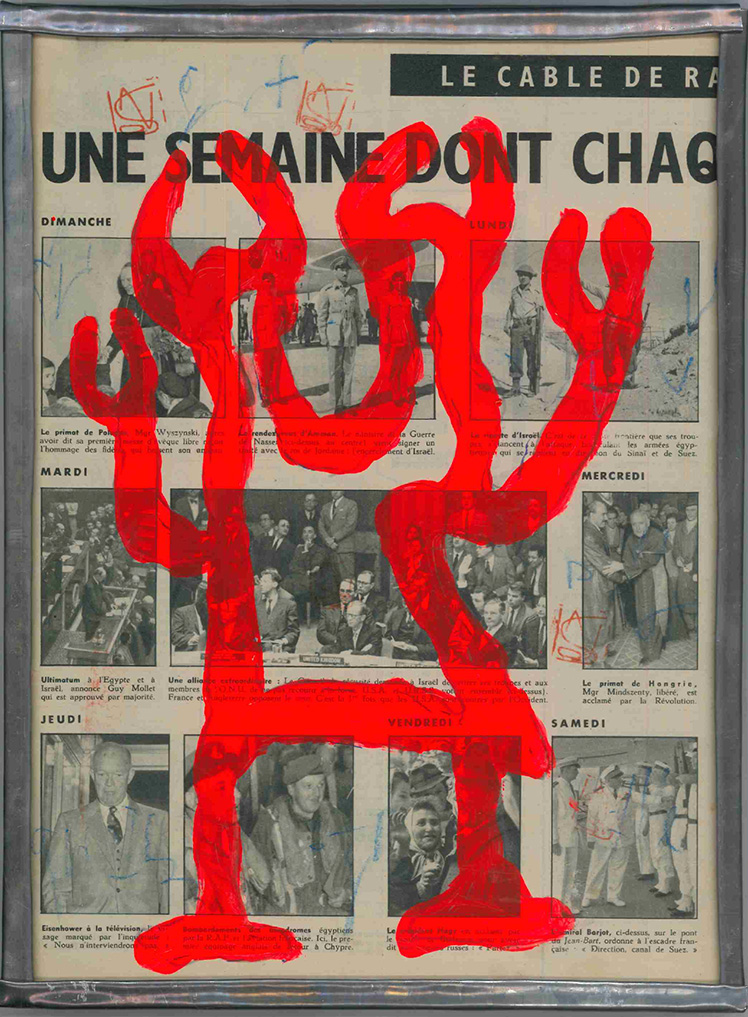
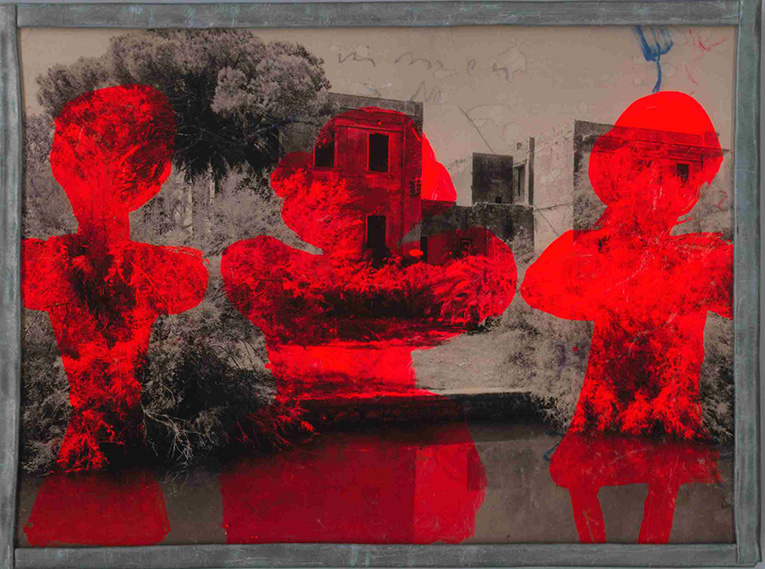
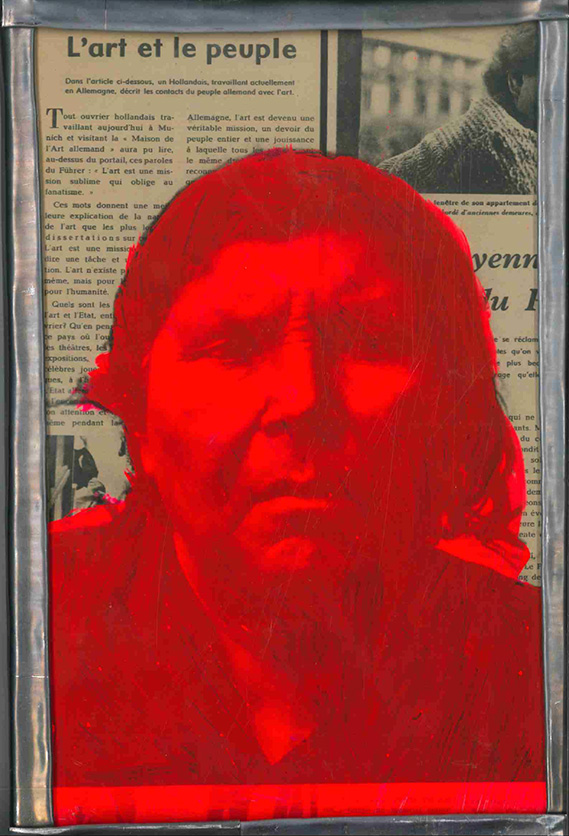
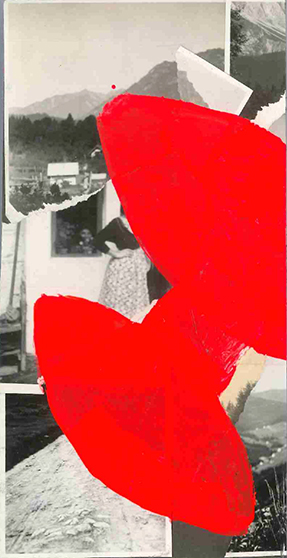
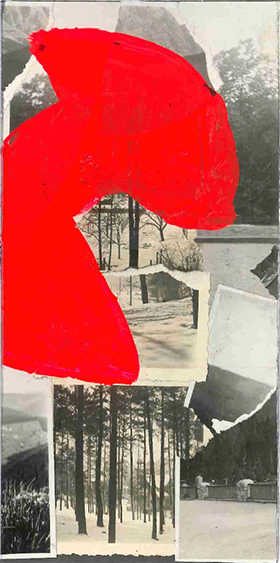
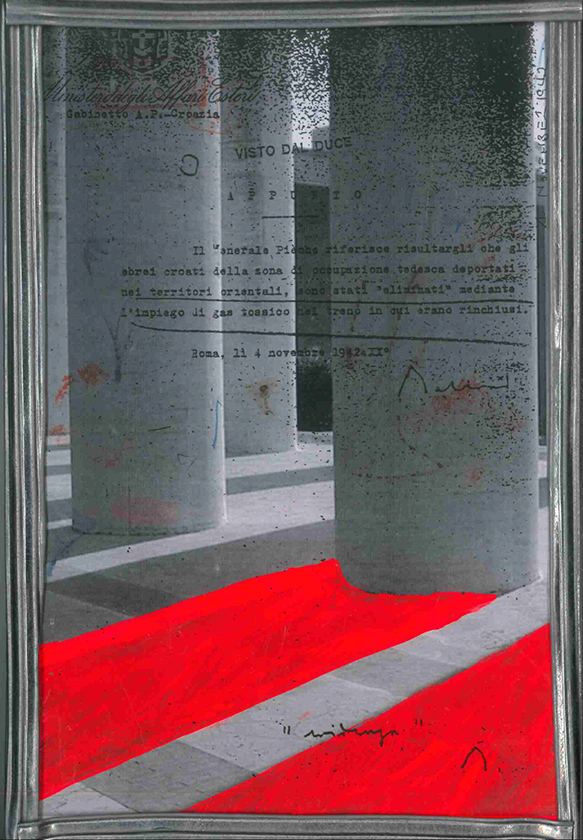
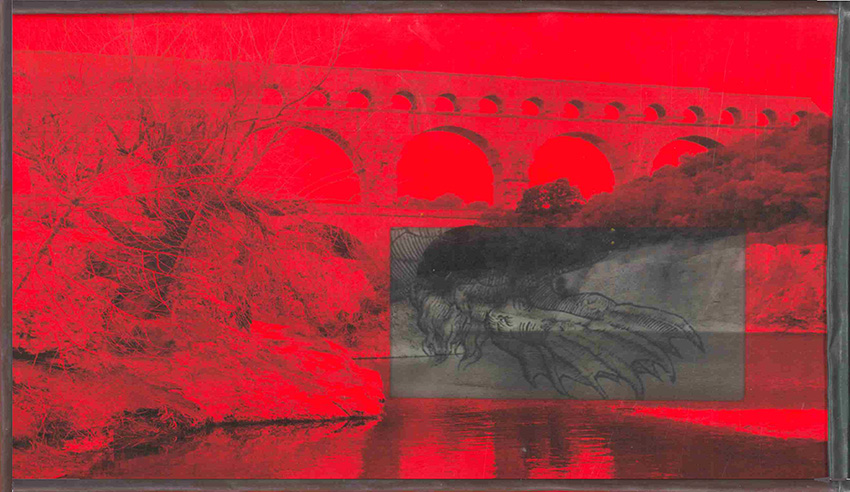
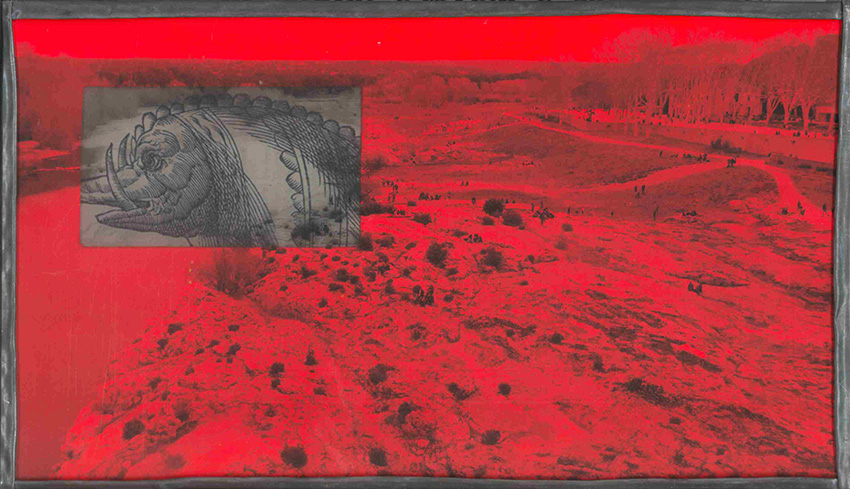
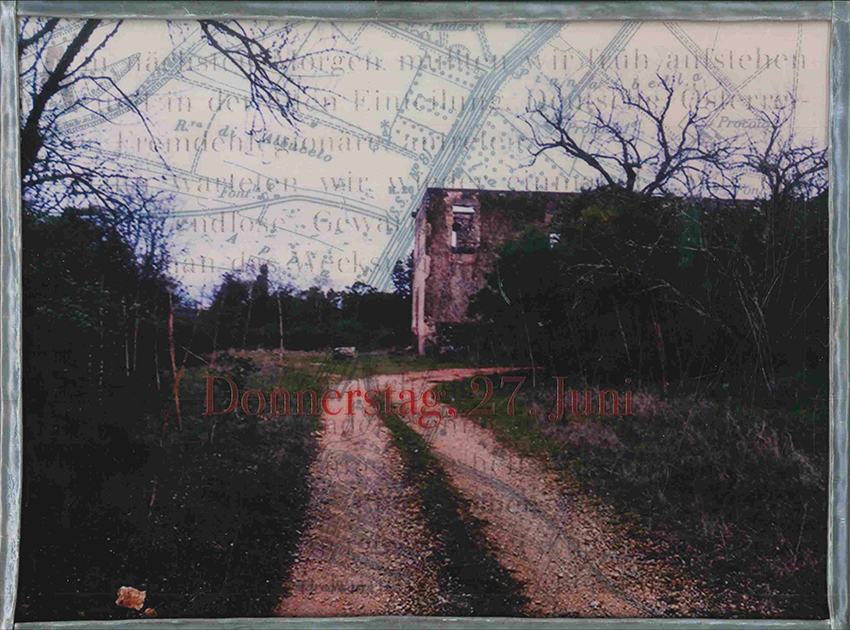
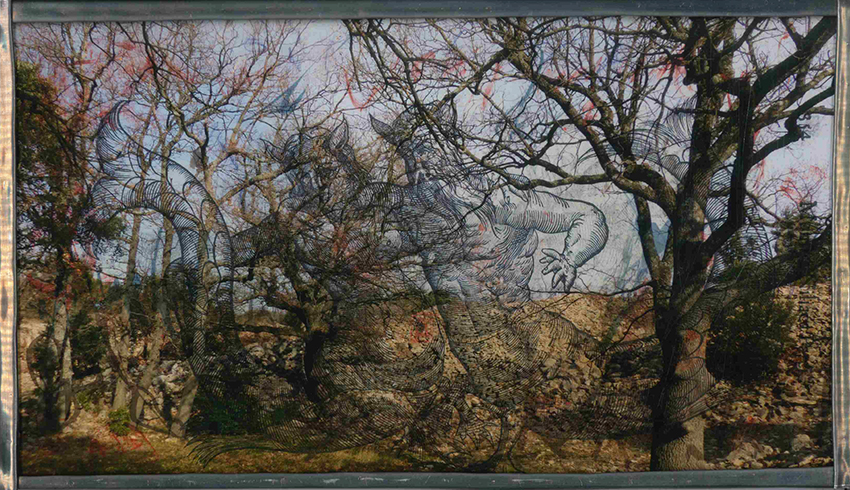
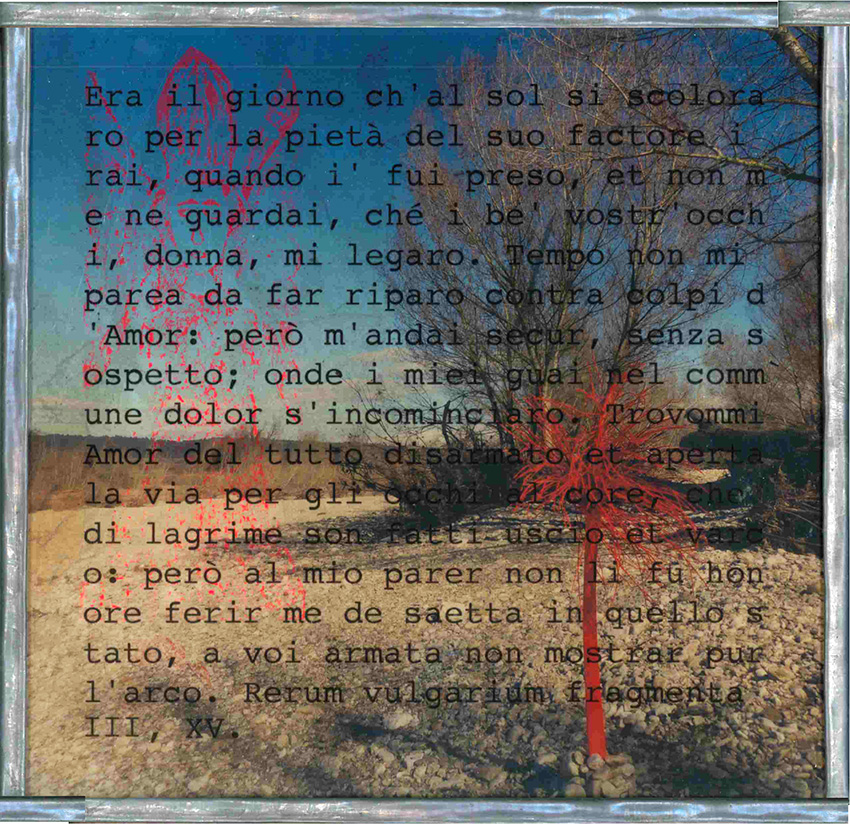
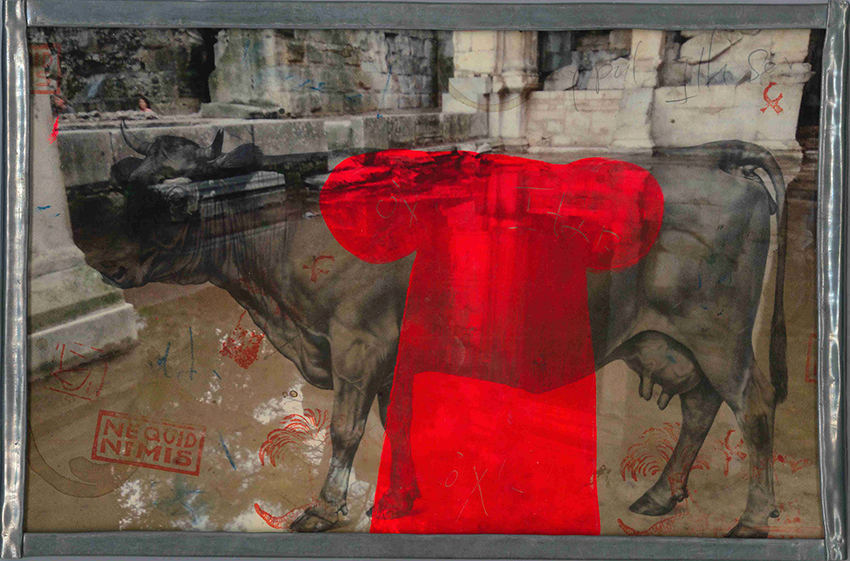
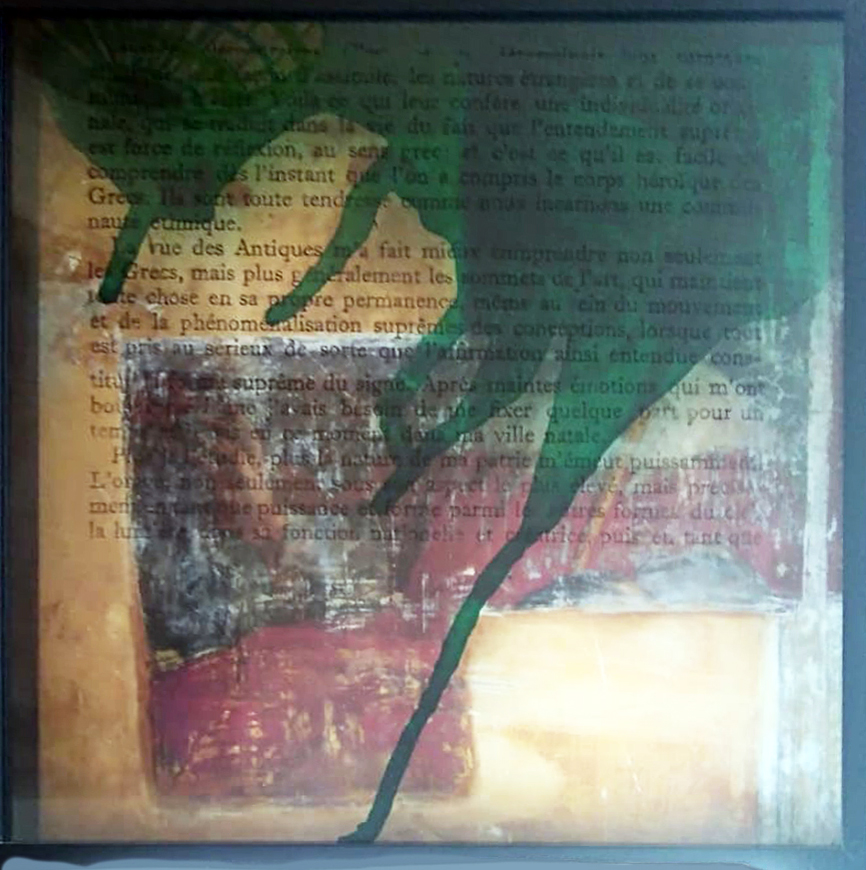
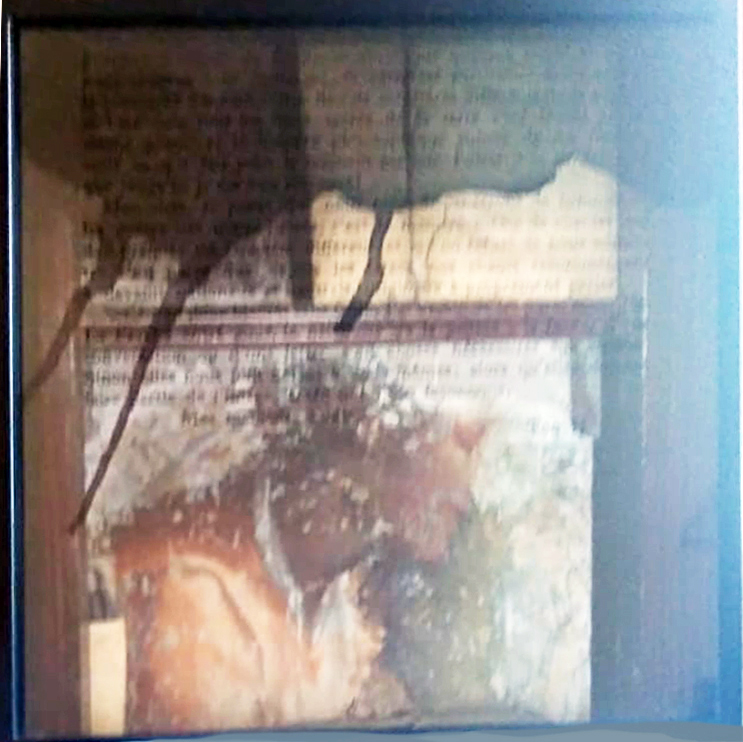
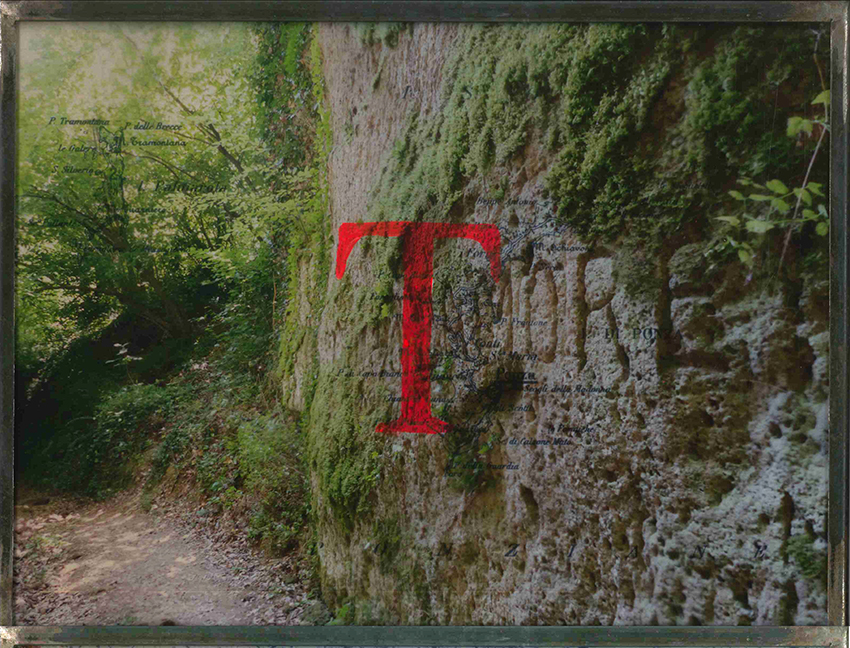
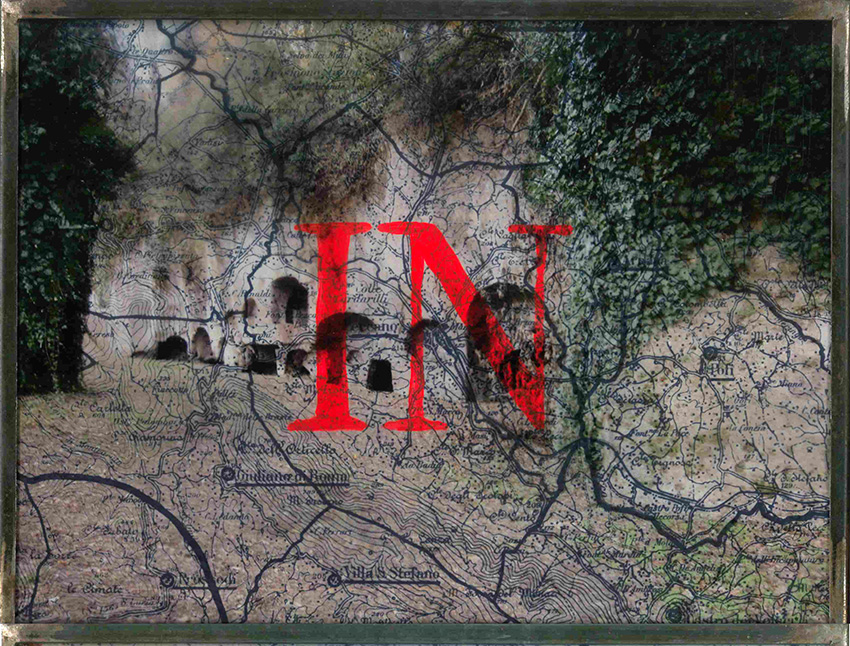
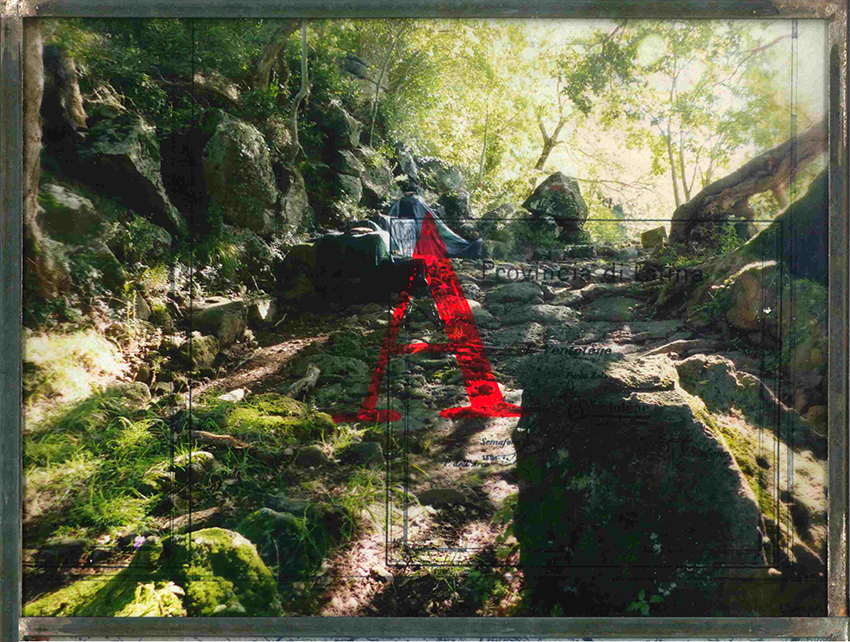
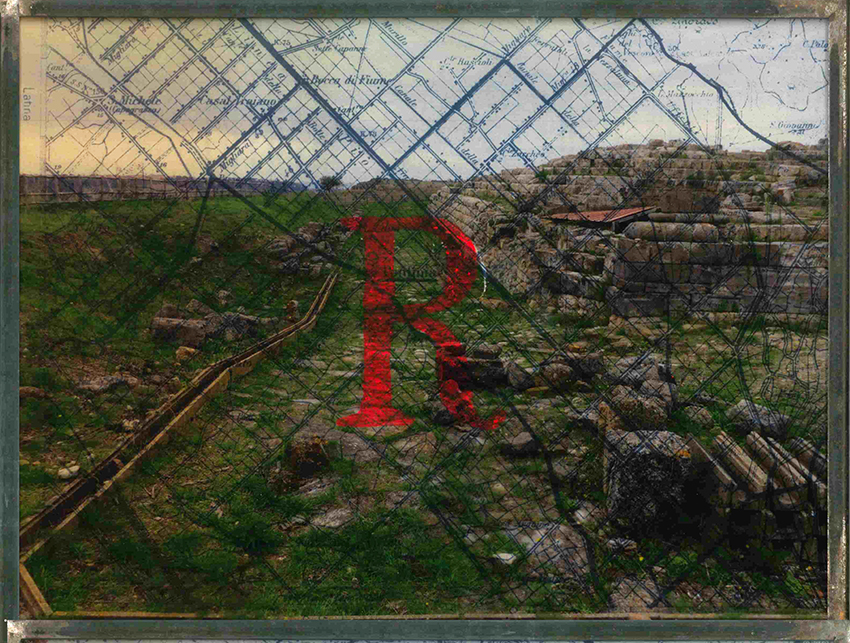
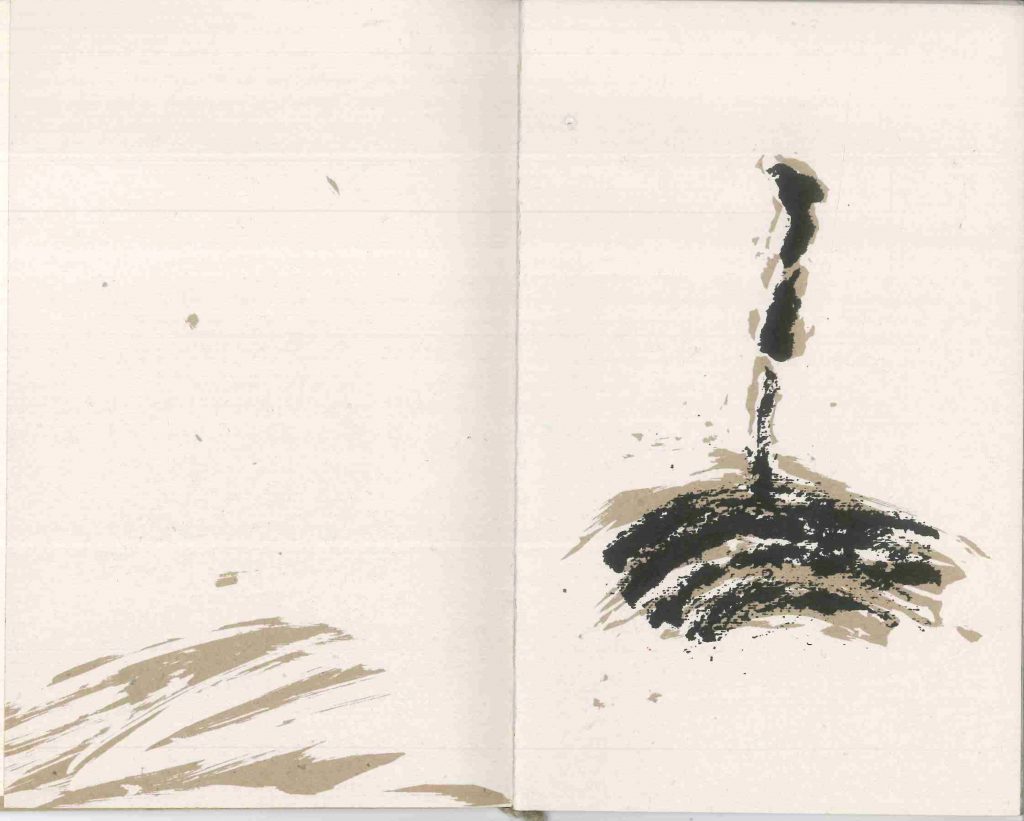
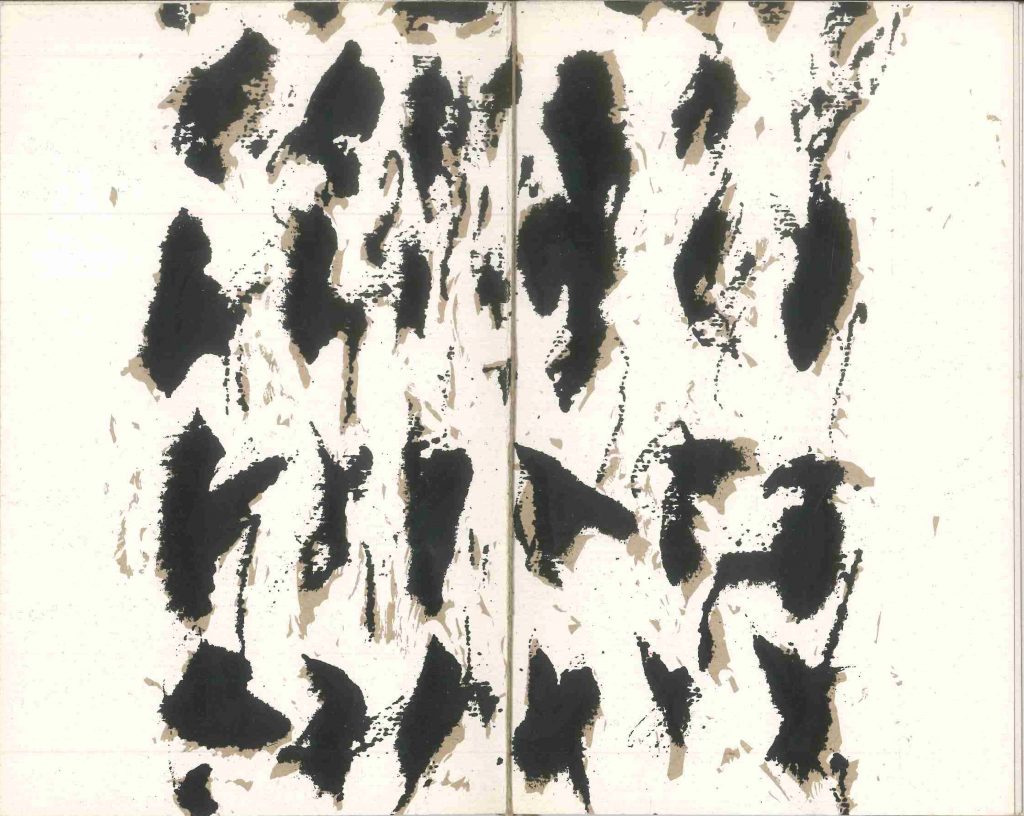
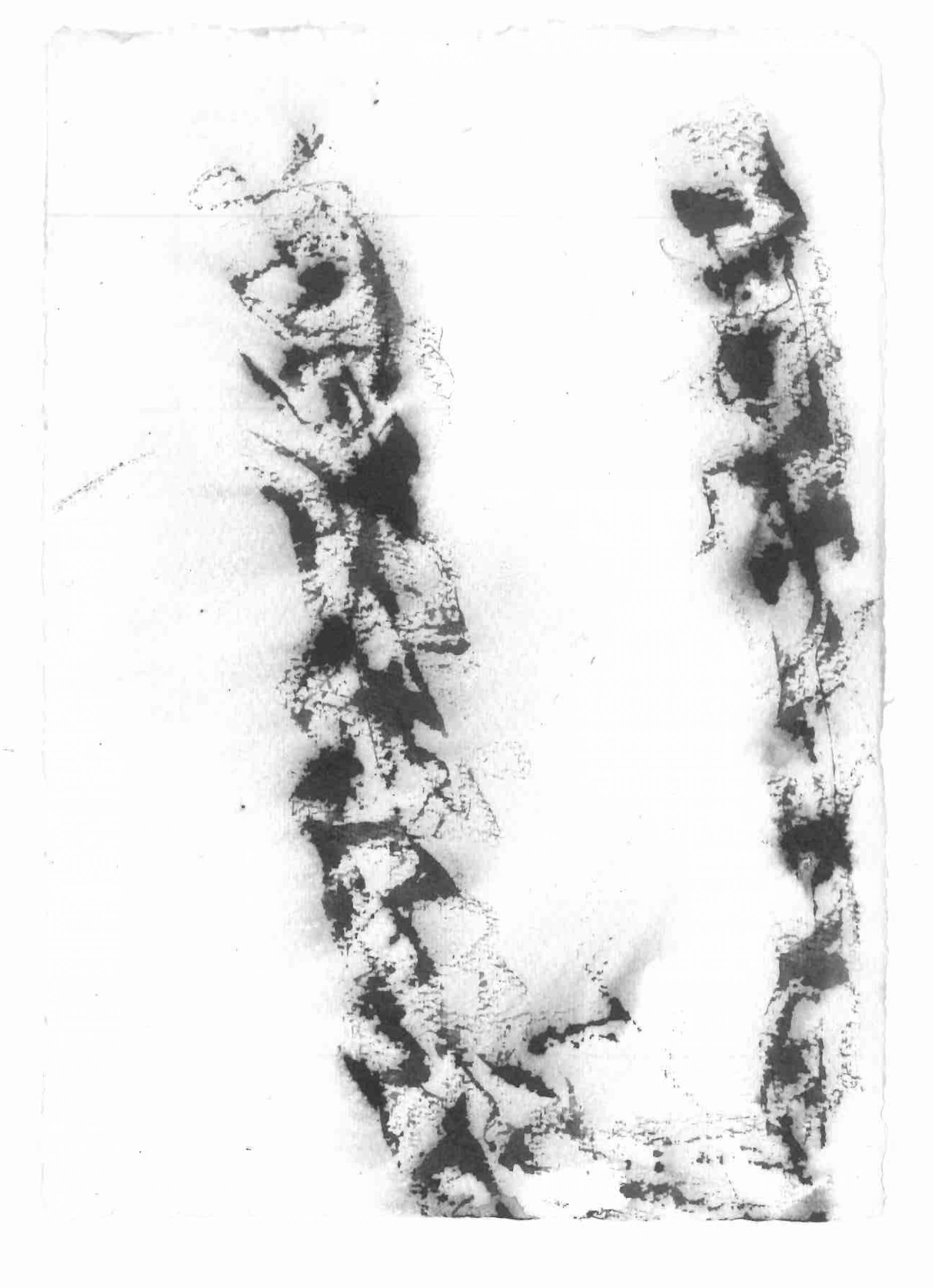
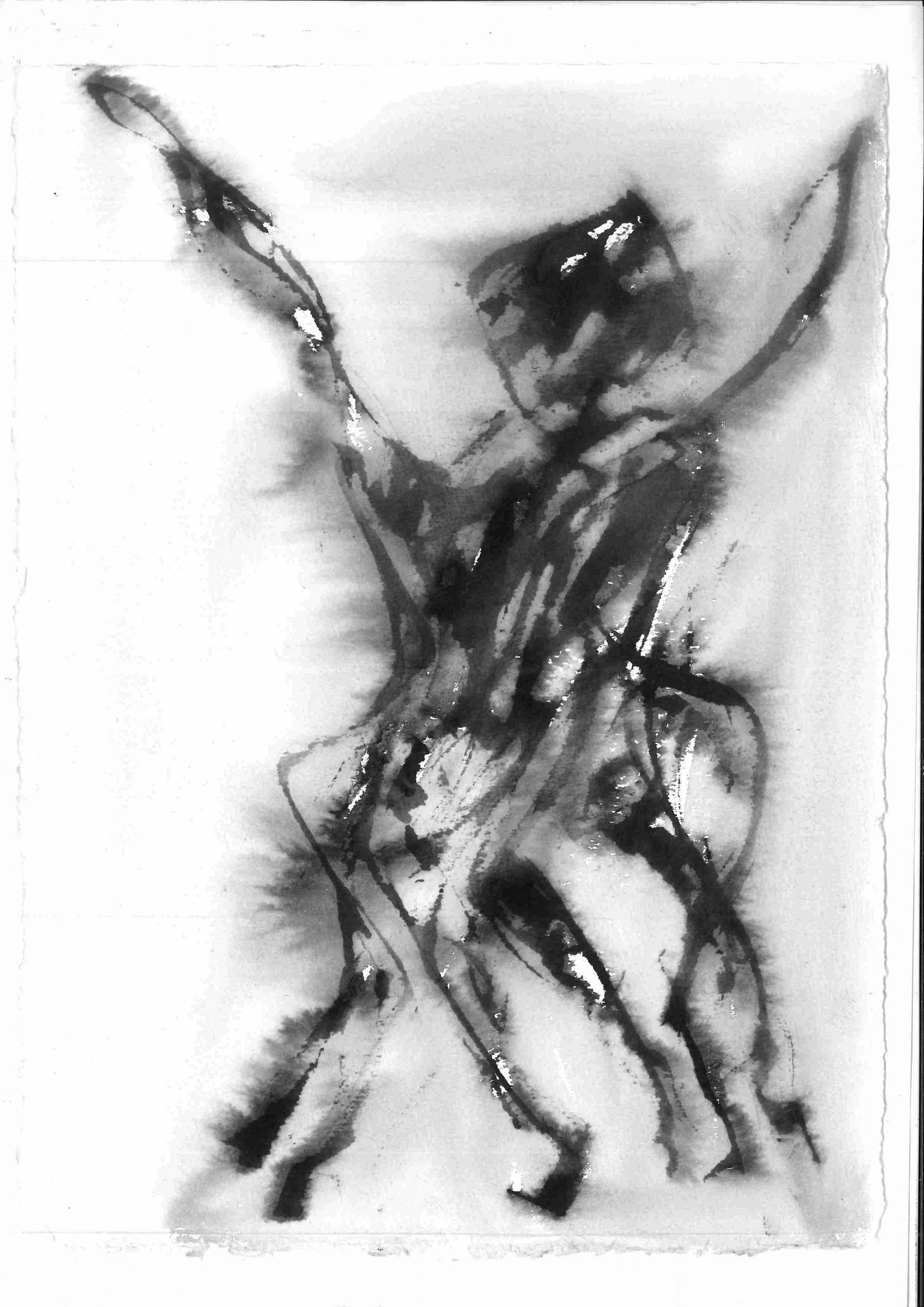
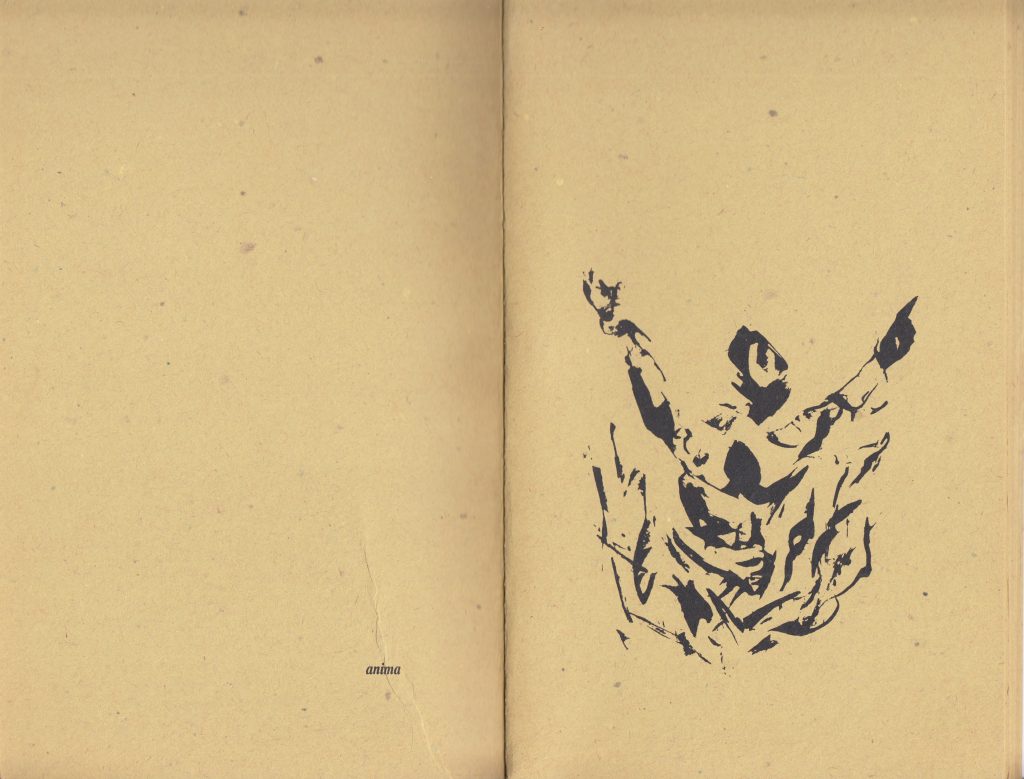
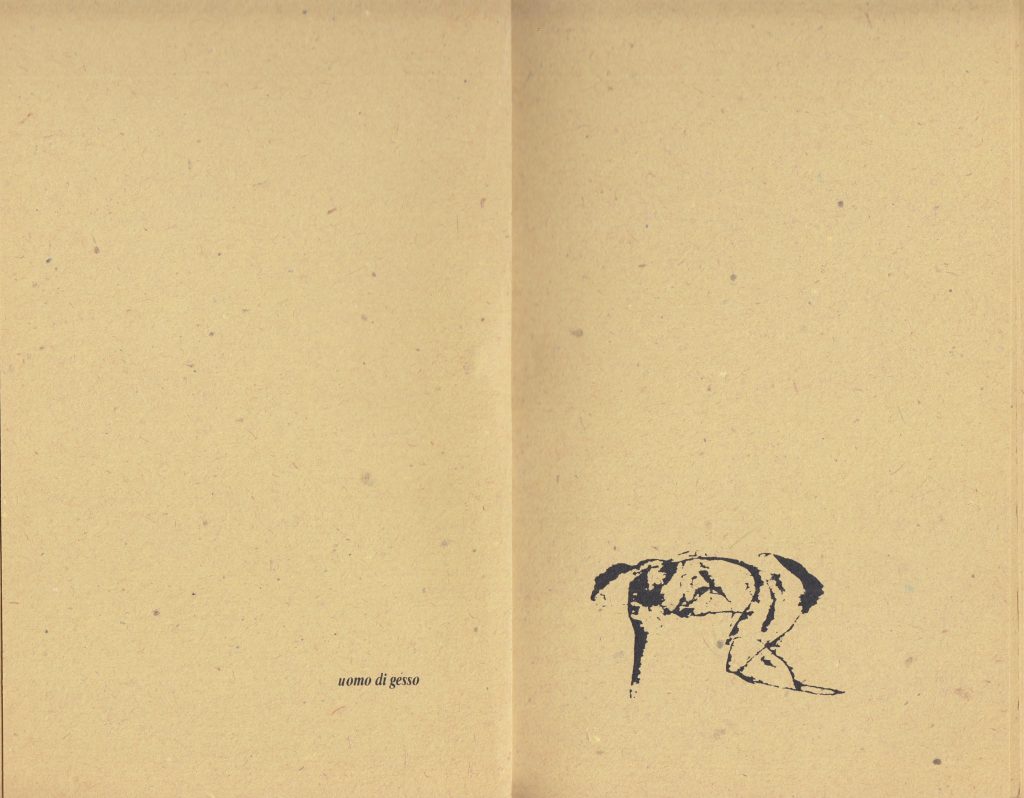
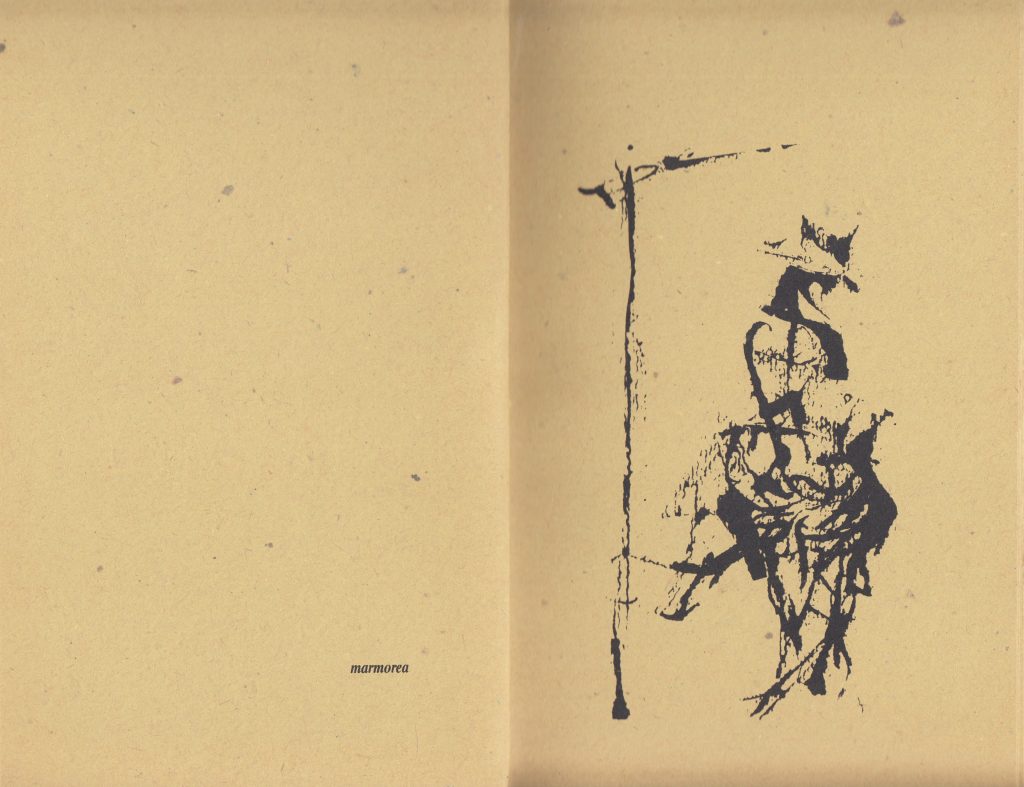
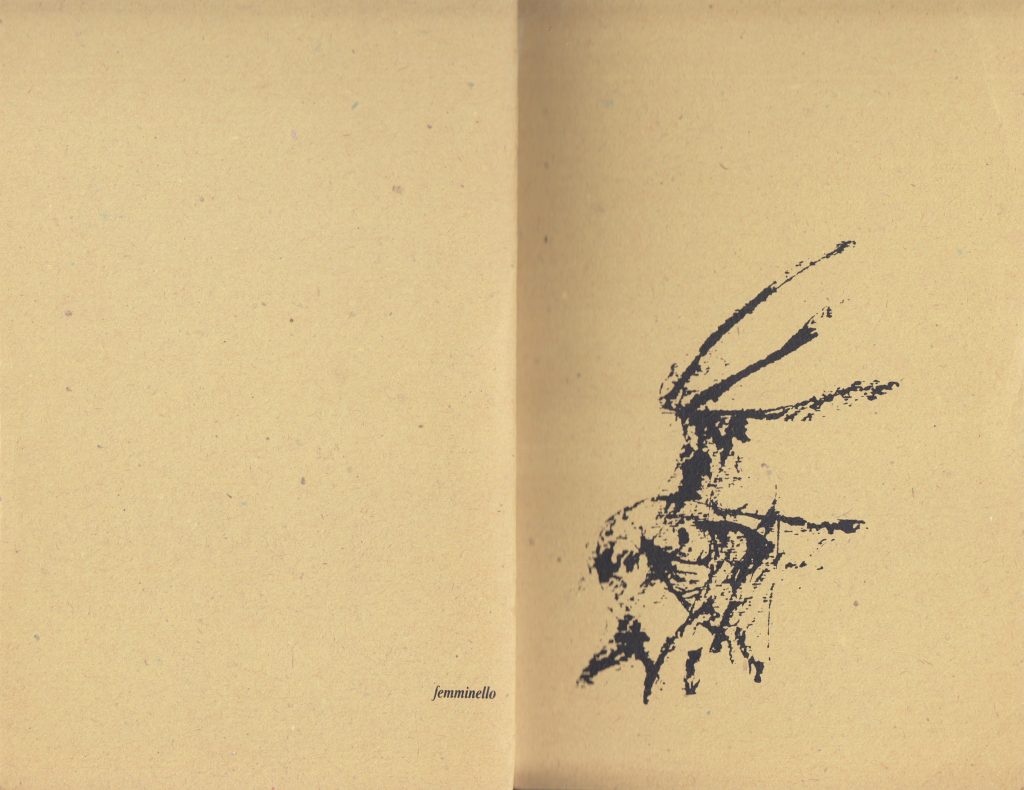
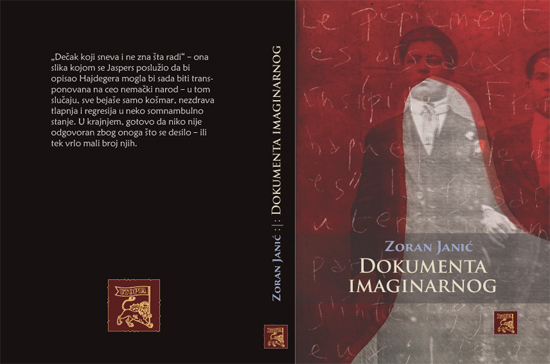
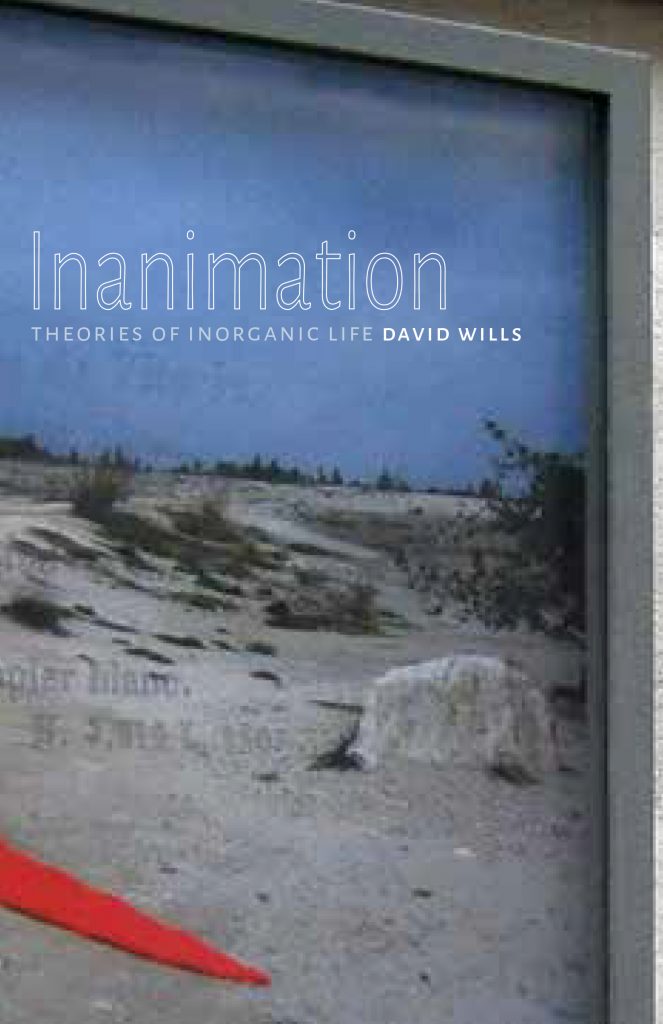
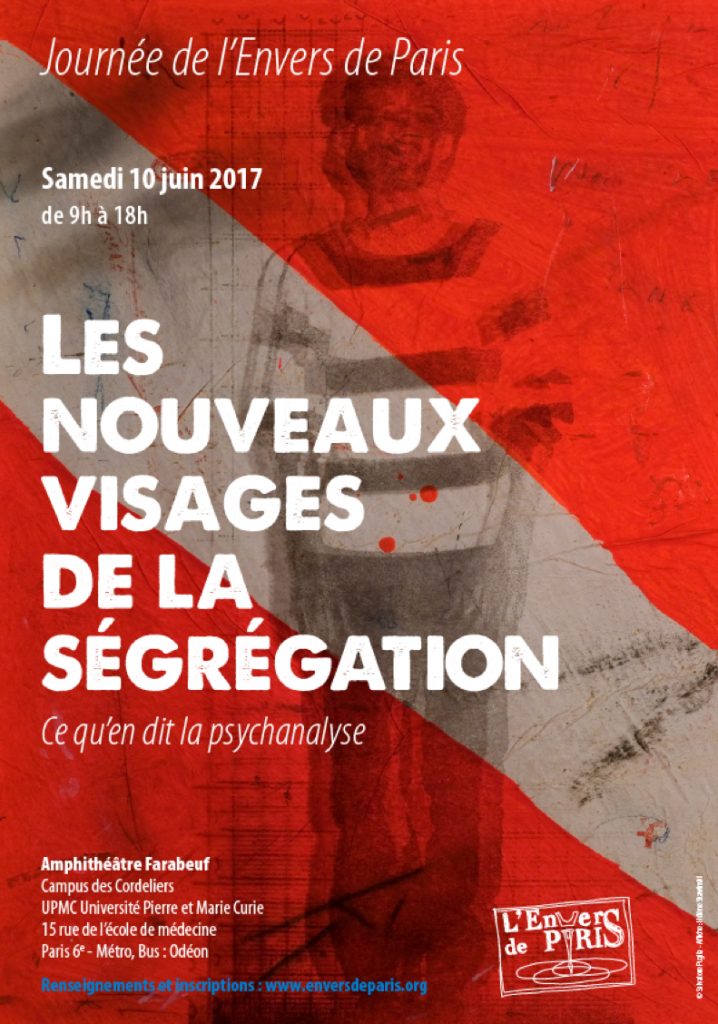
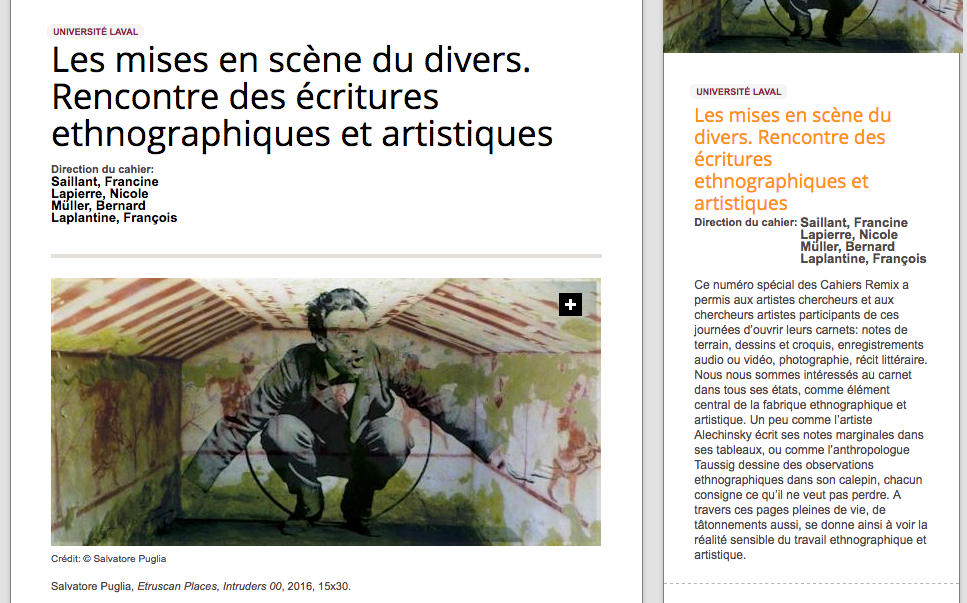
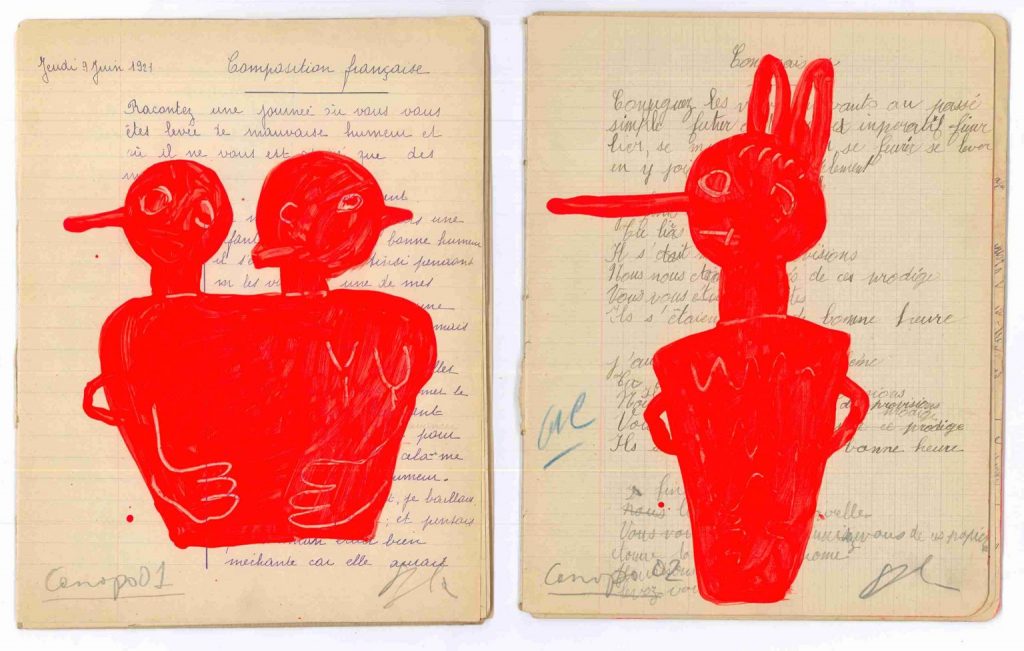
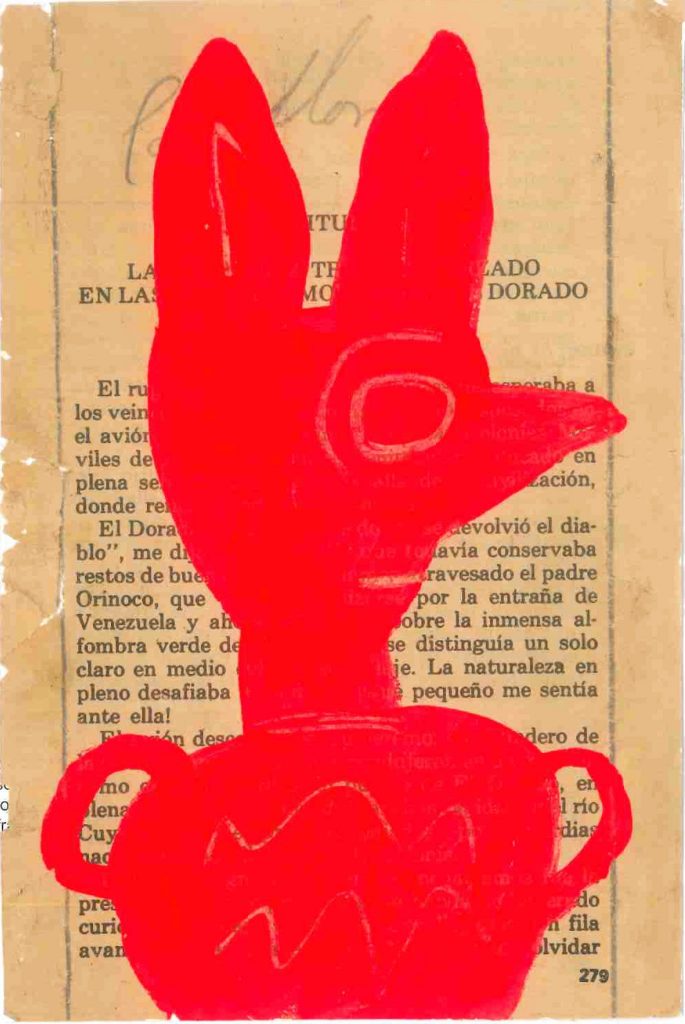
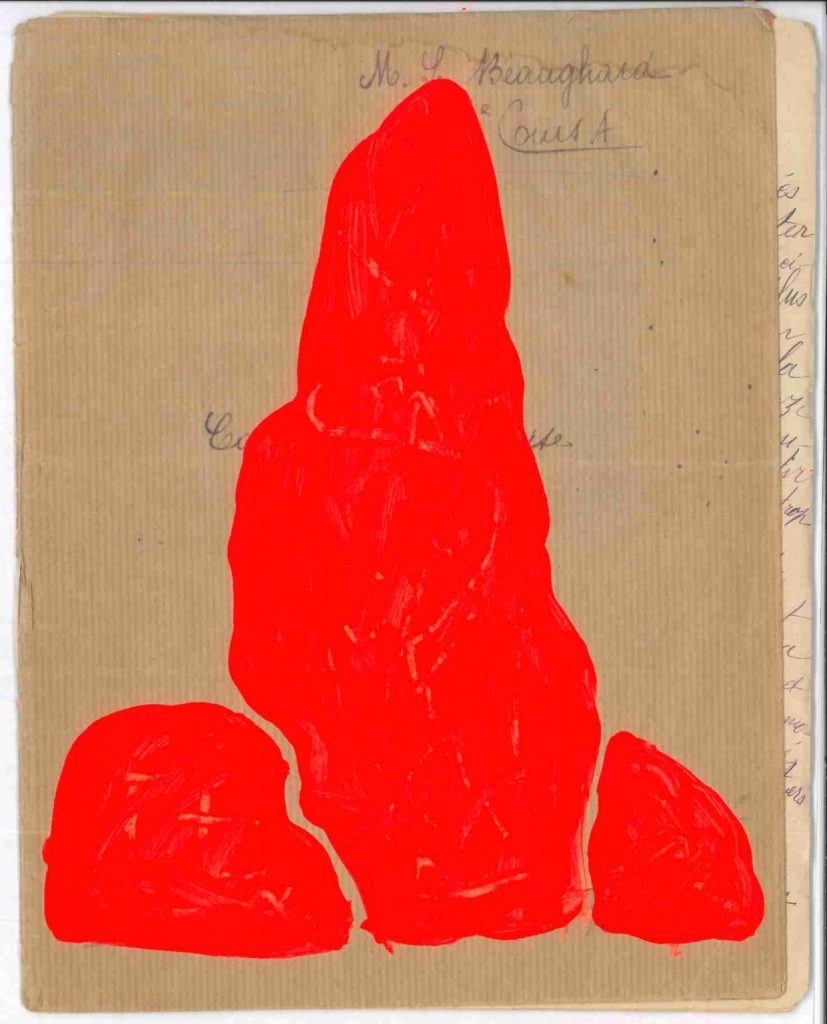
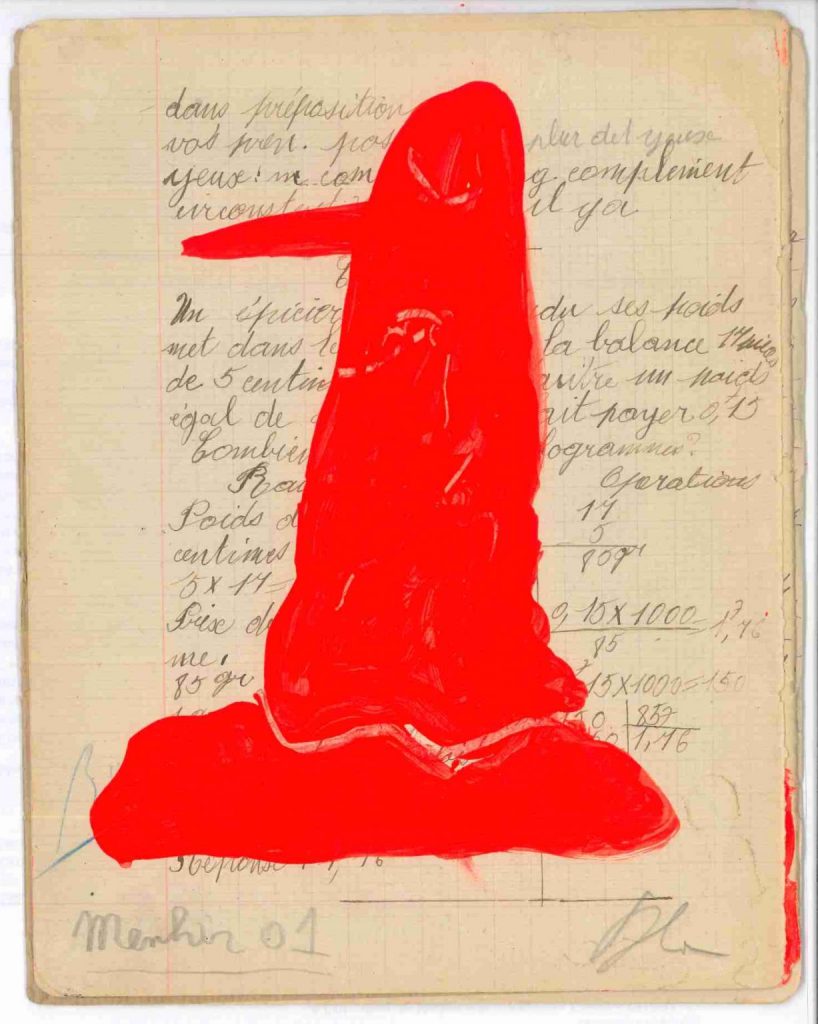
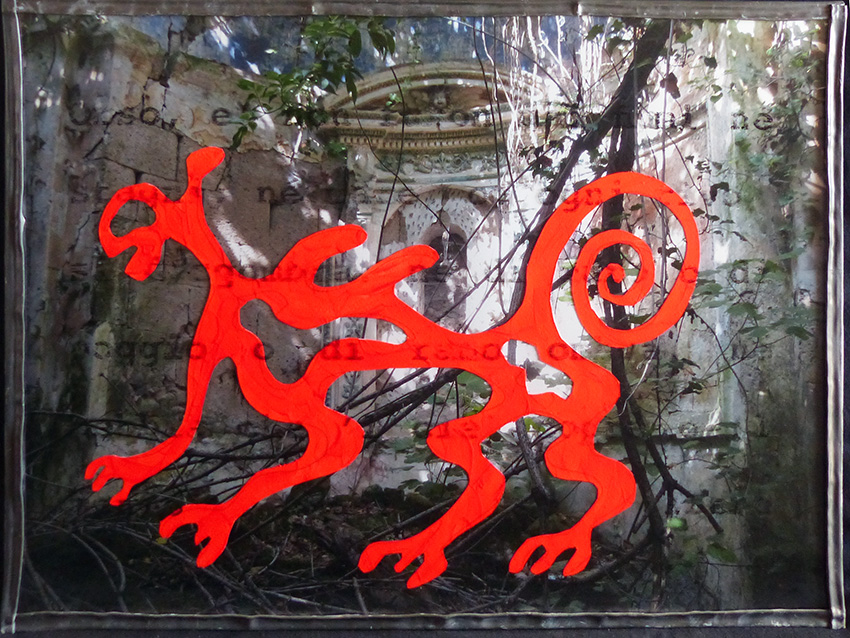
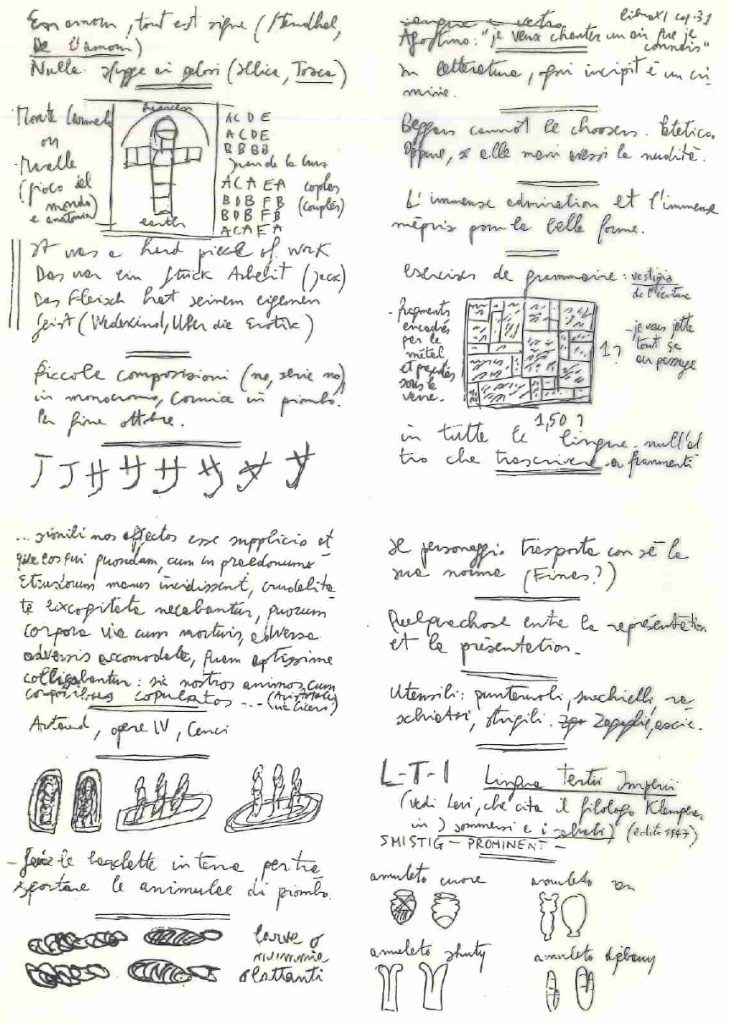
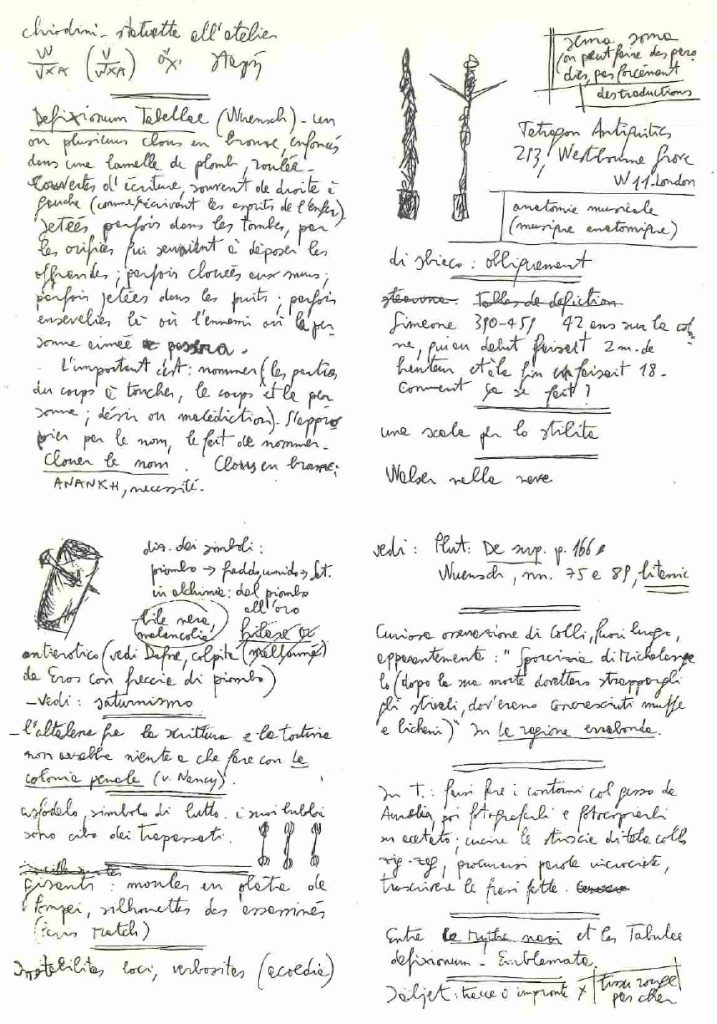
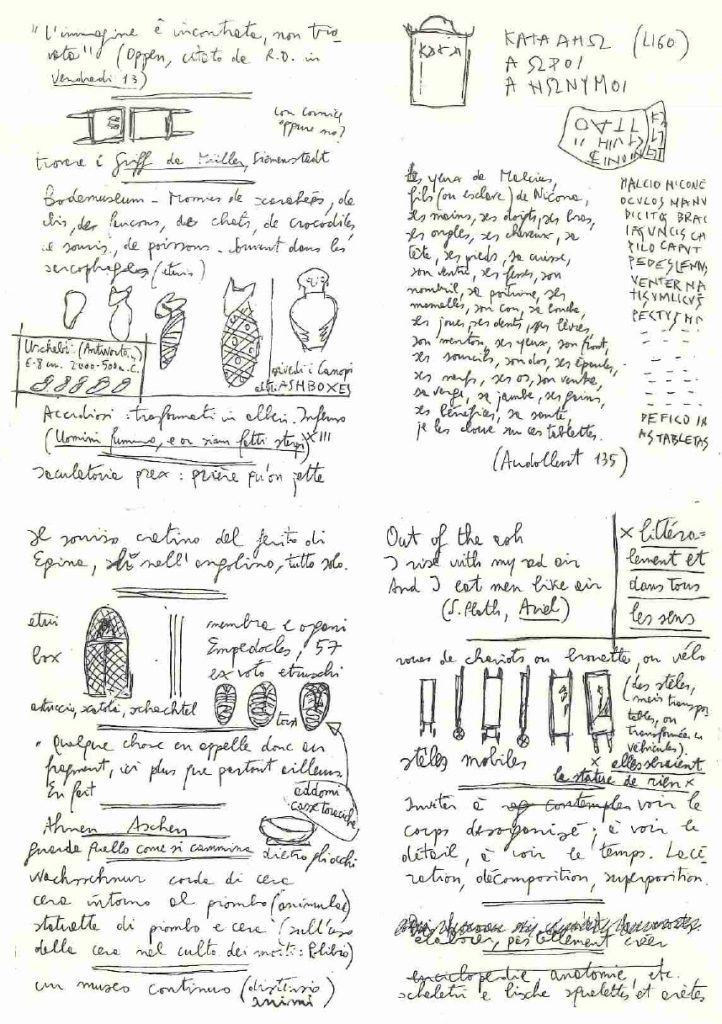
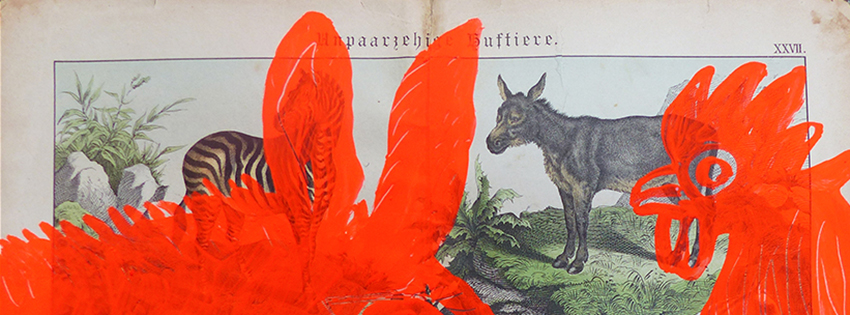
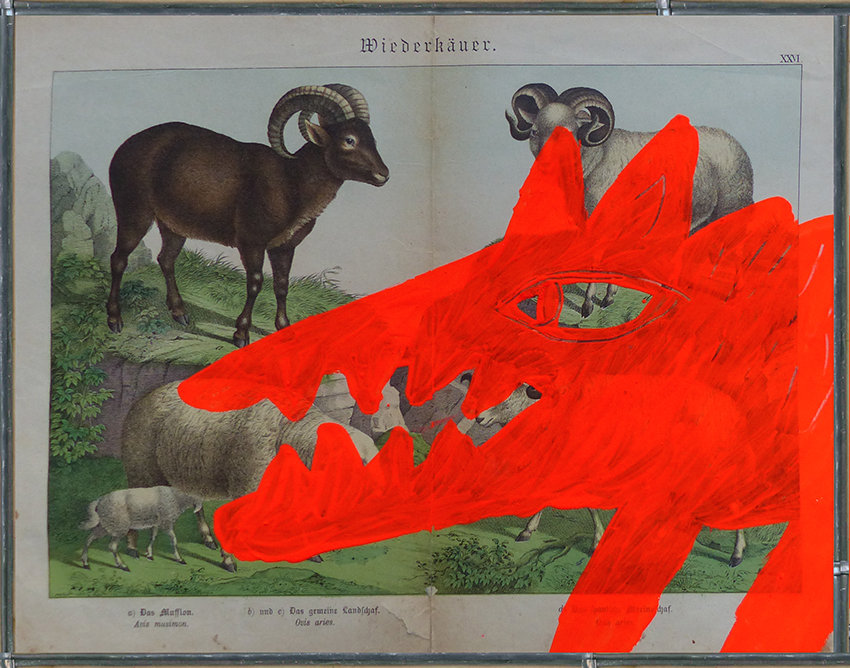
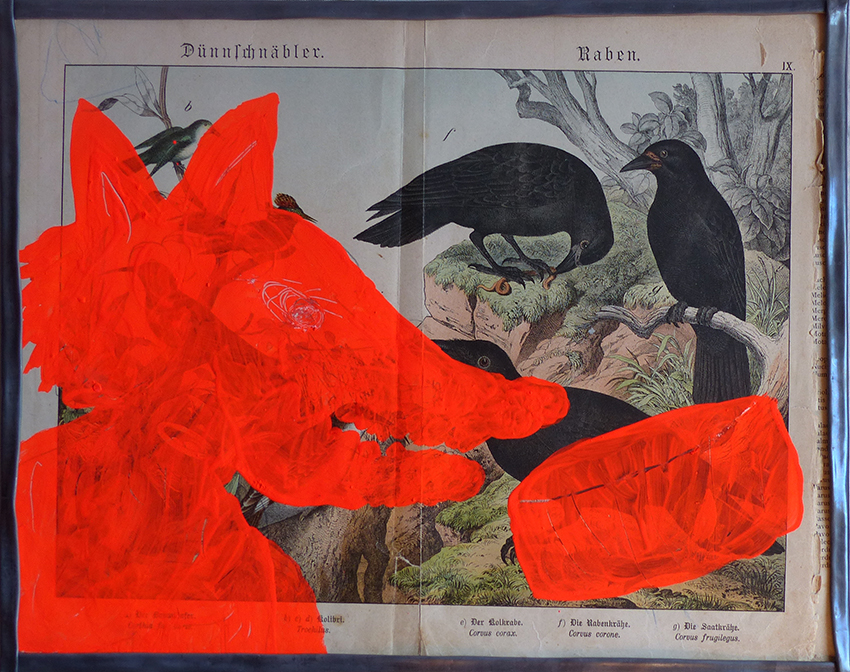
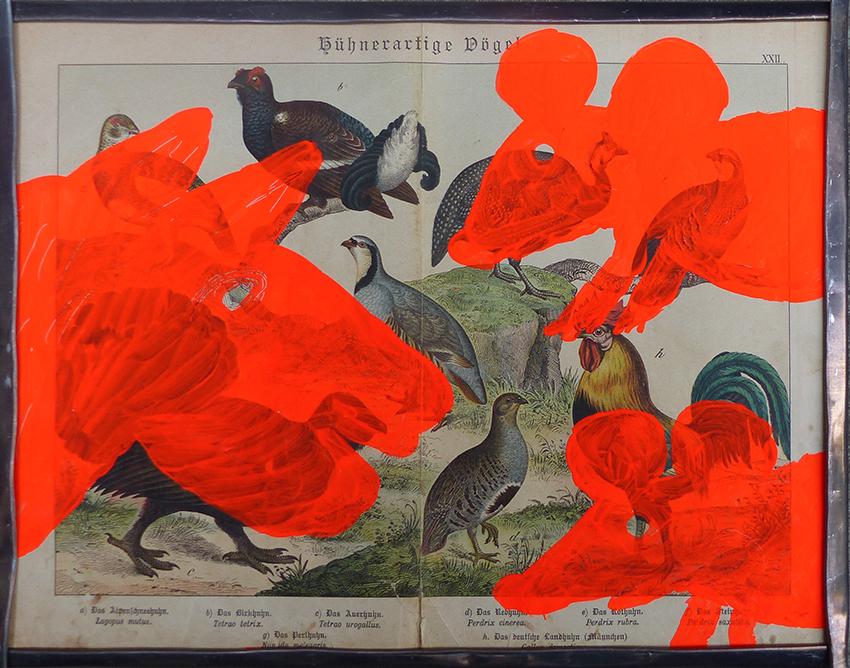
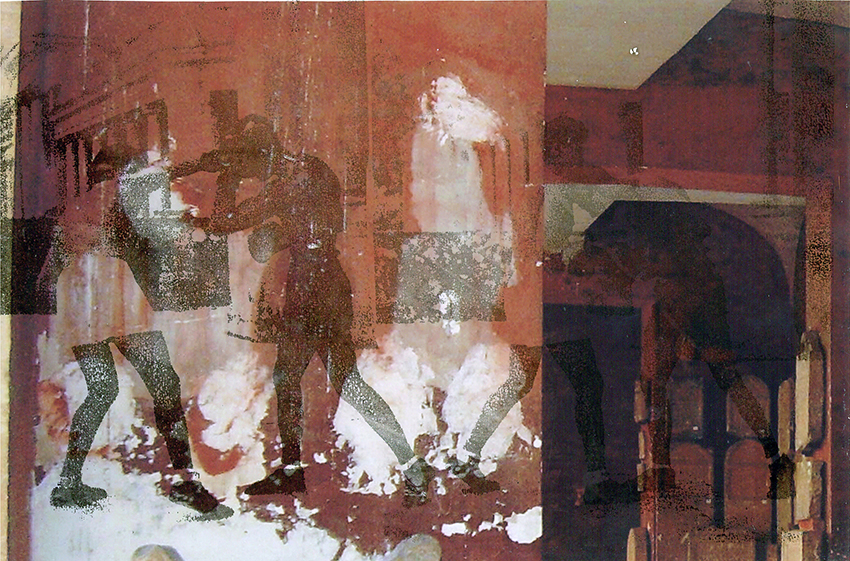
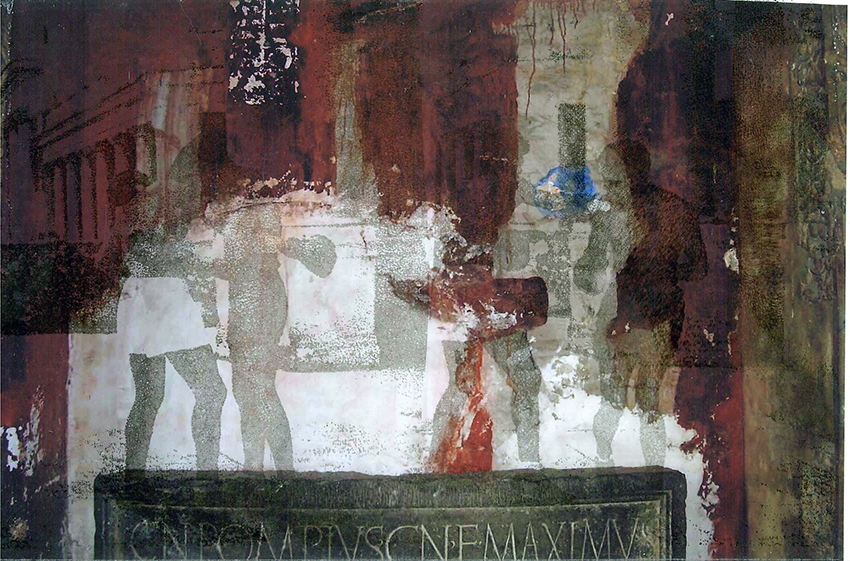
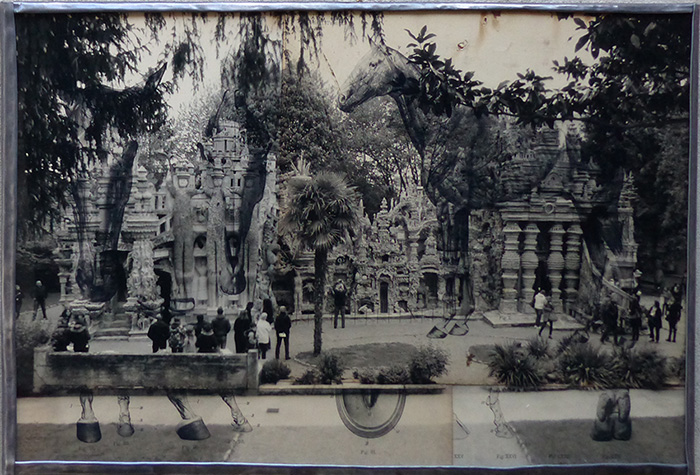
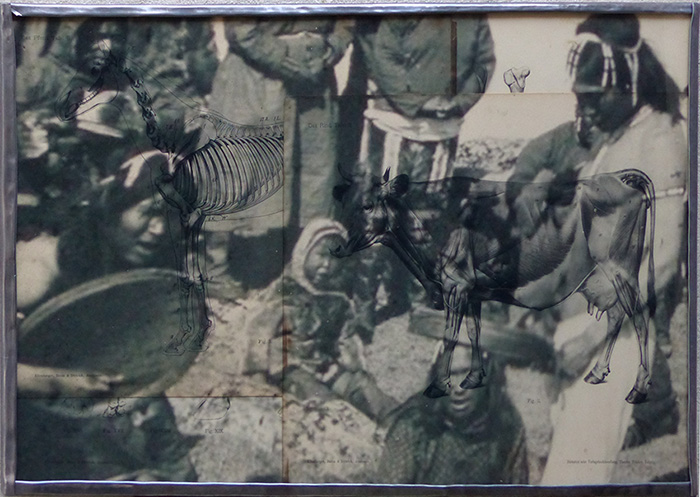
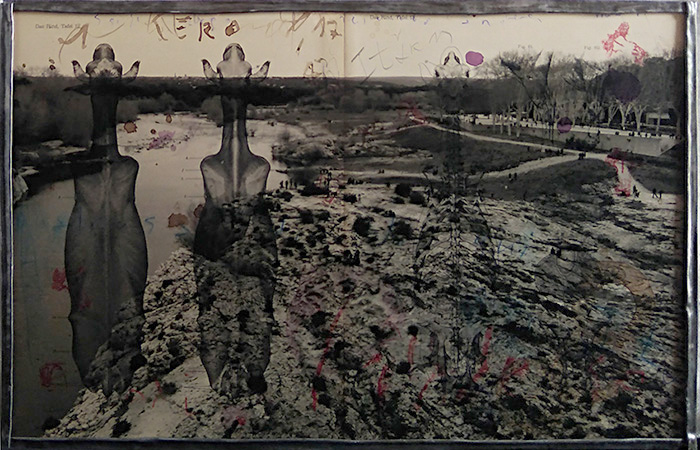
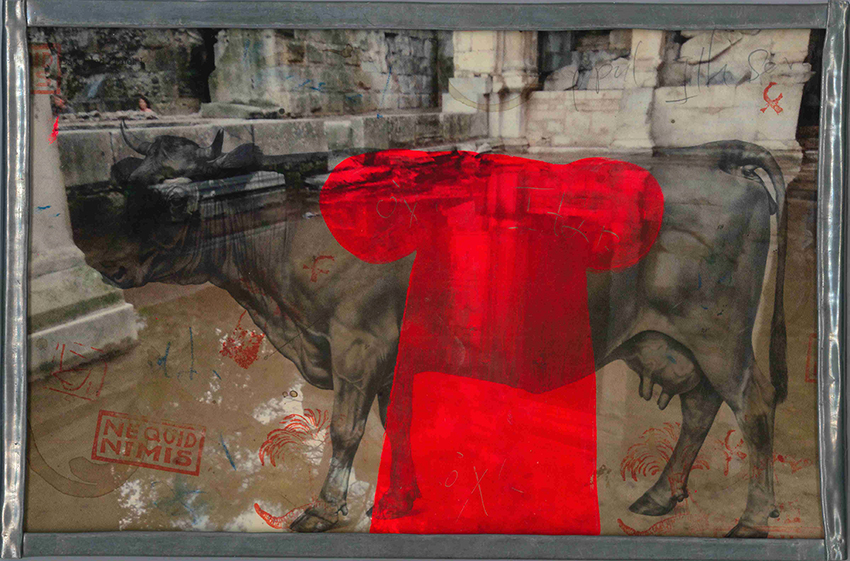
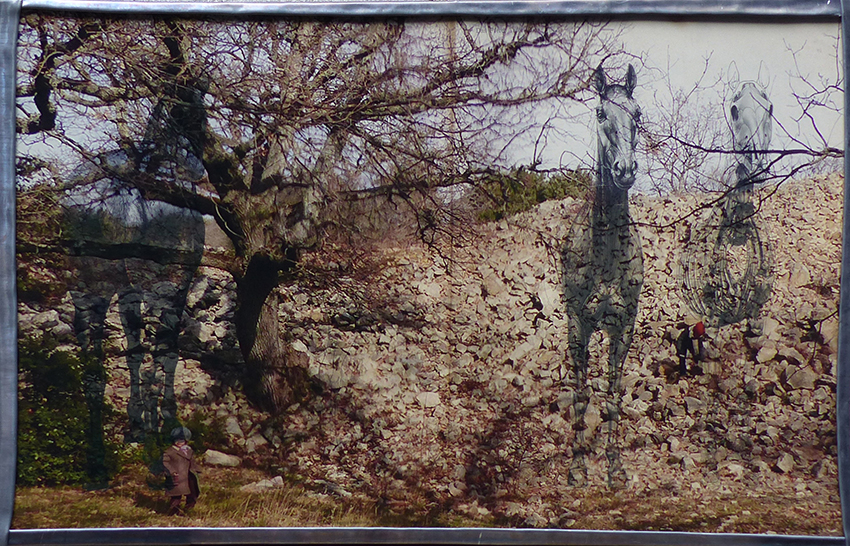
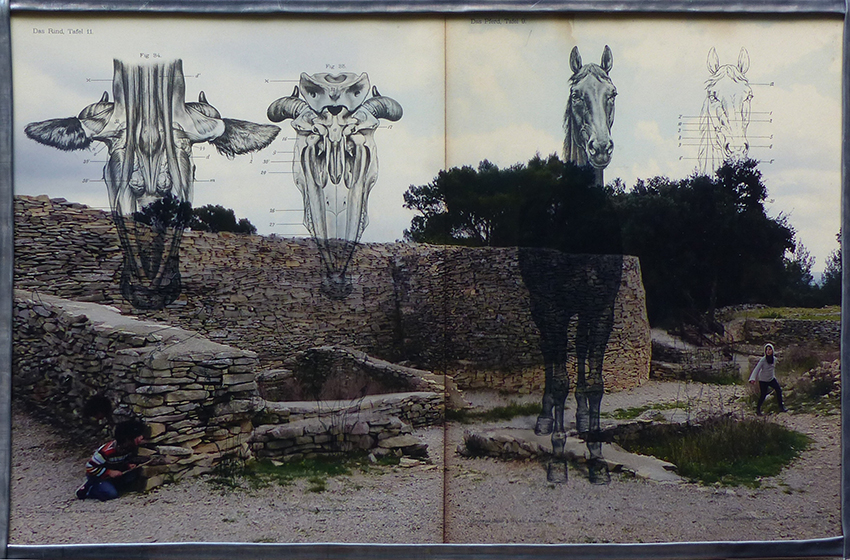
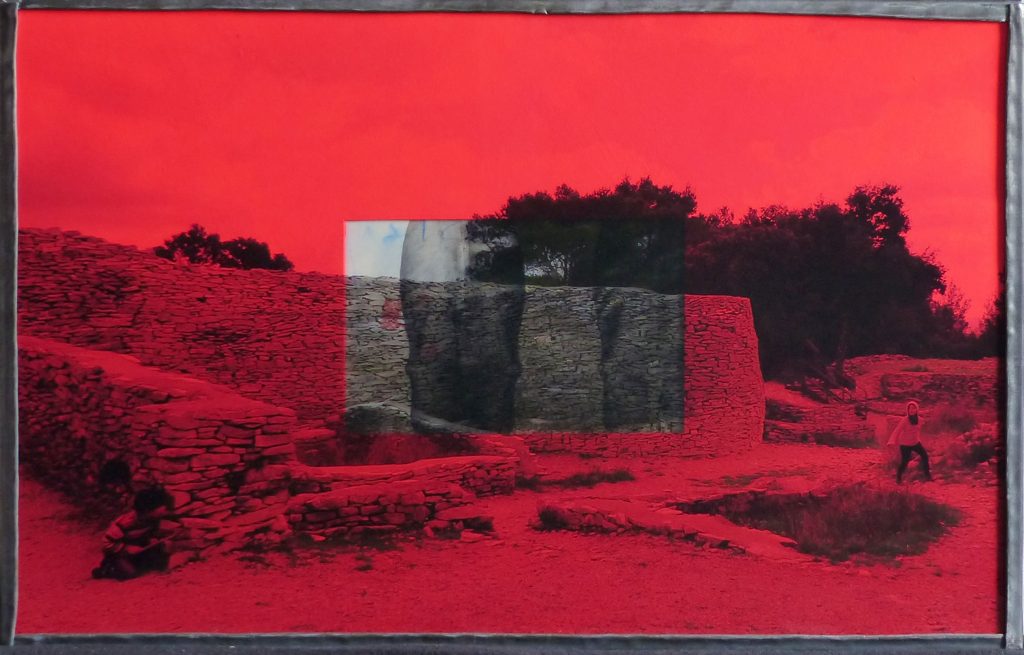
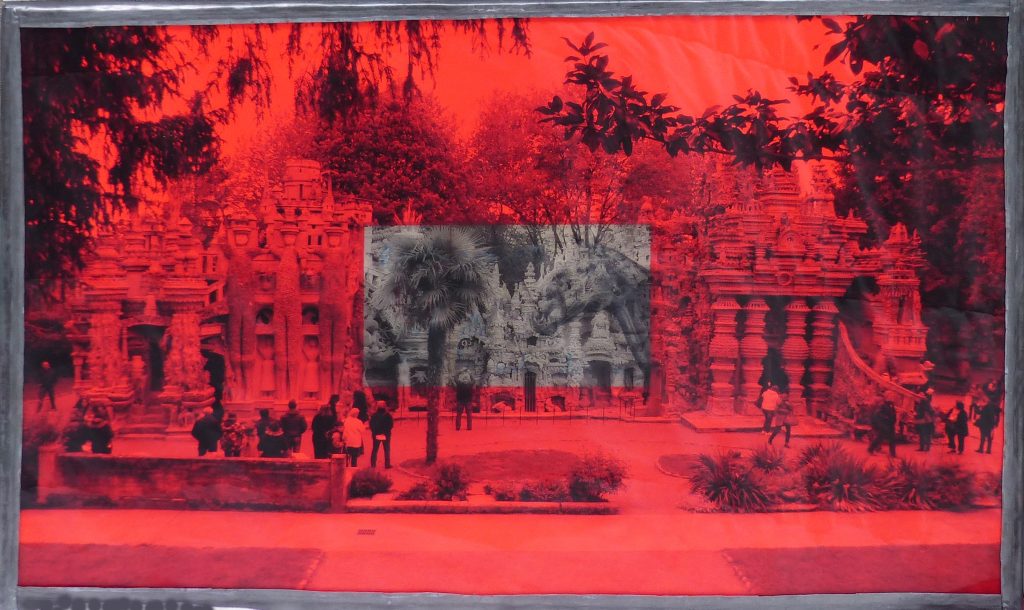
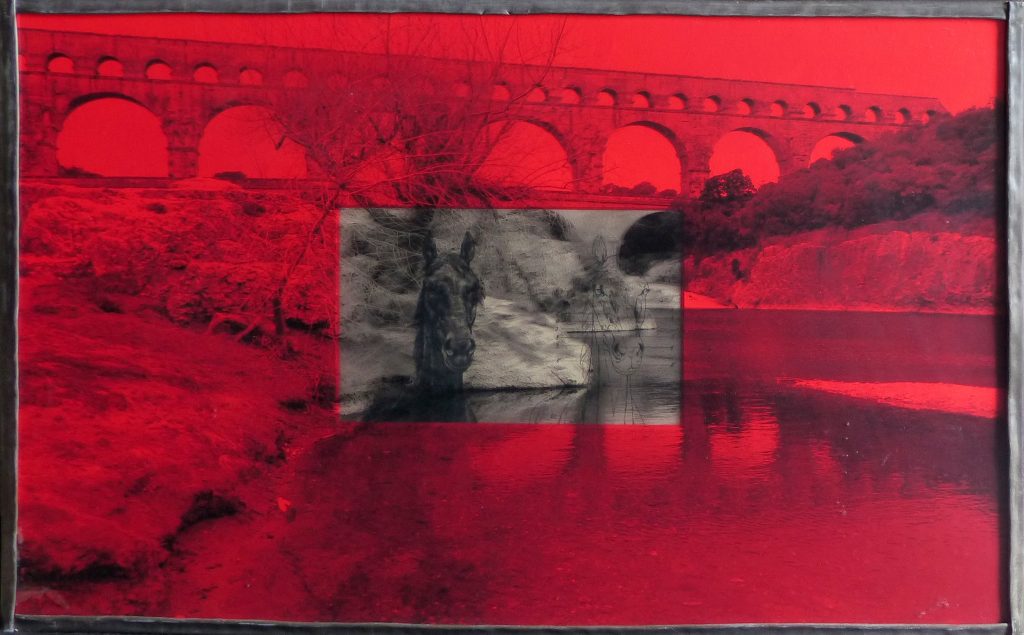
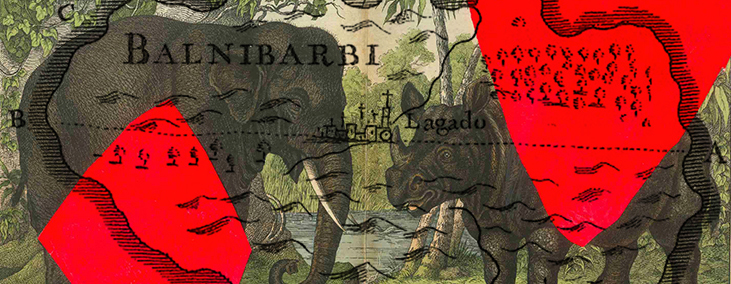
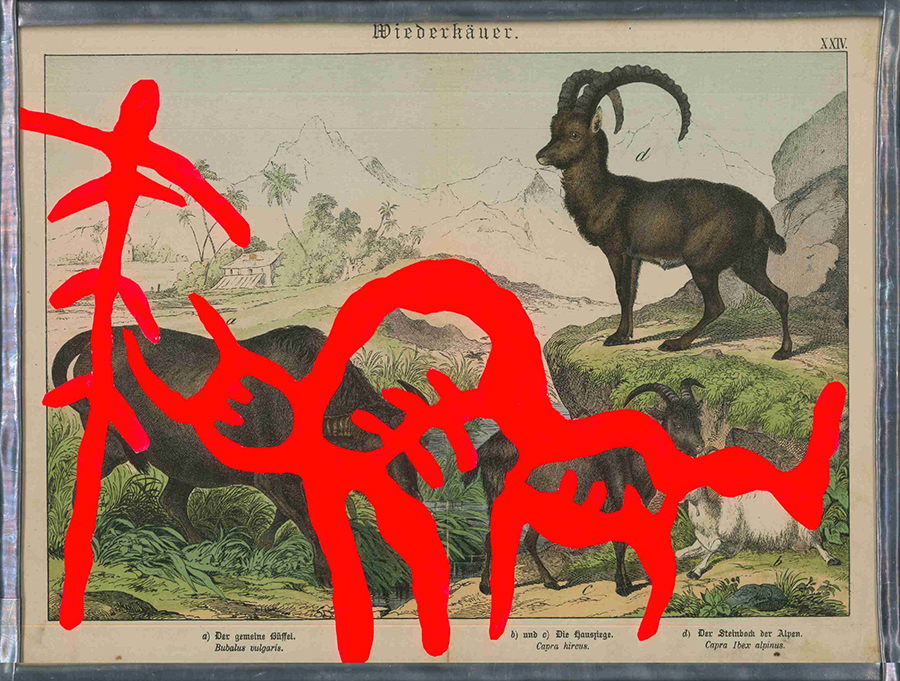
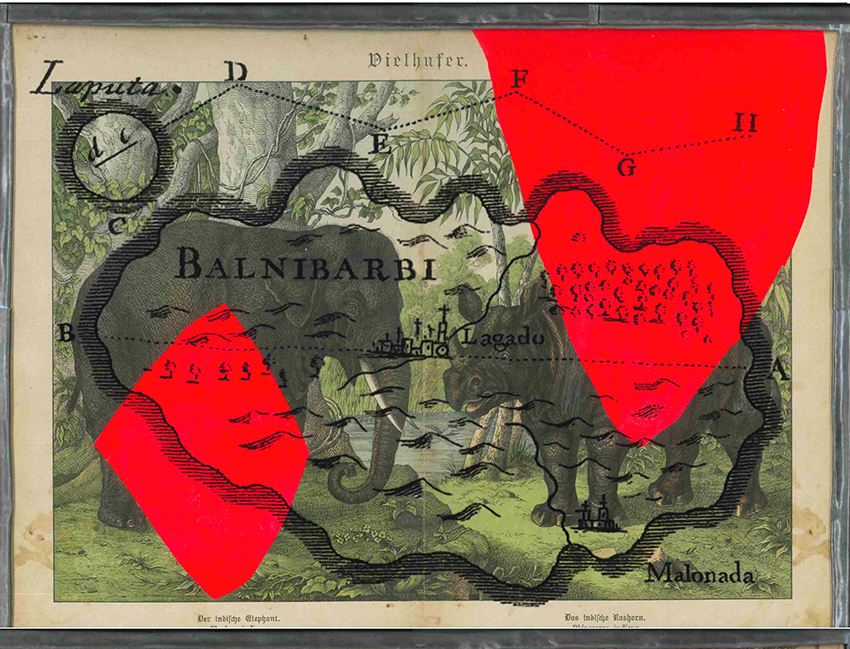
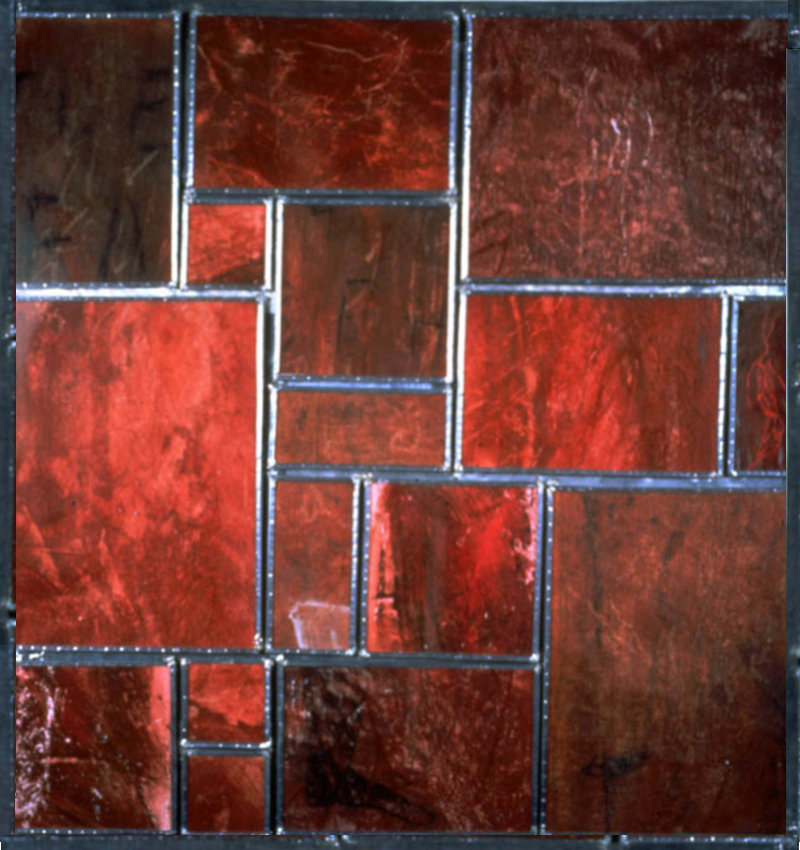
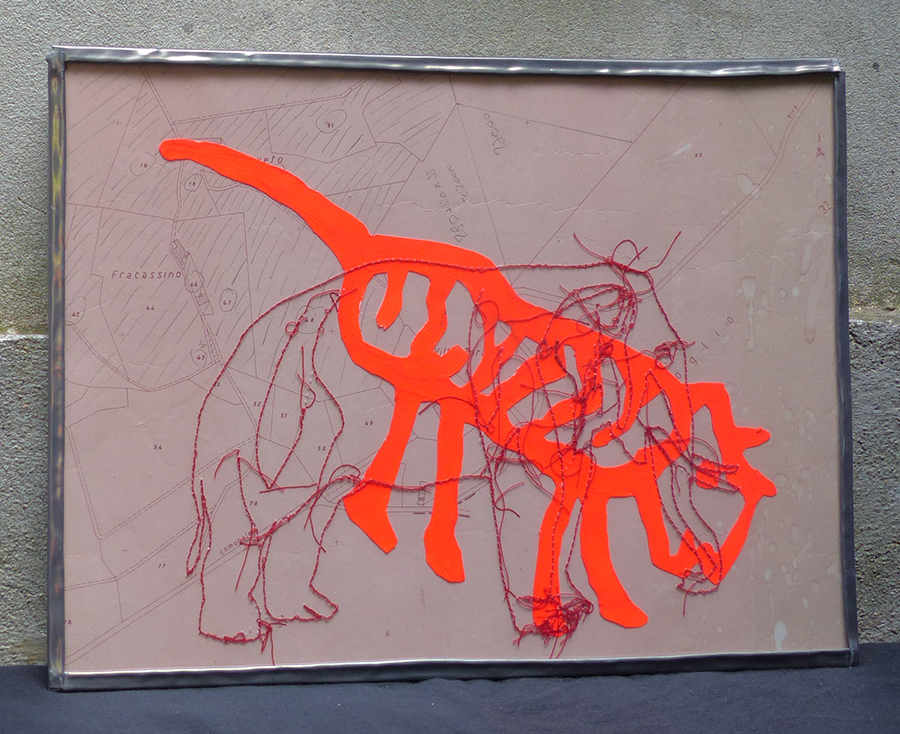
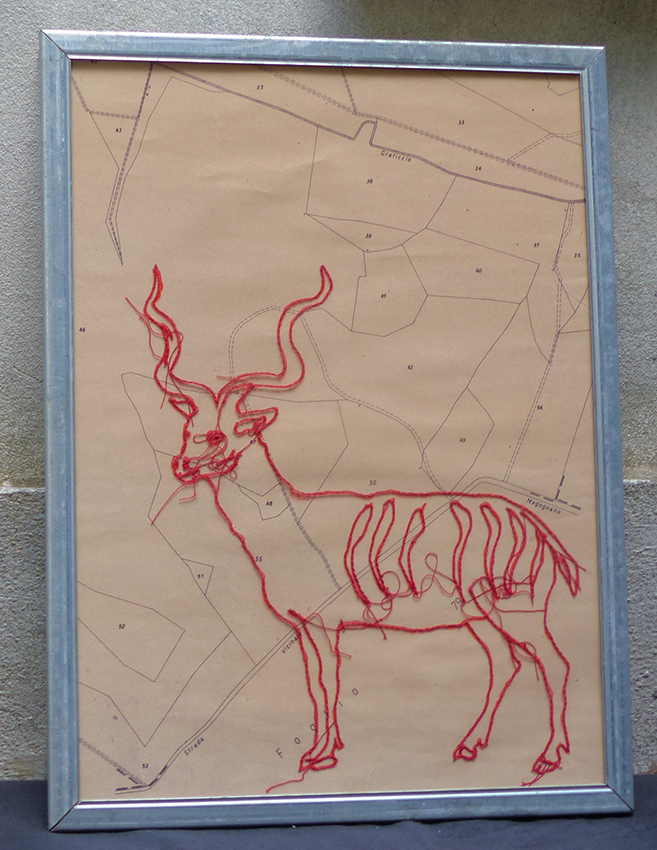
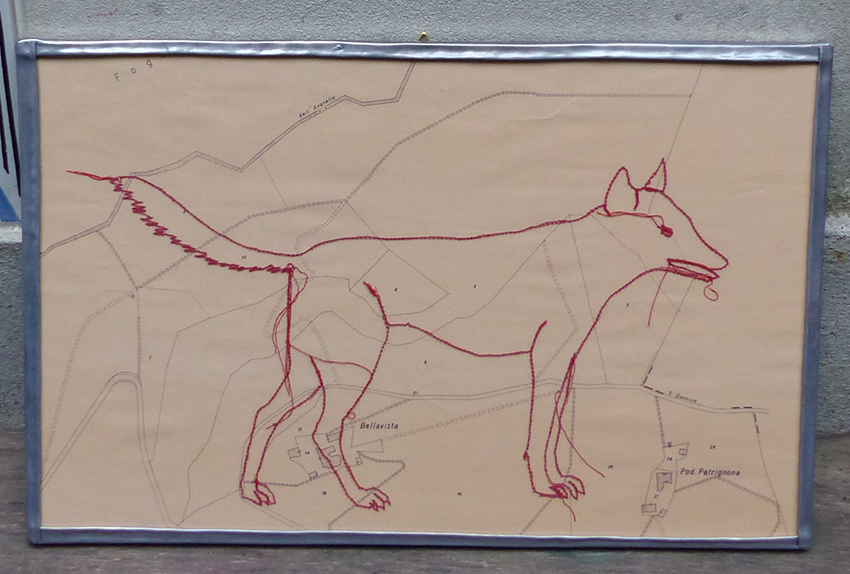
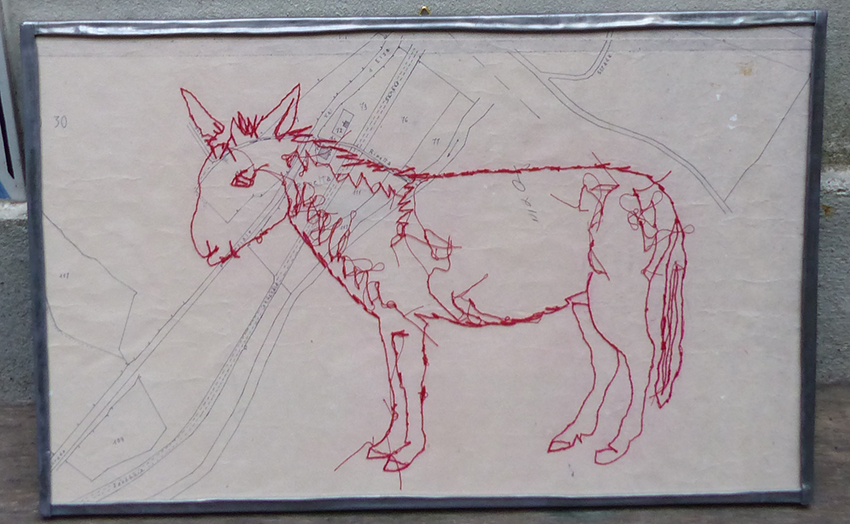
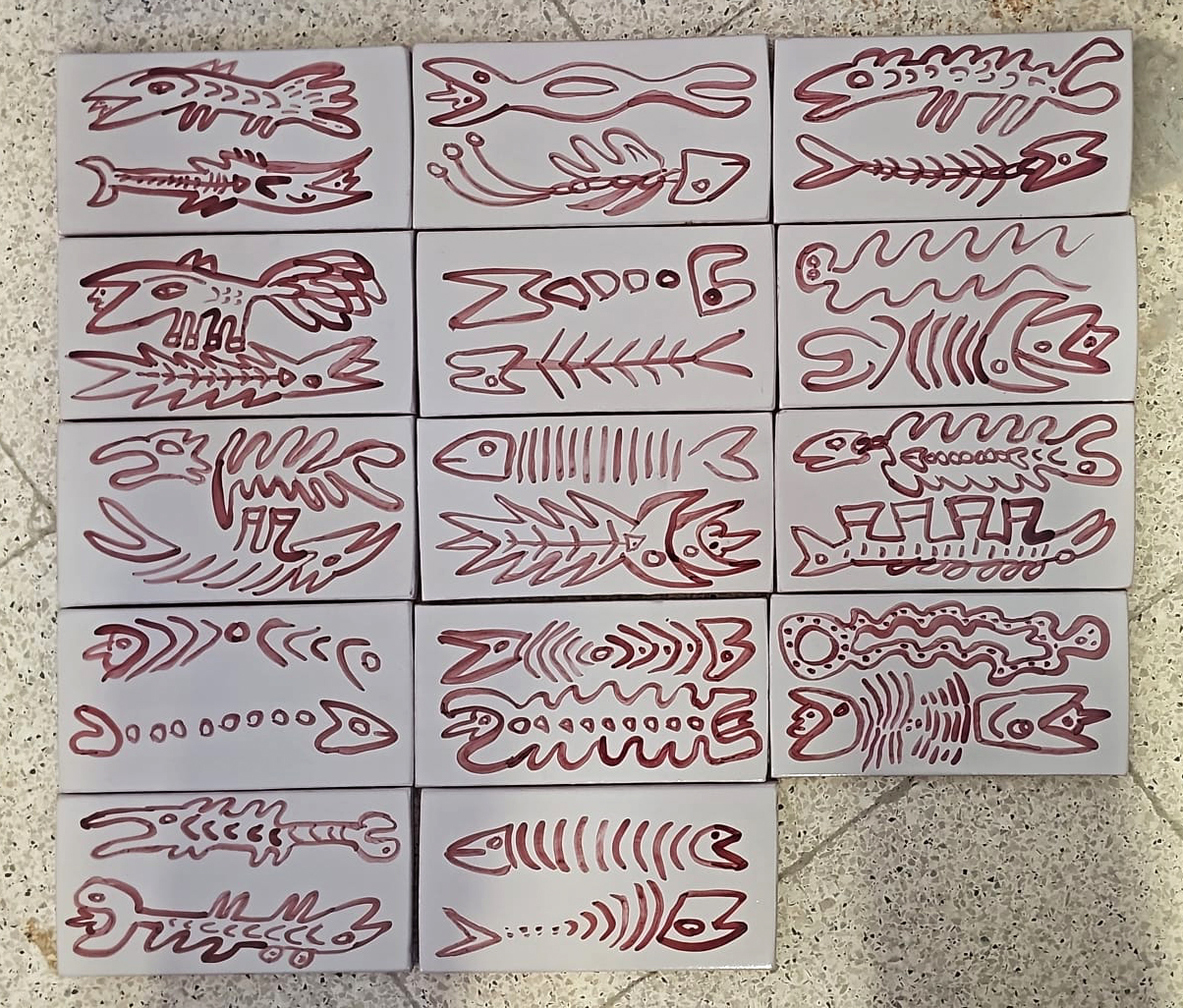
Bestiarium, ceramic tiles 2023.


.

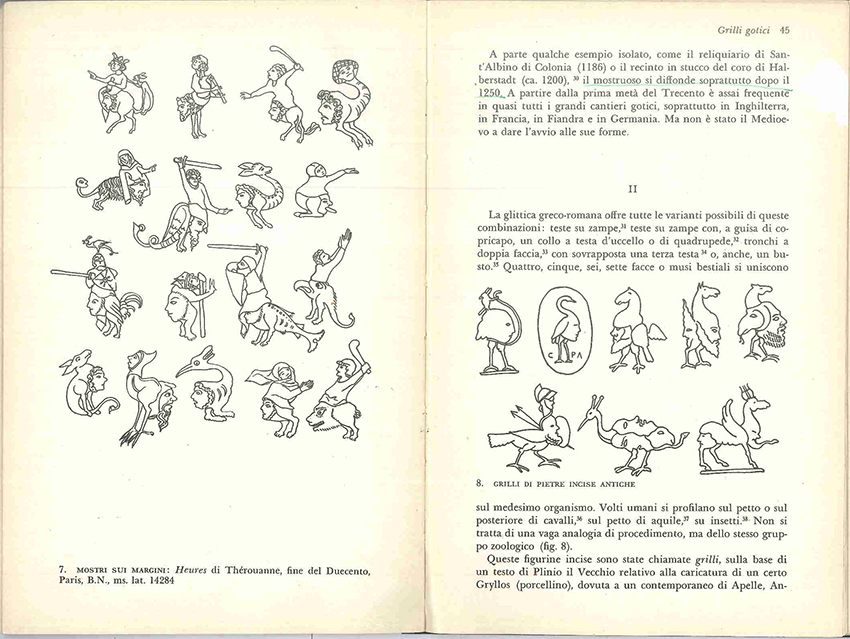
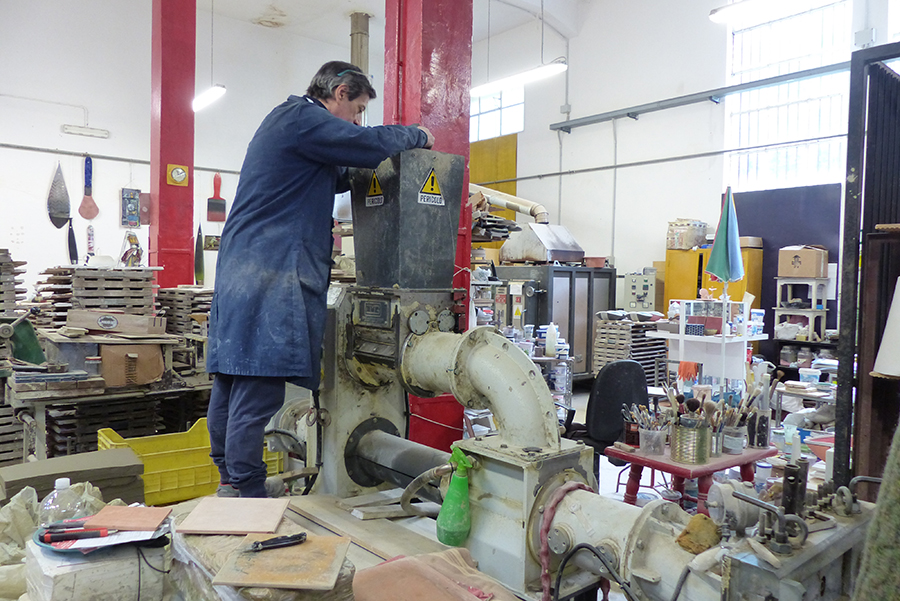
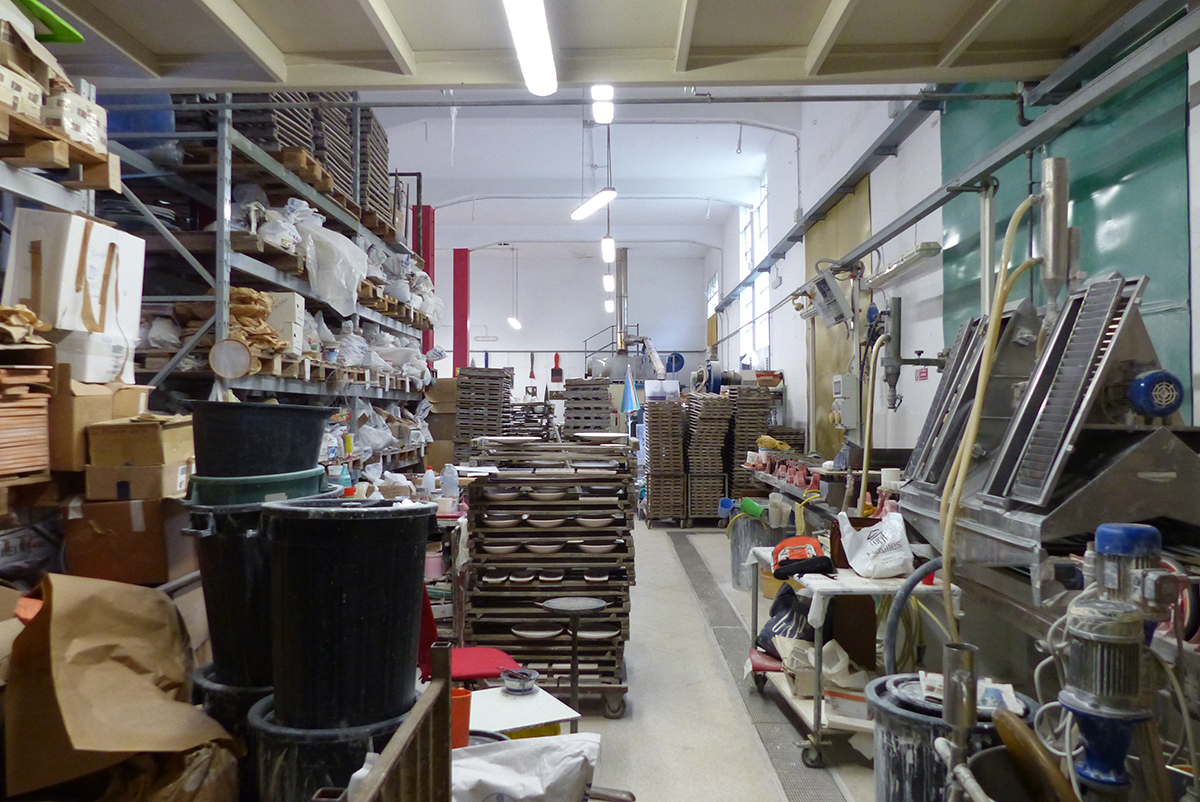
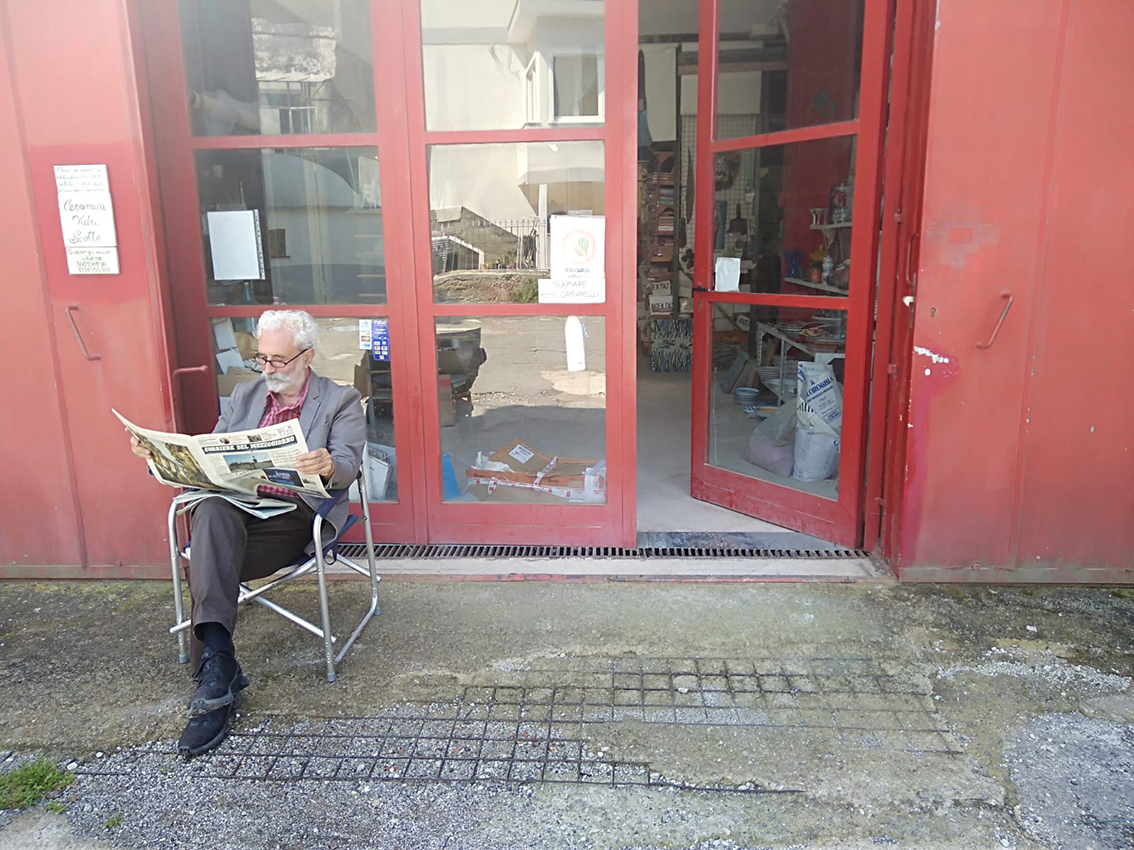
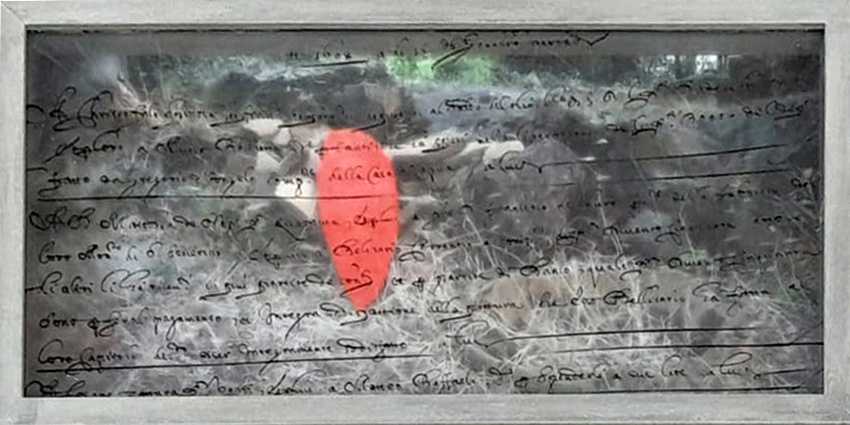
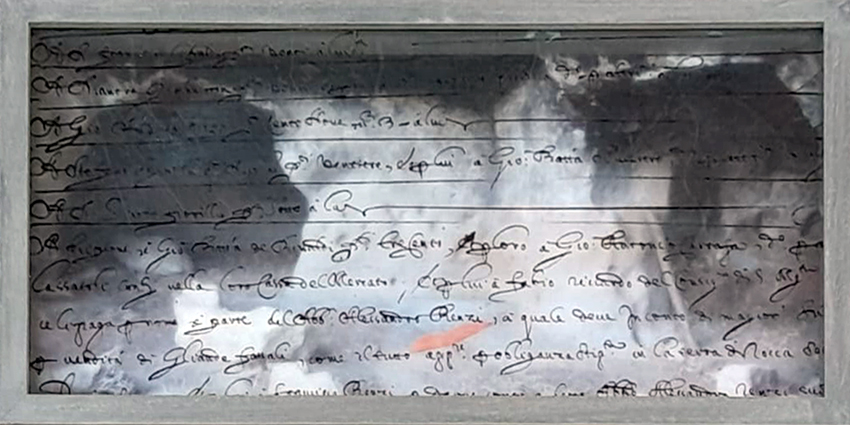
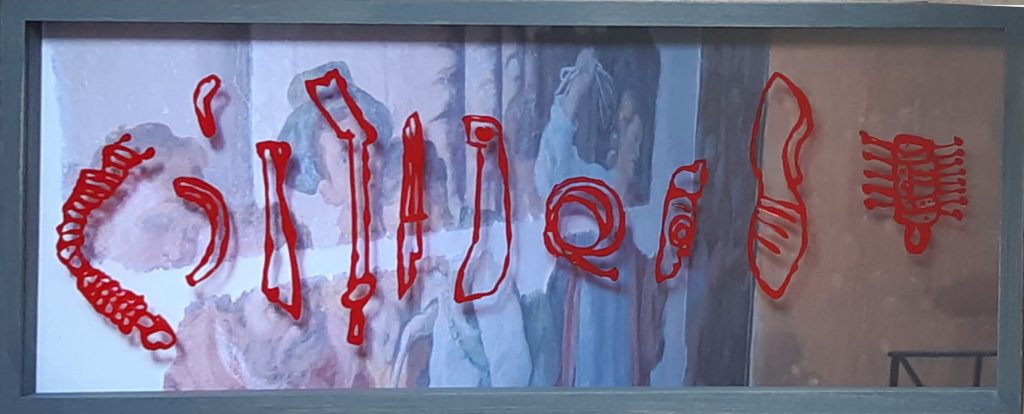
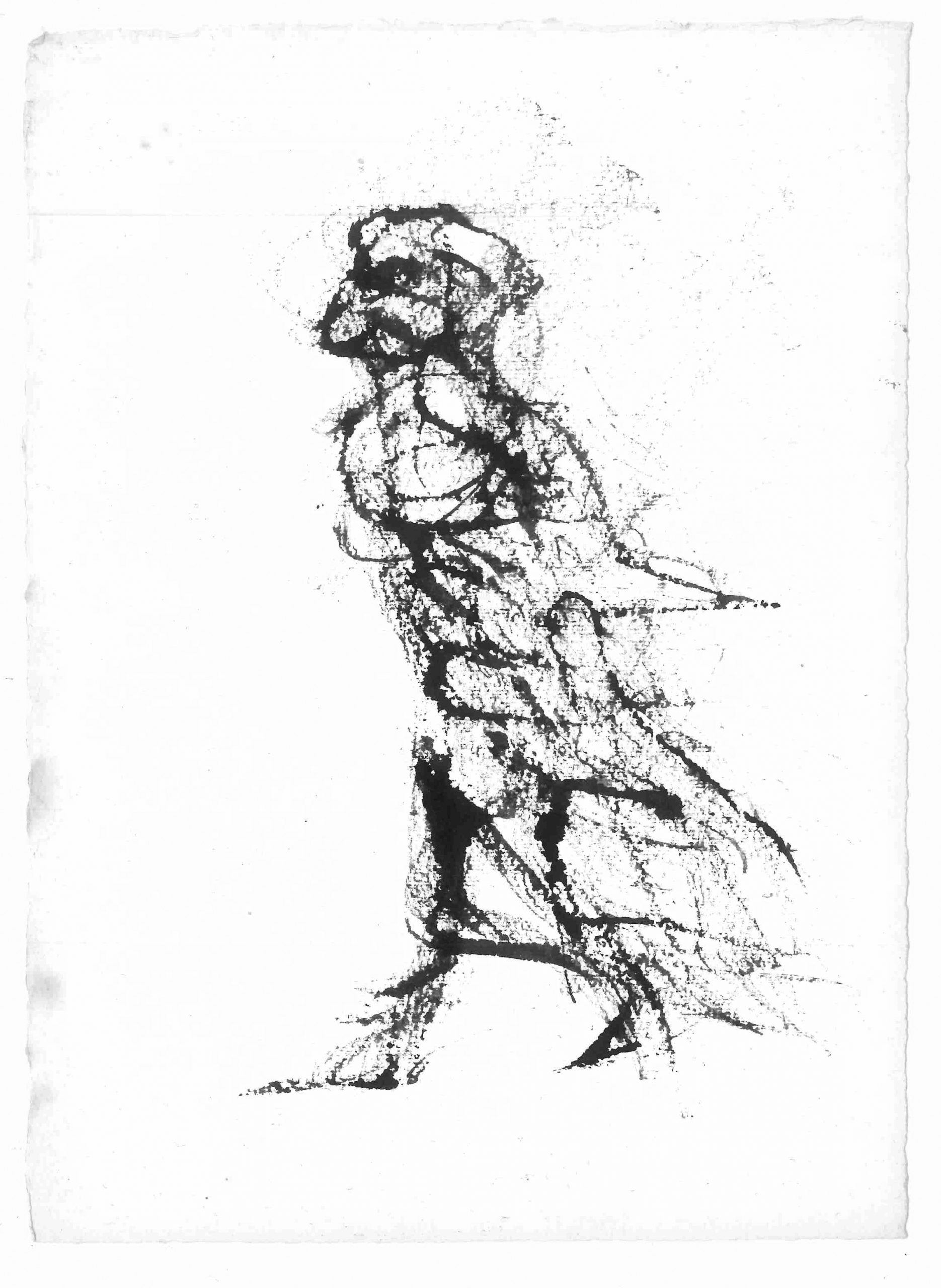
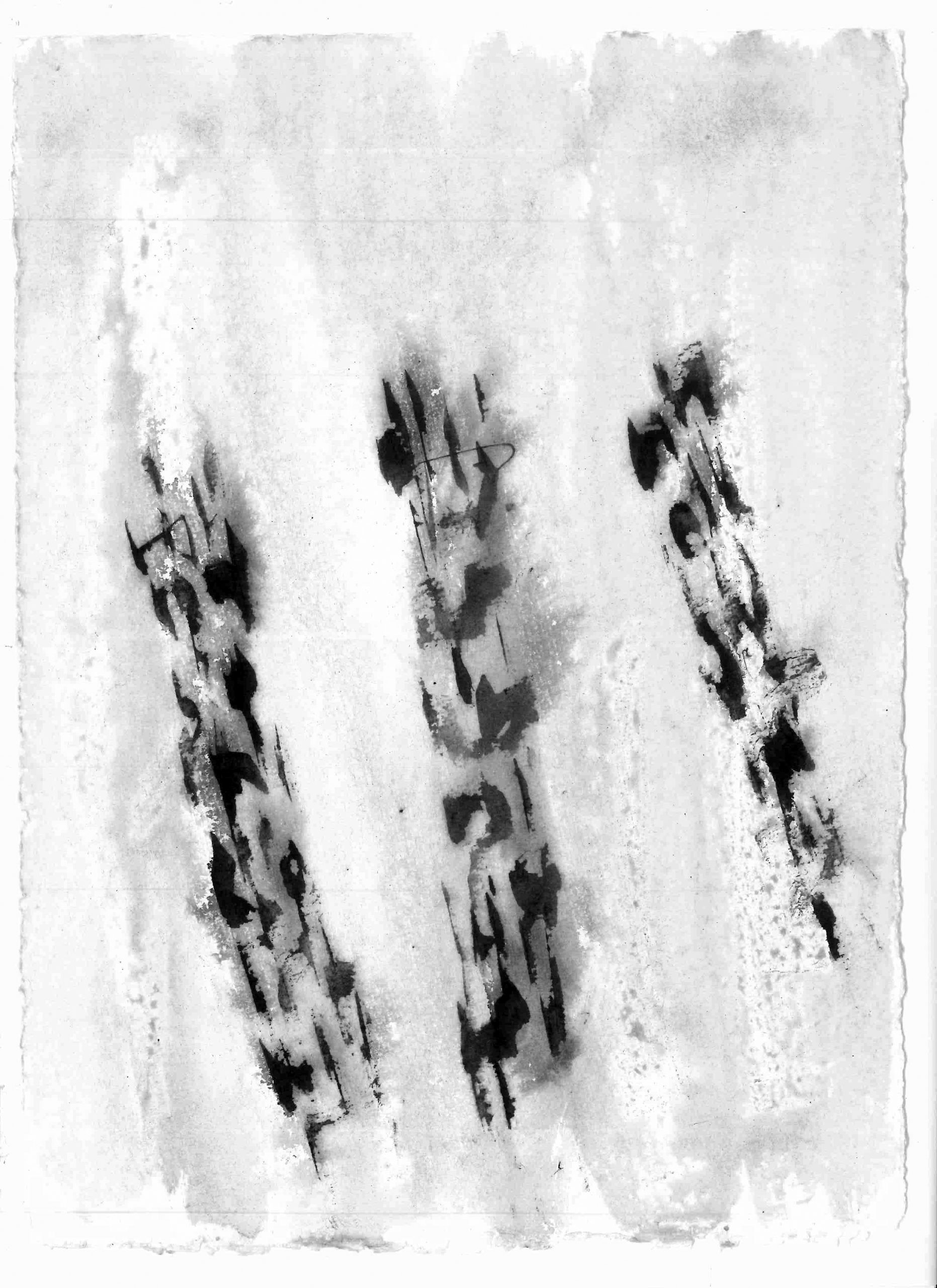
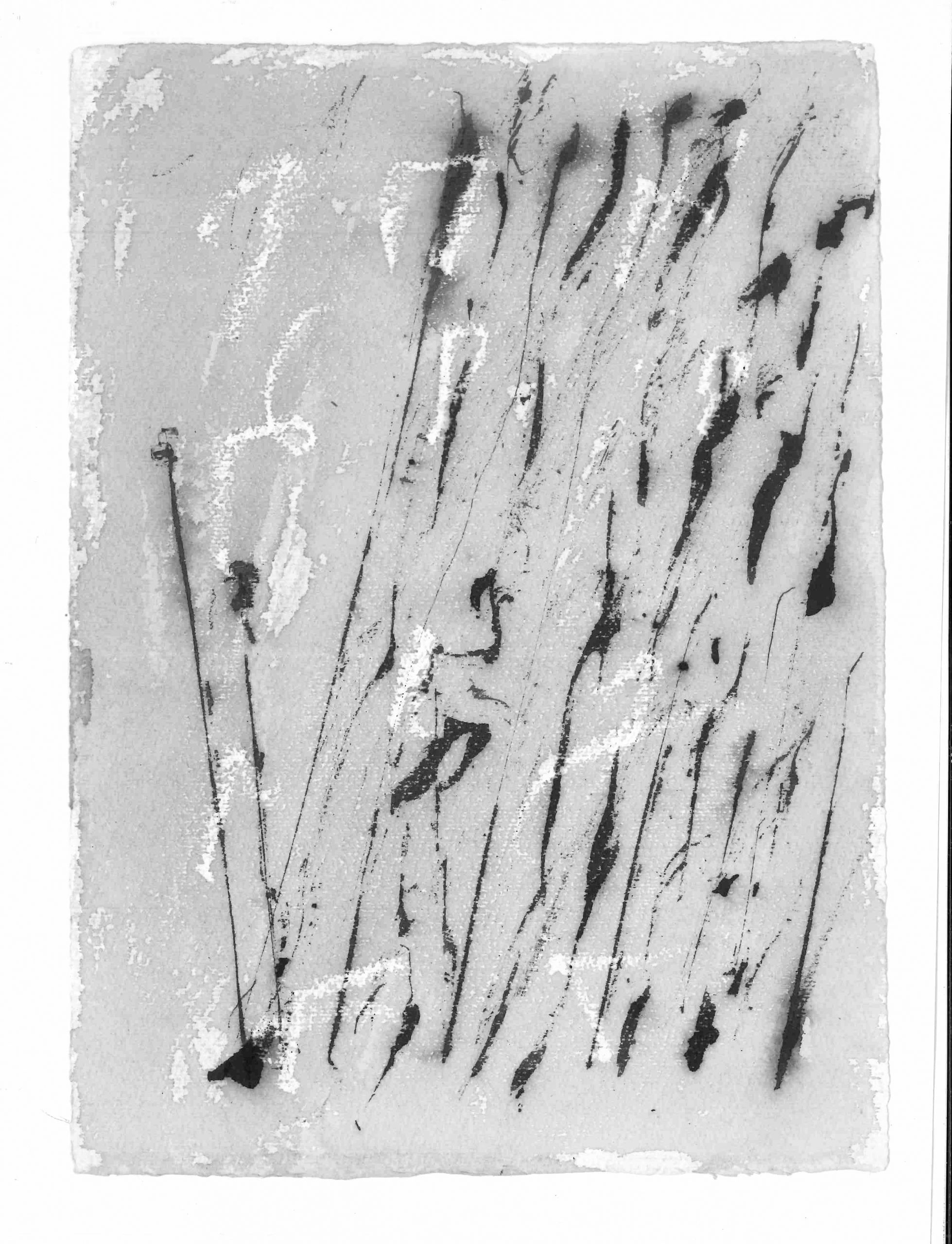
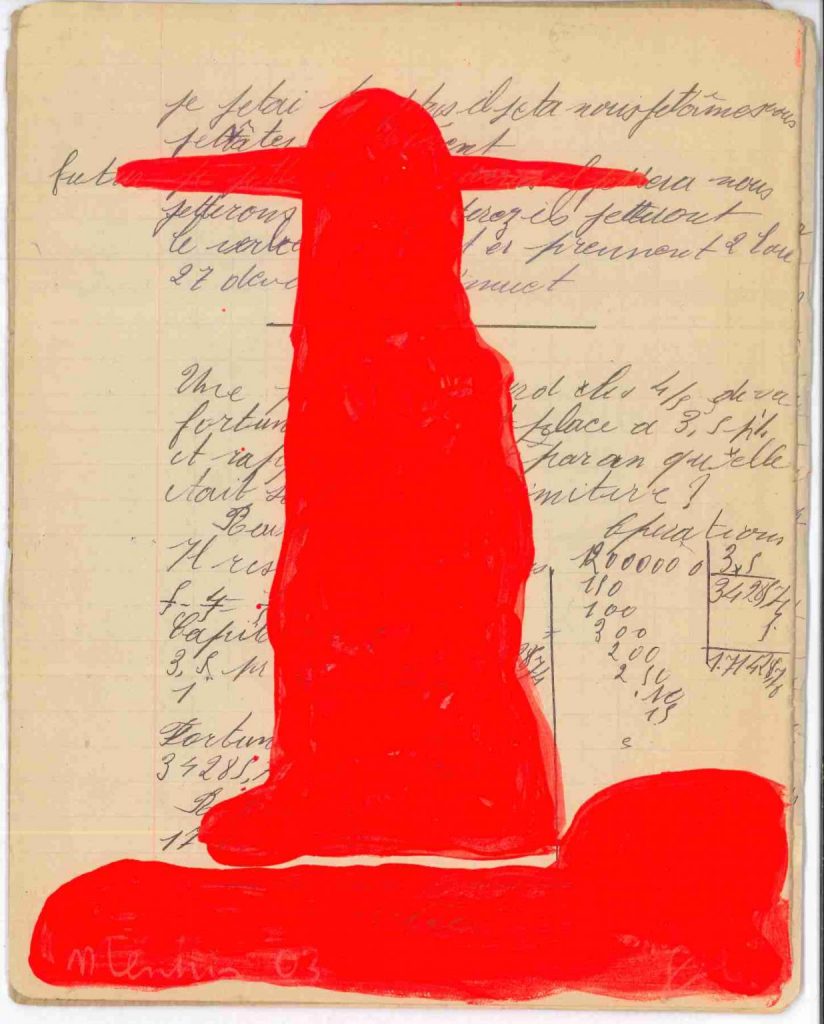
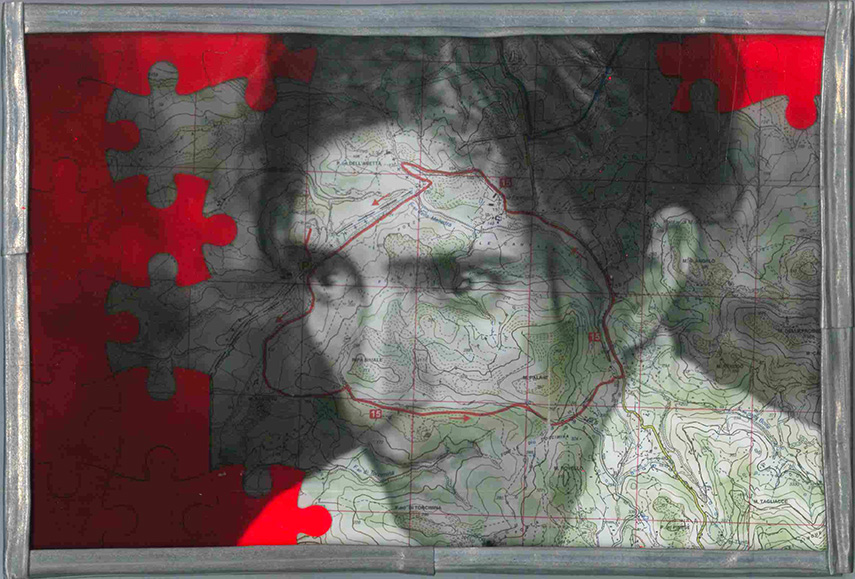
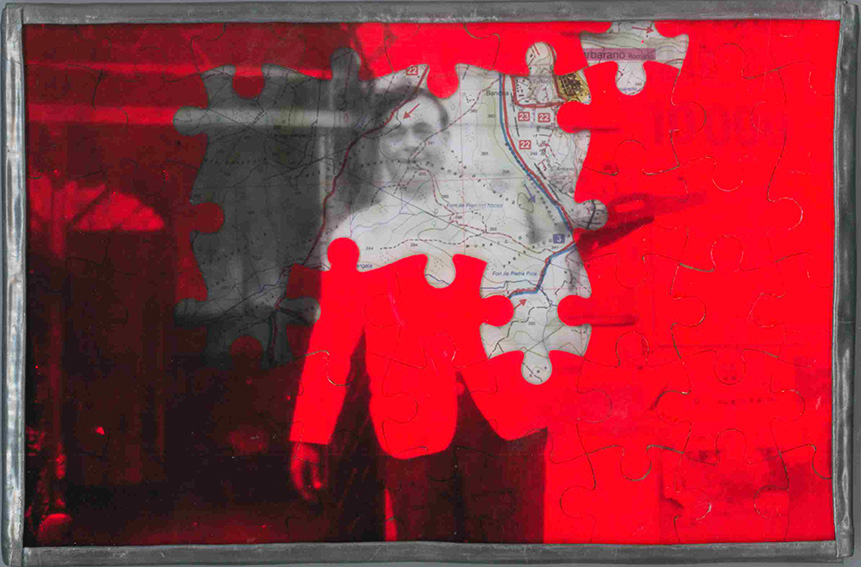
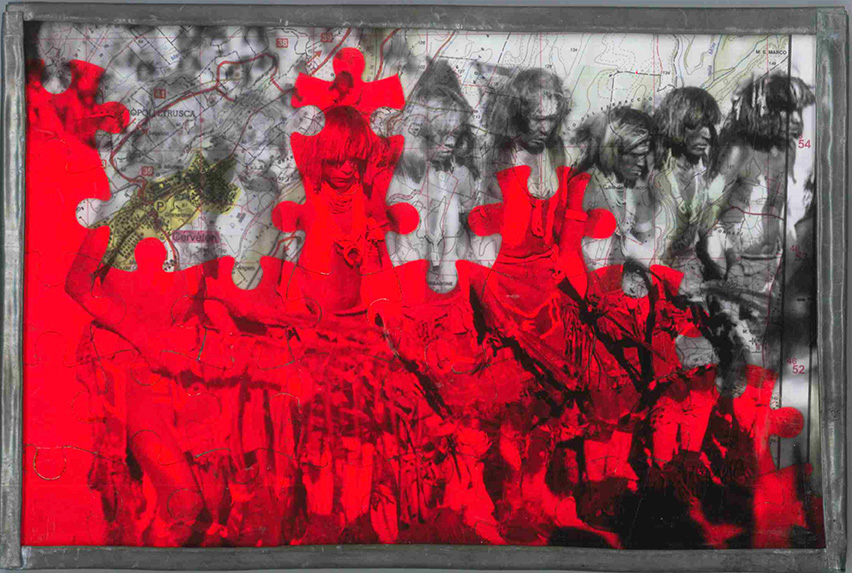
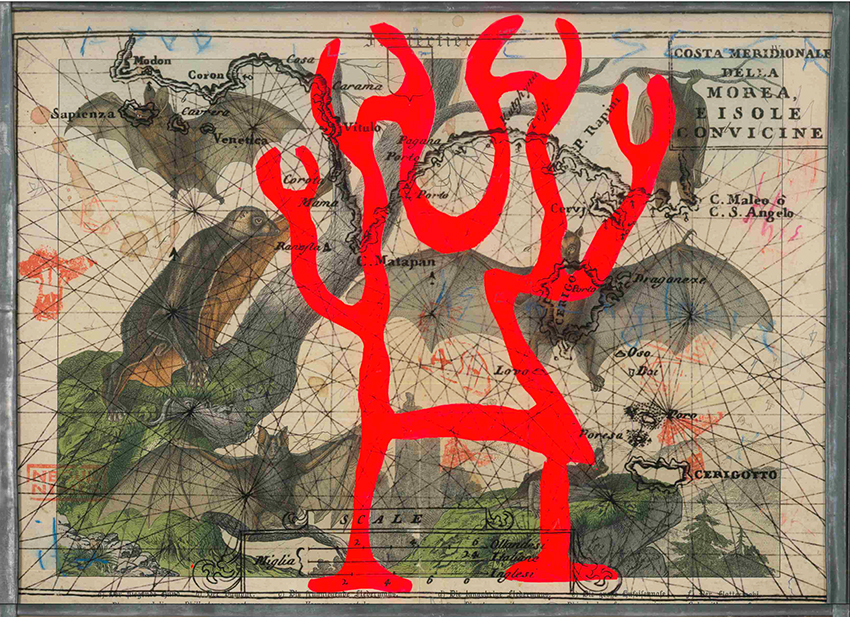
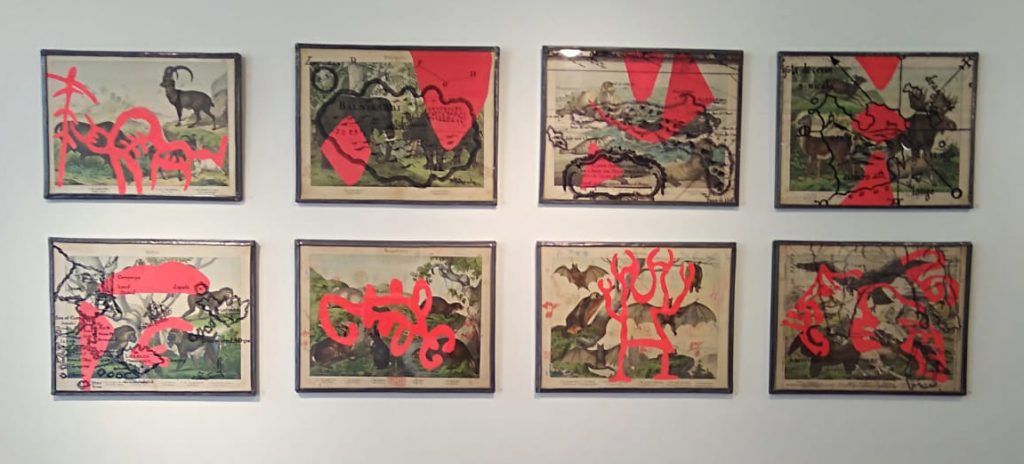
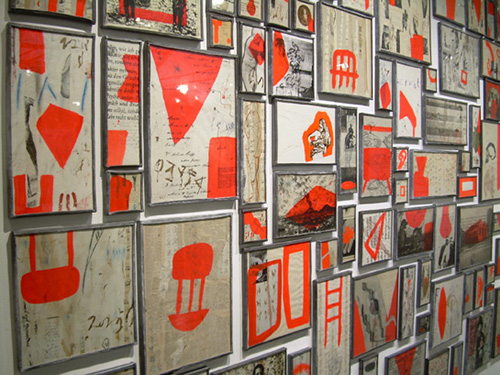
A new series of designs inspired by Southern Italian vernacular ceramics and Jurgis Baltrusaitis’ book Le Moyen Âge fantastique. They have just come out of the kiln at the Scotto factory in Vietri sul Mare.

Tiles are available in 10×20, 15×15 and 20×20 cm. Thickness 1 cm. Color: burgundy red.
Price €25 each (€30 the 20×20), shipping not included.

See also the Ceramic writings 2003-2023 summary page, and examples at the bottom of this page.

Remaing tiles, format 10×20 cm.
.

Remaing tiles, format 15×15 cm.
.
Remaing tiles, format 20×20 cm.
.


.
.
.

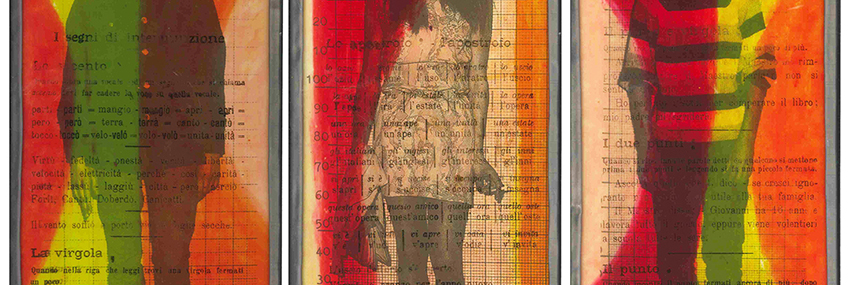
Anni Settanta, triptychs (2023).

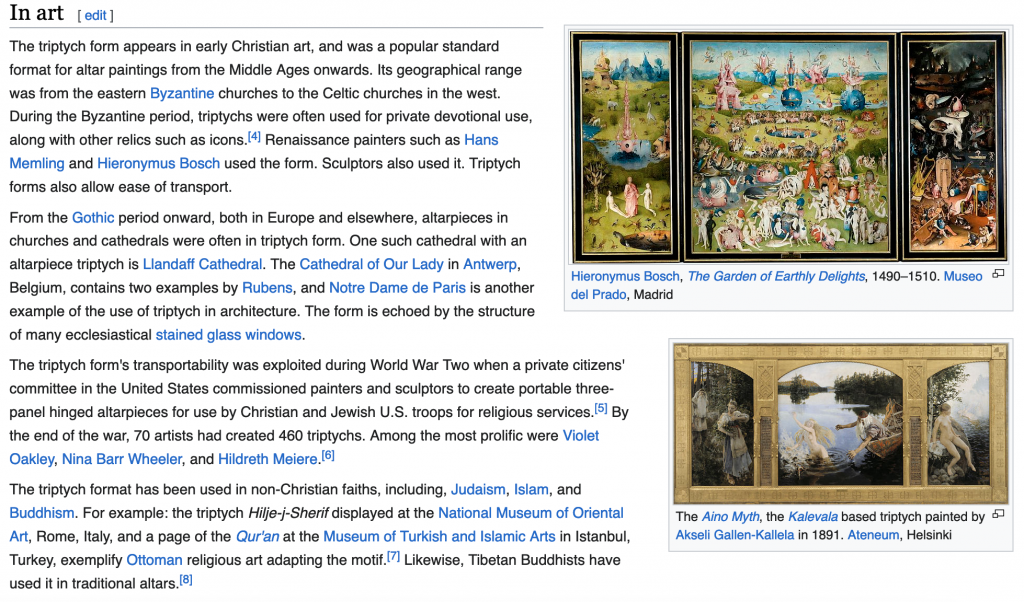
(From: https://en.wikipedia.org/wiki/Triptych)
.

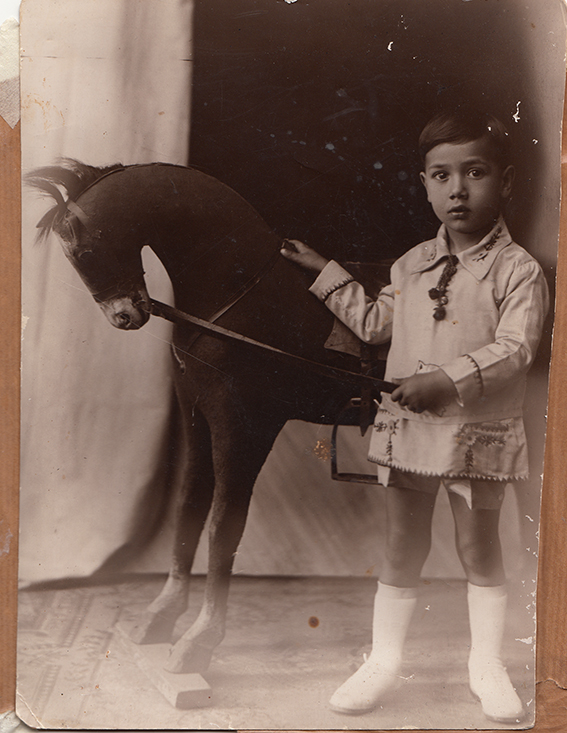
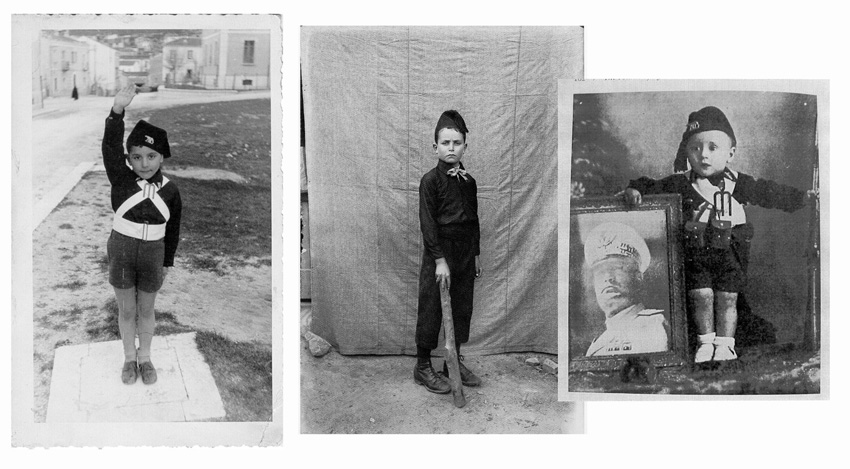
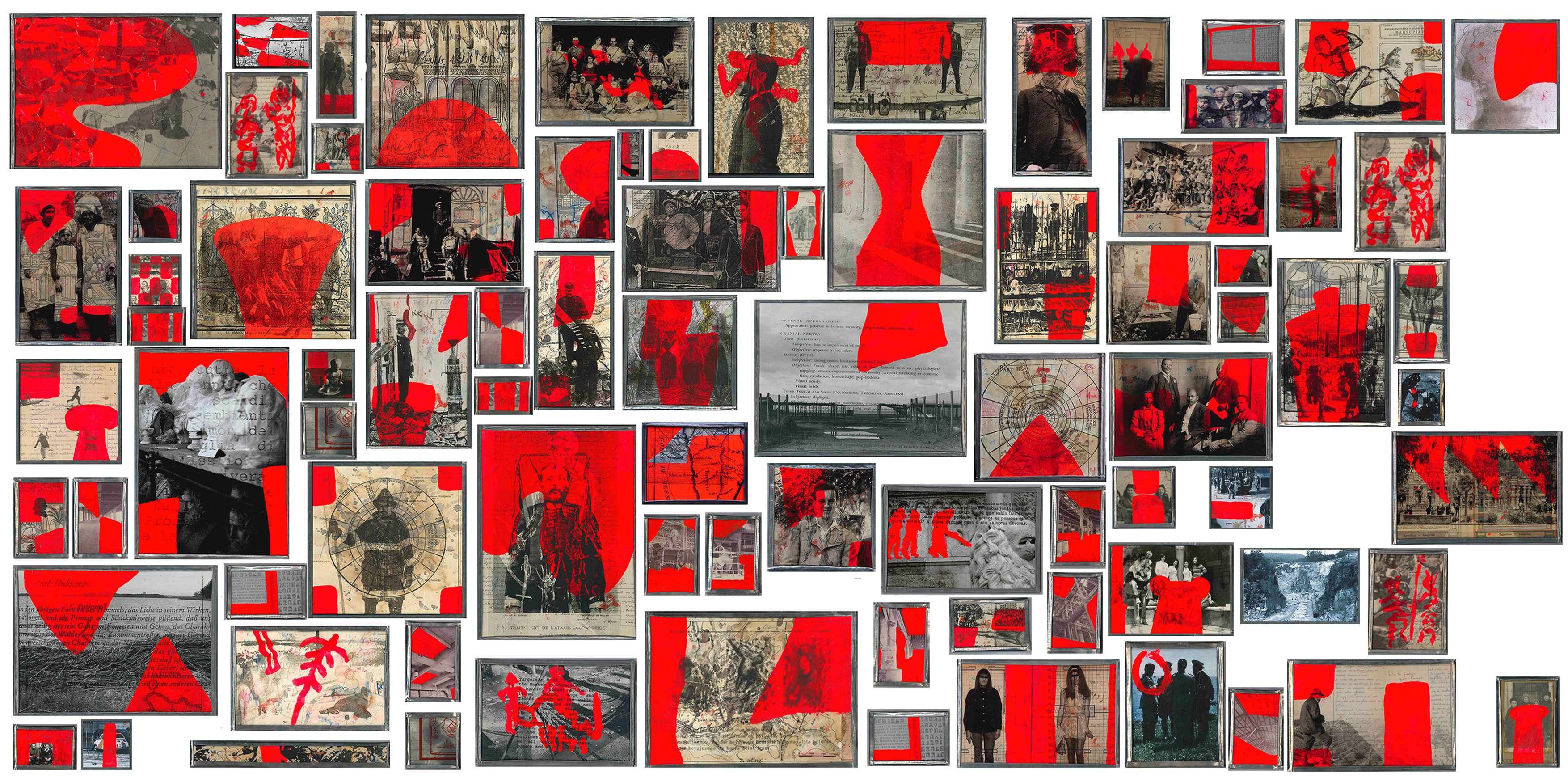
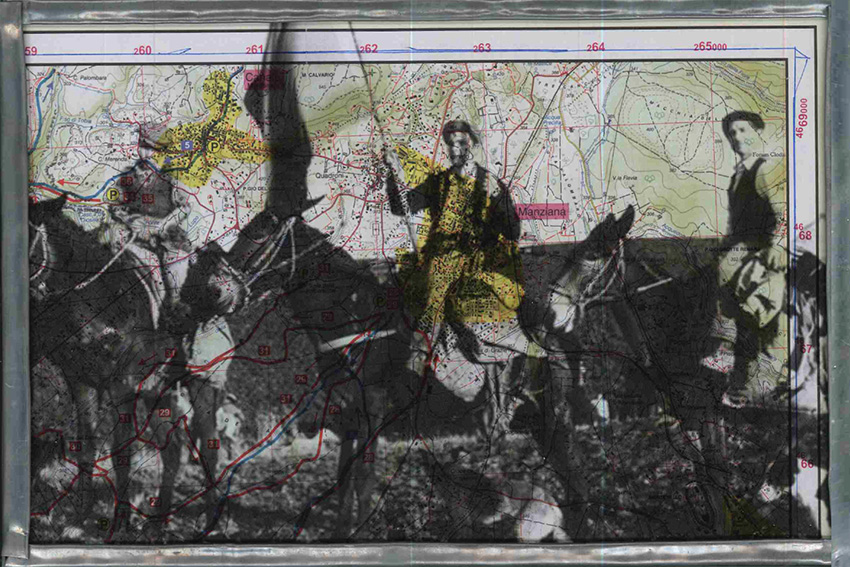
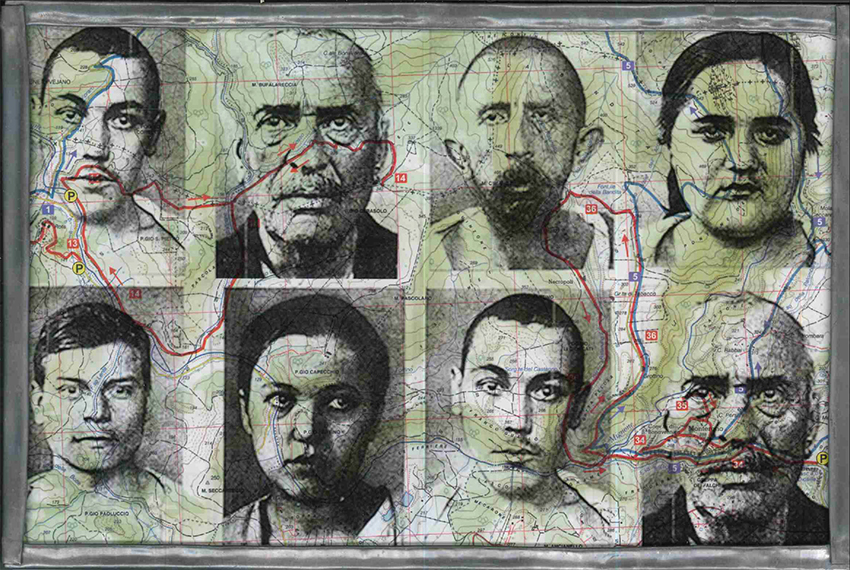
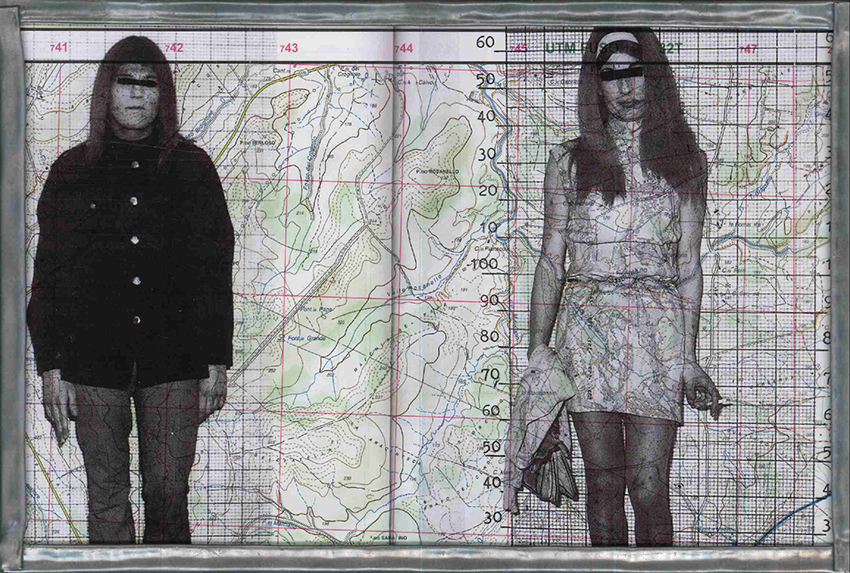
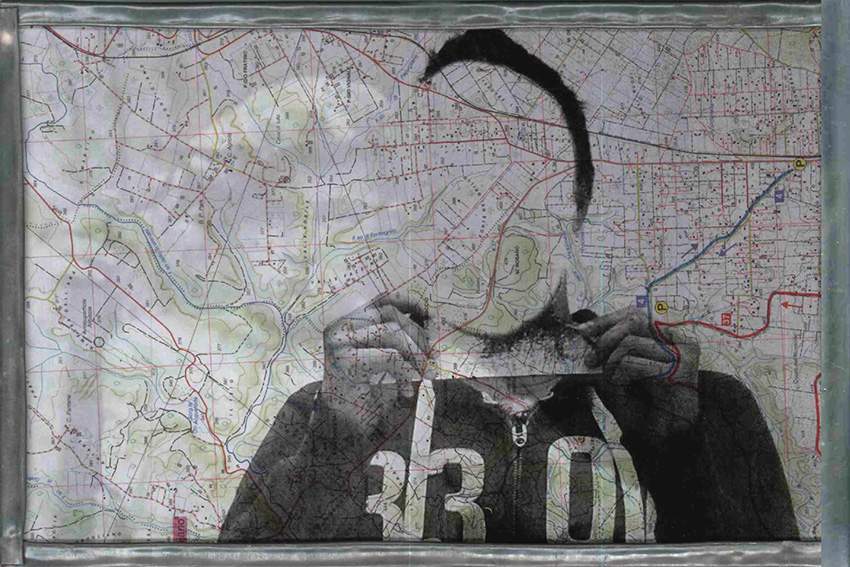
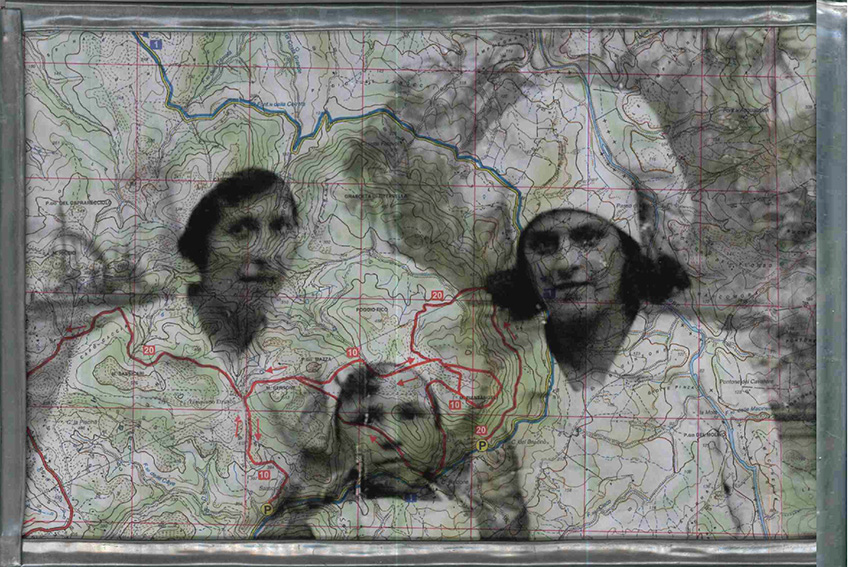
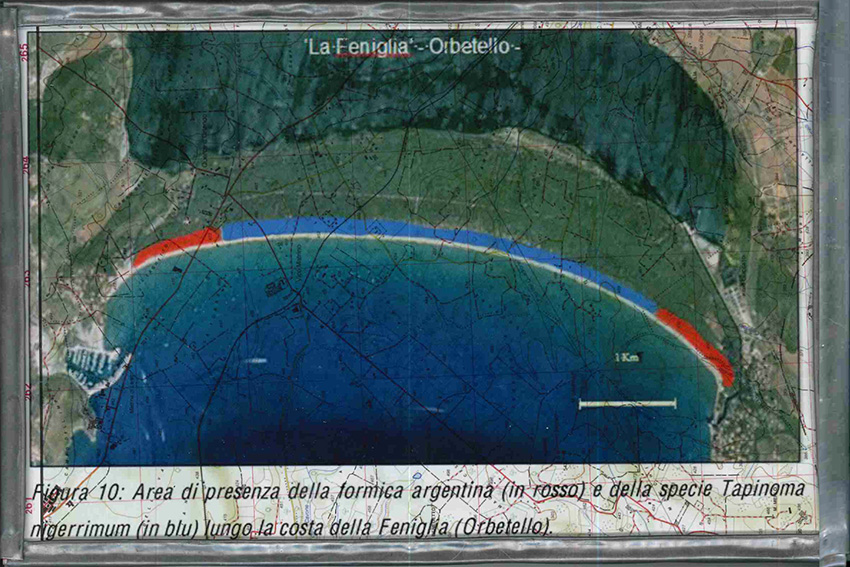
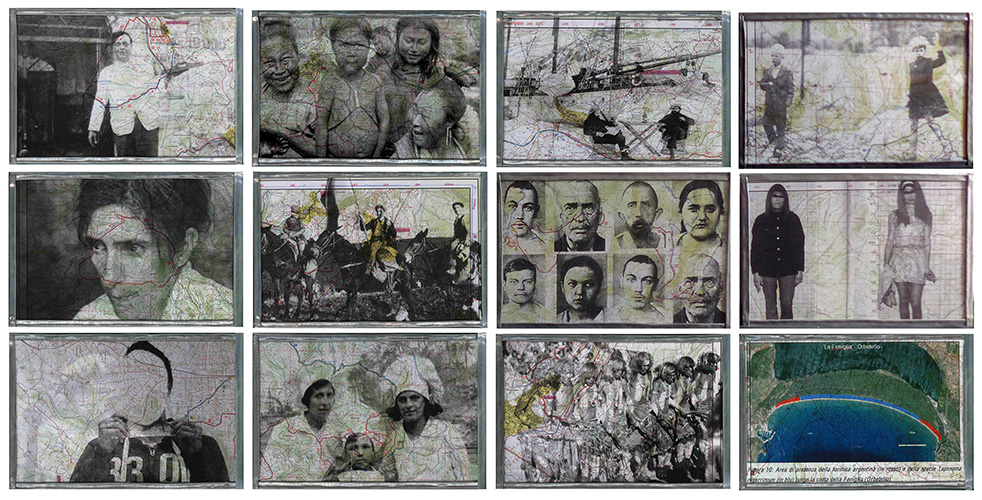
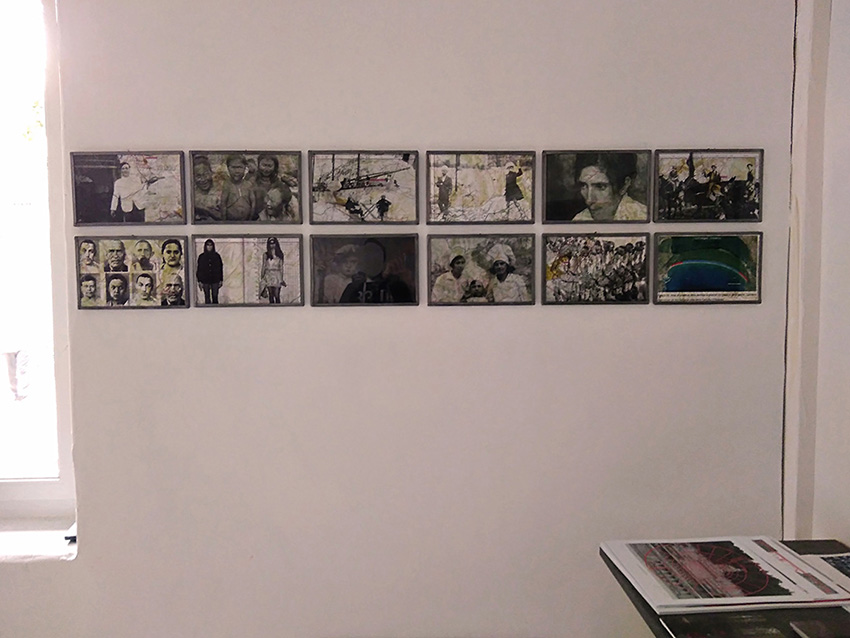
At the dawn of my seventies, I am beginning a ”historiographical” work on the 1970s, the decade of my twenties. I think it will develop in triptychs and I hope to complete three or four of them.

Wallflowers remix (Anni Settanta, uno).


La Buoncostume remix (Anni Settanta, due).


Cravos (Anni Settanta, tre).


Polytechnio (Anni Settanta, quattro).


Fenomeni morbosi svariati (Anni Settanta, cinque)


Millenovecento residui

Laralia (Dale i Sunnfjord 1999)

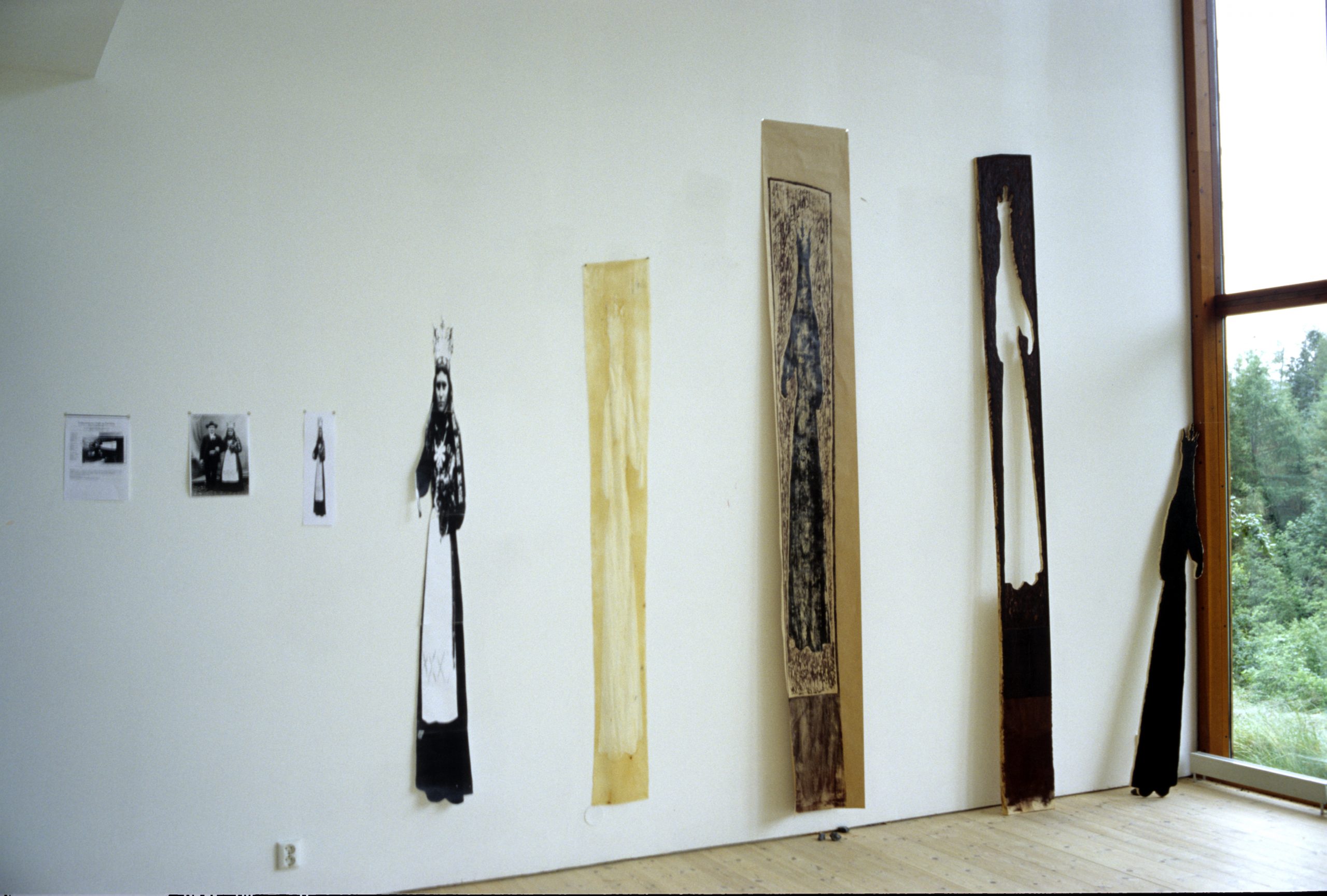
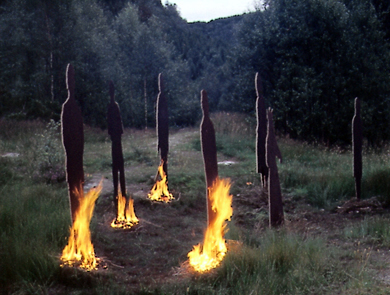
This work is entitled Laralia. The dictionary tells us that, in ancient Roman times, the Lares were the ancestors’ spirits, whose images, made out of painted wood or cast wax, were collected and worshipped in a specially designated part of the mansion called the Laralia.
These pictures were periodically displayed in processions, and then set on fire. Pliny the Elder mentions them in the section of Naturalis Historia devoted to painting (Book, XXXV, 6-7): in his criticism of modern art then in vogue, he underlines the moral value of these portraits, which served not only to commemorate the deceased, but also to accompany the living, so that “when somebody died, the entire assembly of his departed relatives was also present”.
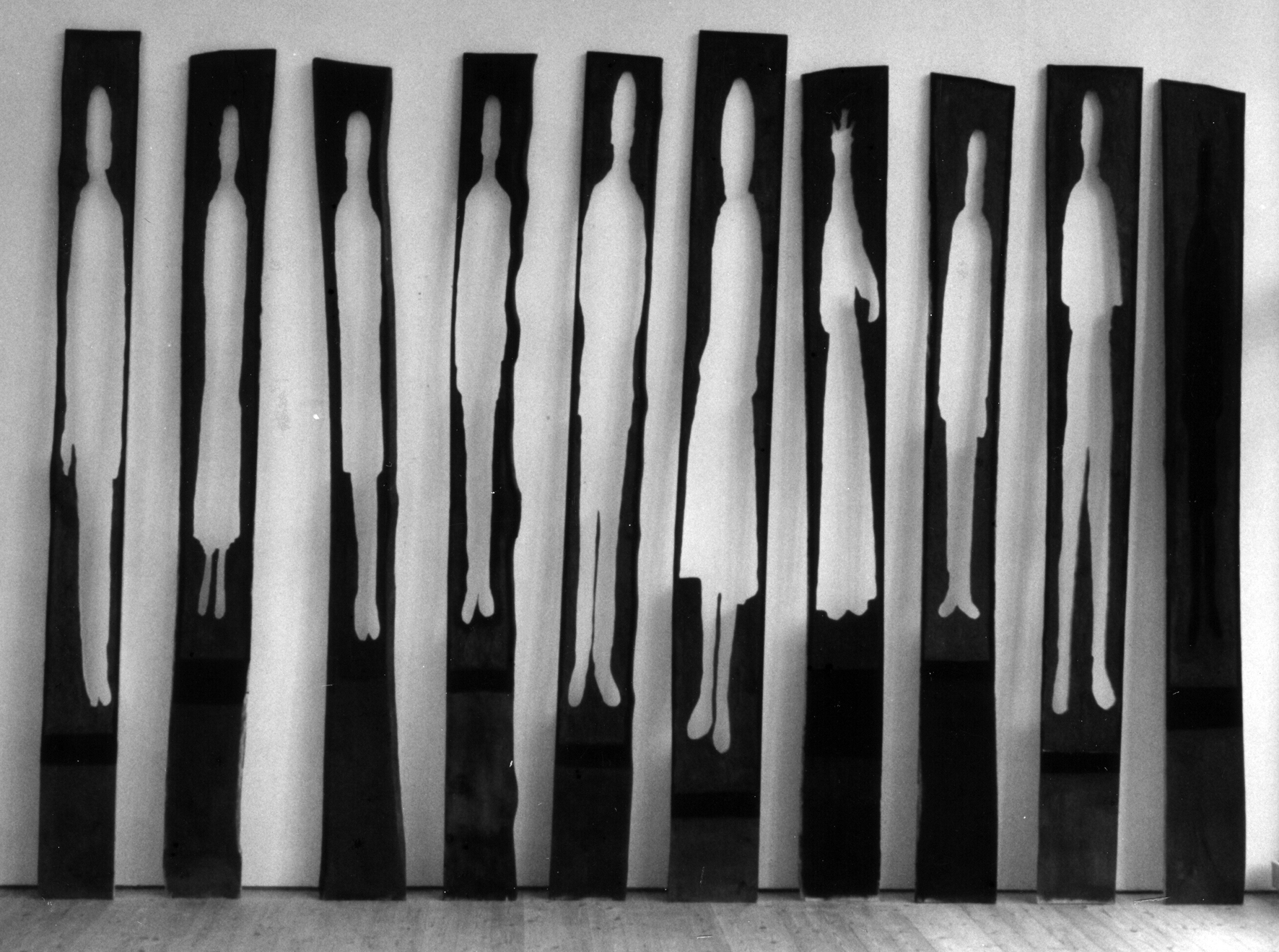
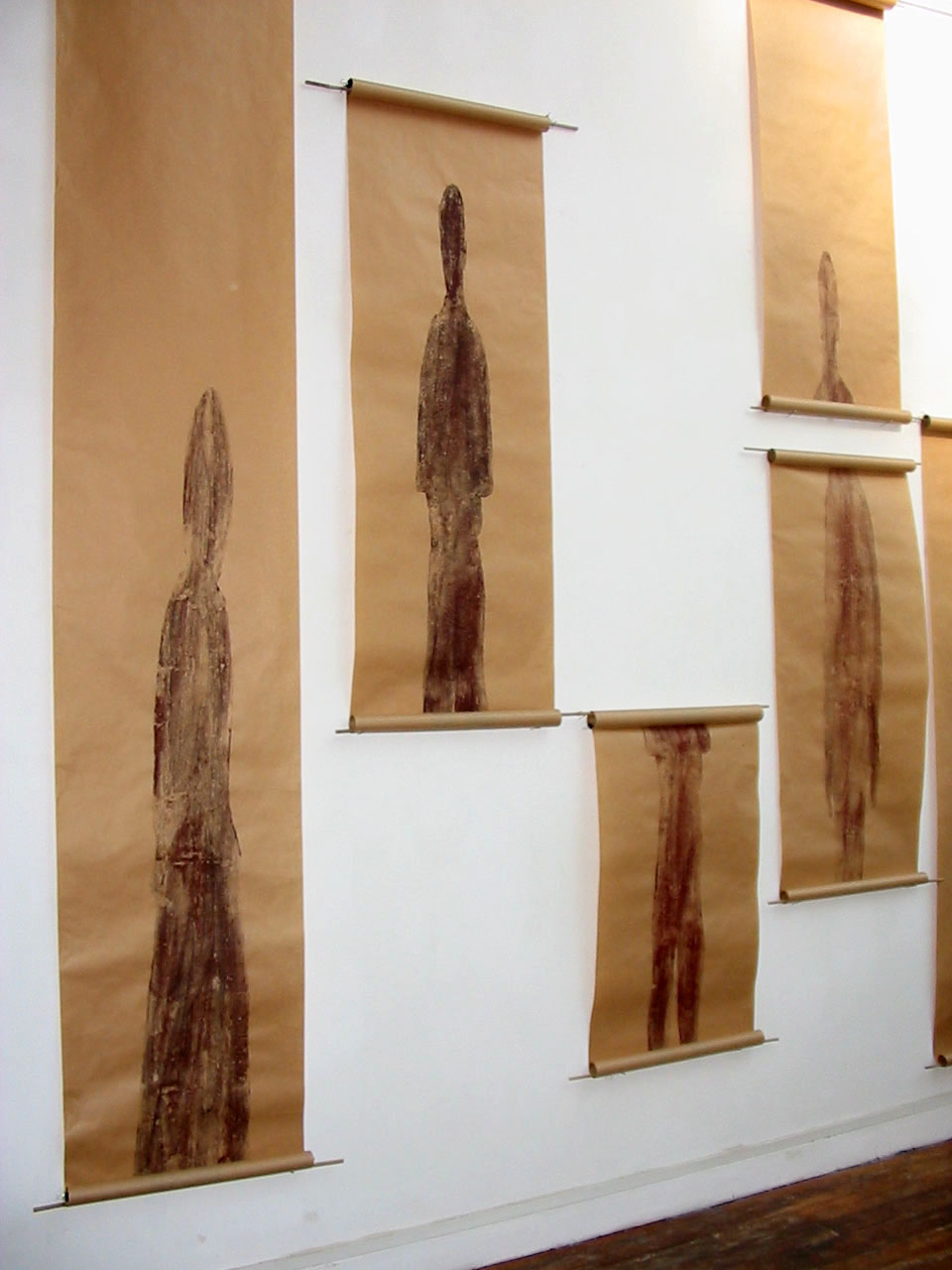
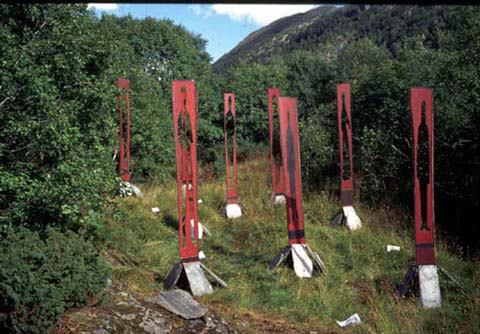
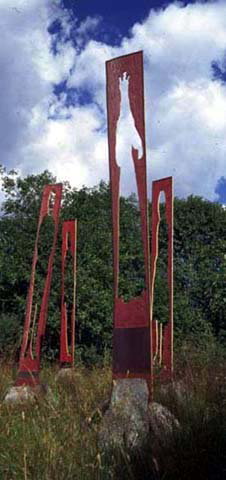
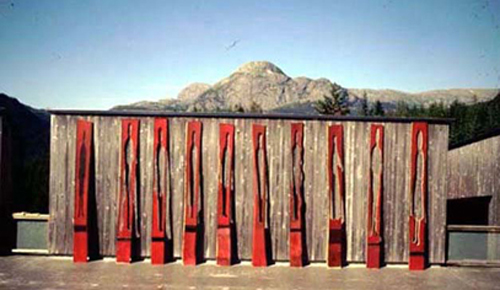
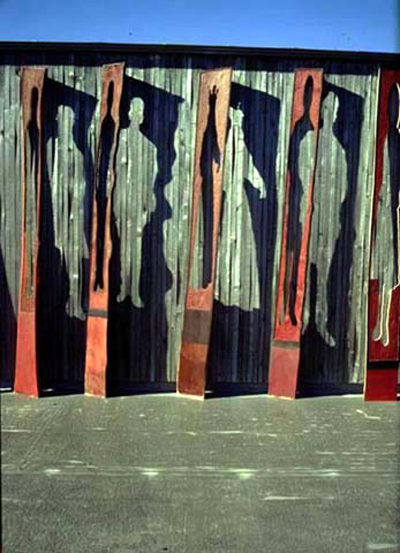
Ten pictures of local people, chosen at random among the ones conserved at the Fjaler Folkbibliotek, have undergone a multi-staged process of transformation: first, they are deformed in order to reveal their Anamorphosis, reminiscent of the long evening shadows; then, they are enlarged to life size; finally, their silhouettes are traced and cut out on boards of pine wood.

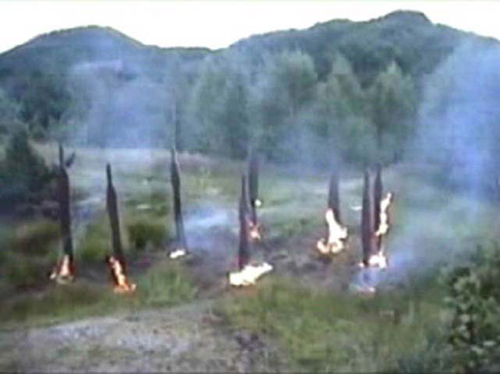
These black silhouettes were placed atop Dalsåsen Hill and then set on fire, in a brief ceremony.
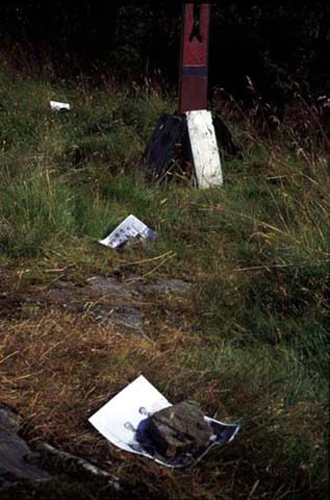
On the other end, the three-meter high plates, from which the silhouettes had been carved out, were erected in the Øvstestølen Plateau, above Dale, in a spot visible from the Jøtelshaugen Peak. Painted in oxide red, these steles turn their backs to the west, so that, at the end of the day, around mid-August, the shadow of each top touches a stone, under which the original picture of the corresponding individual has been placed.
This work is mobile. During the day, in sunlight, the shadows on the ground change shape, cross each other and are, for a fleeting moment, similar to the original picture.
The instantaneous freezing of the photographic image documents a unique state of a person and is meant to be recognisable by the person’s relatives and the collective memory. In Laralia this image is subjected to multiple reproductions, which progressively distance the subject from its departure point.
The final stage of this process – the woodcut – is the opposite of the photographic image, in terms of the time and energy required for its execution; the slowness can be seen as a less tyrannical and intense way of recording the image.
The ten pictures, transformed into steles whose commemorative function is only vaguely related to the individuals they portray, will surrender to the action of time and nature, which will further modify them and ultimately lead to their decay.

This work is not intended to be a mere celebration of local history. Instead, it is an attempt to finding a sign or a “monogram”, of vanished individualities that could possibly remain after a progressive flattening of the recorded images. Perhaps this process mirrors the functioning of our memory, with its arbitrary choices, gaps and repetitions and constitutes an attempt to navigate between the opposing poles of amnesia and hypermnesia, forgetfulness and obsession.

laralia-01

laralia-02

laralia-032

laralia-04

laralia-05


(A short movie by Knut Nikolai Bergstrom, 3’32”)

laralia-06


Note: for a journal of this installation, see Diario Boreale, interrotto. And, also in Italian, a transcribed notebook: Taccuini scandinavi 1999-2000.


Travaux d’intérêt local (gardois)

de 2023 à 2017

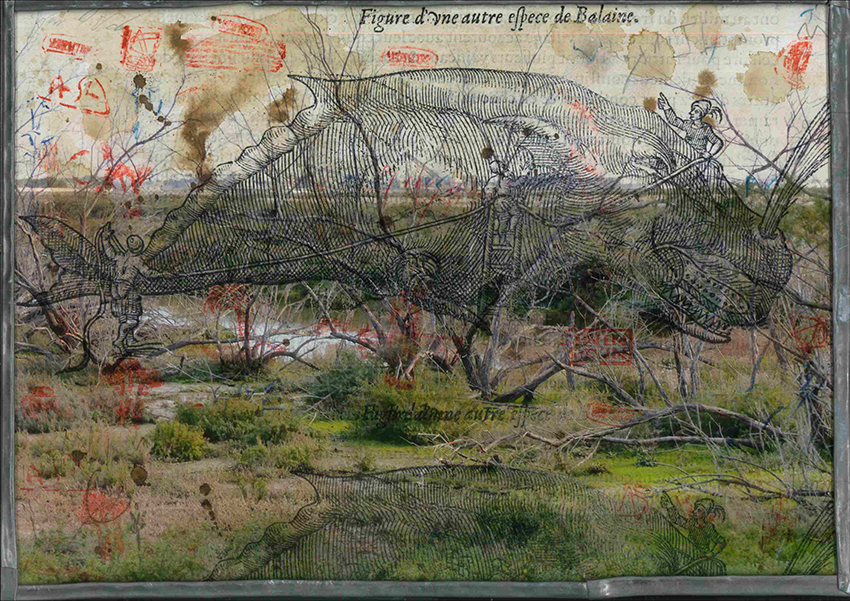
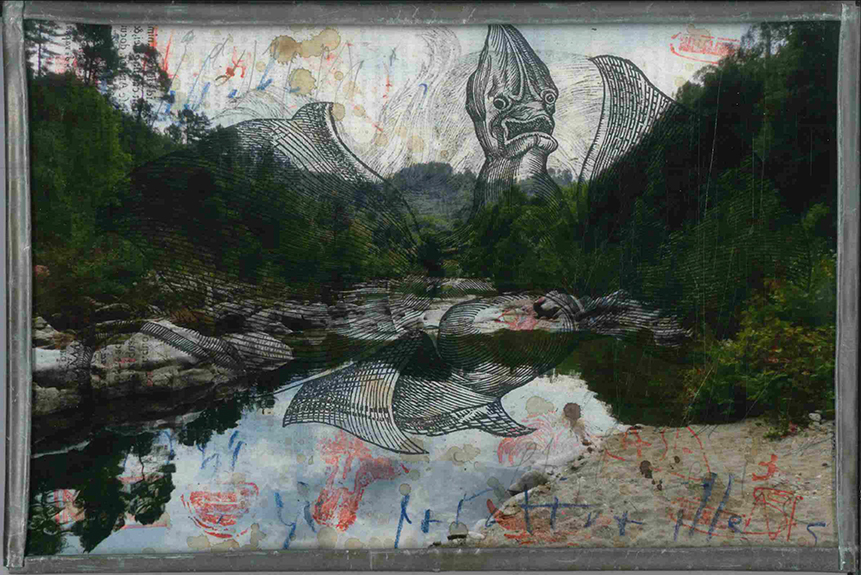
Les monstres du Gardon 01, 24×42, 2023.
.
Les monstres du Gardon 02, 24×42, 2023.
.
Paulhan 00, 24×36, 2023. La série de six : Paulhan.
.
Nuovi mostri 01, 30×42, 2023.
.
Le monstre du Gardon, 20×30, 2023.
.
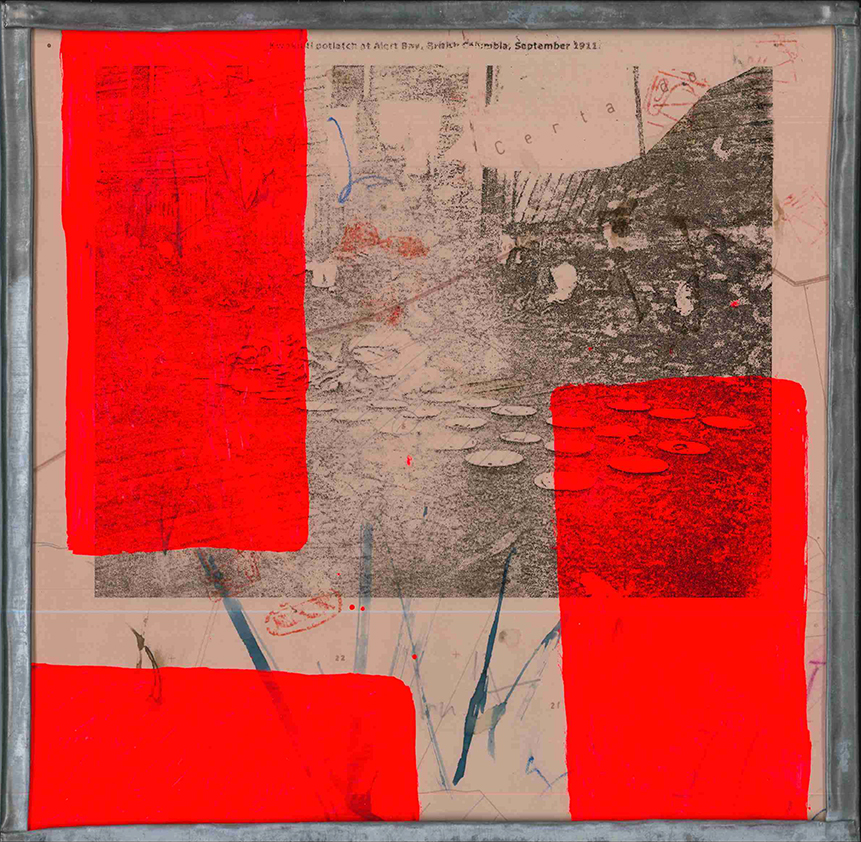
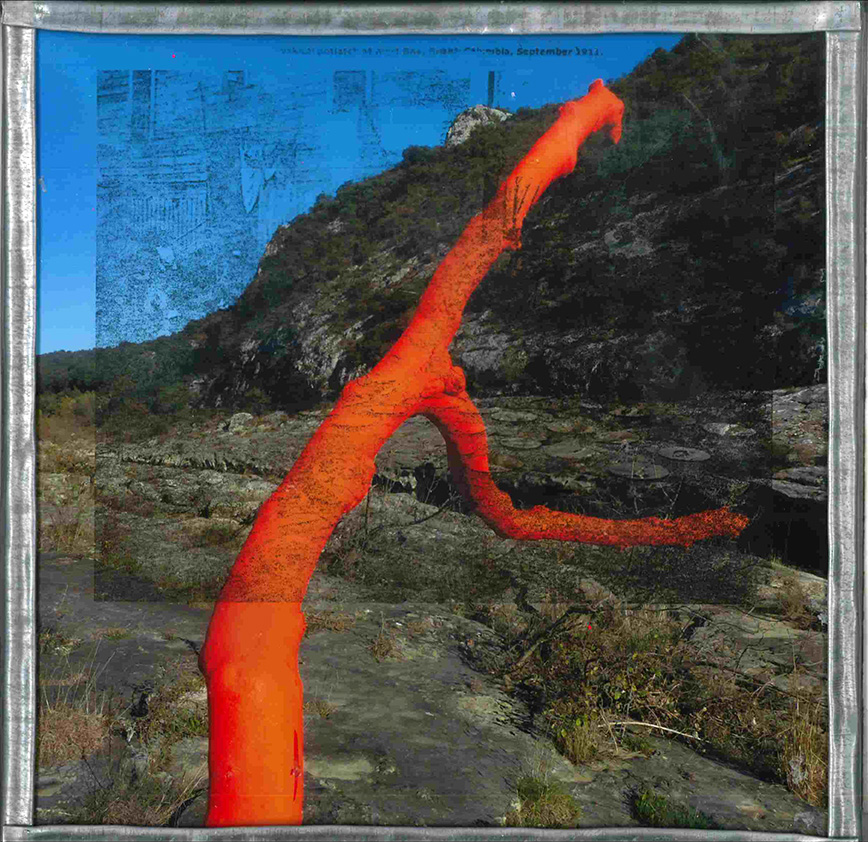
Garriga-Potlatch, 30×30, 2023.
.
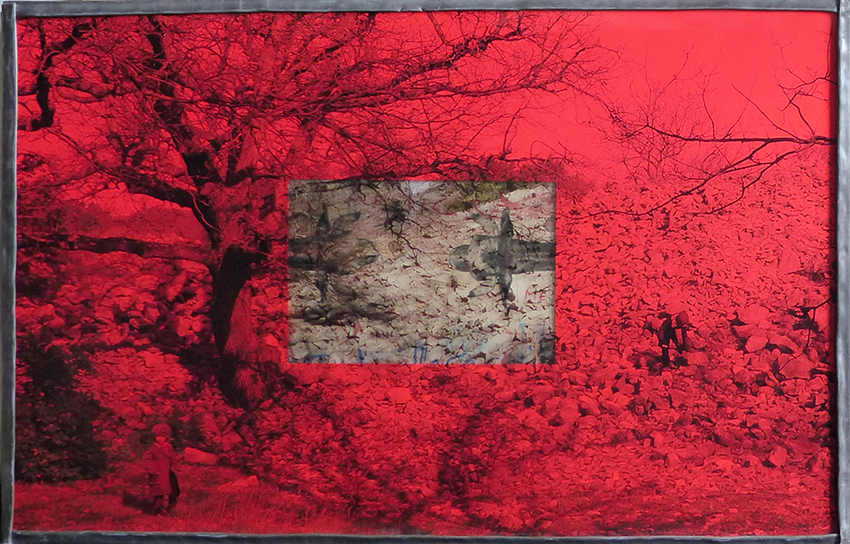
From the Road 02 bis (Nages), 31×50, 2023.
.
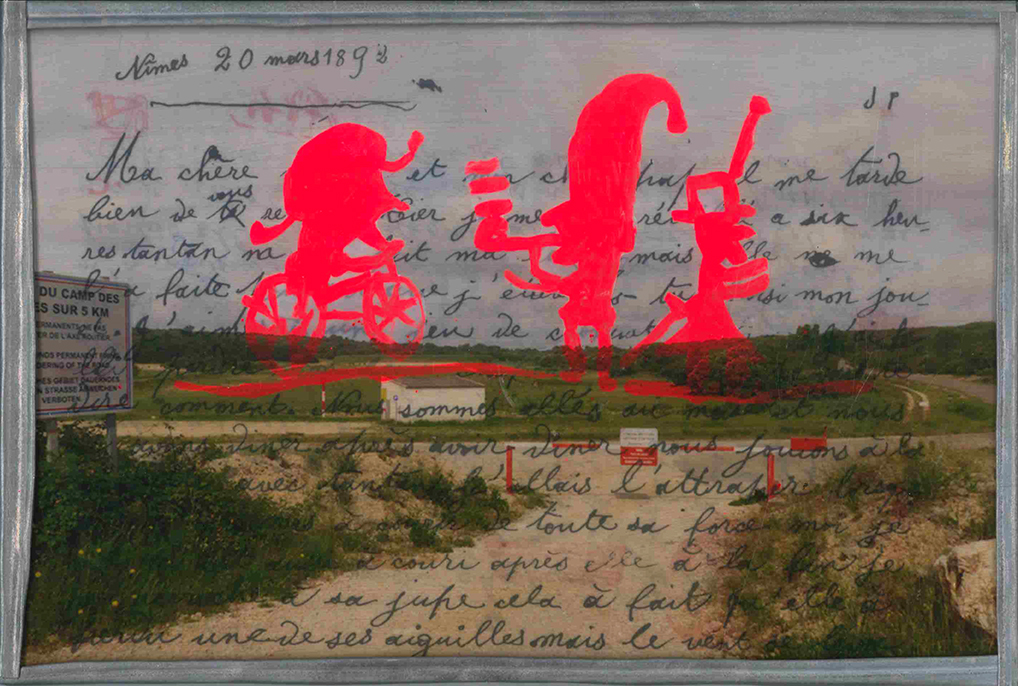
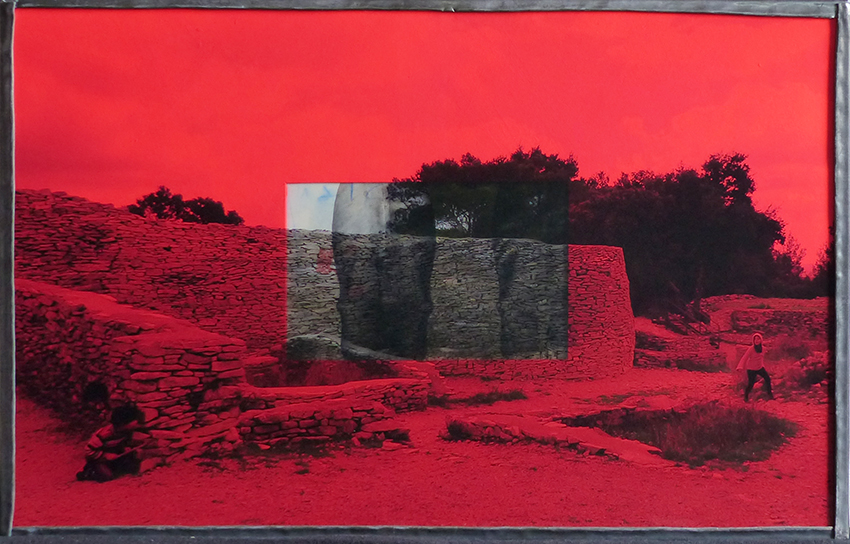
From the Road 01 bis (Camp de César), 31×50, 2023.
.
Ponge 06, 24×42, 2022. La série de six : Ponge.
.
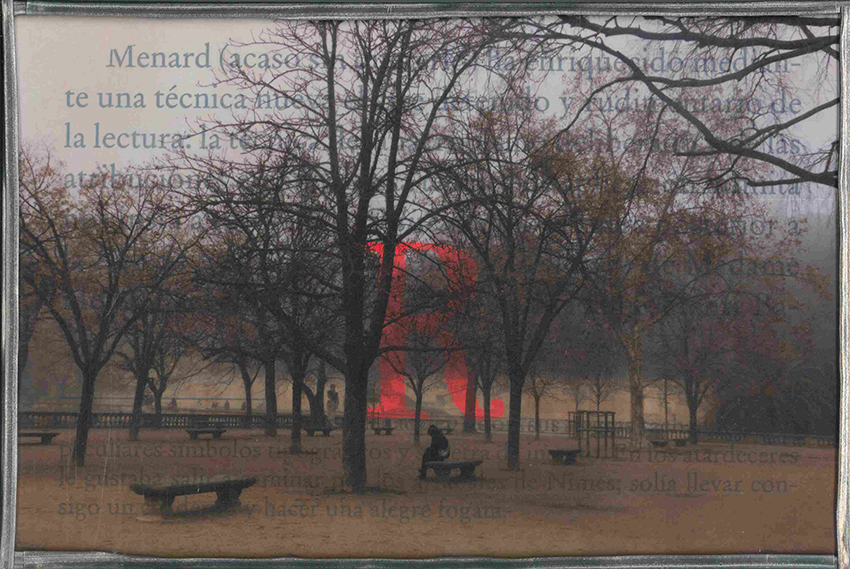
Menard 05, 28×42, 2022. La série de six : Menard.
.
Feuchtwanger 01, 30×40, 2022. La série de sept : Feuchtwanger.
.
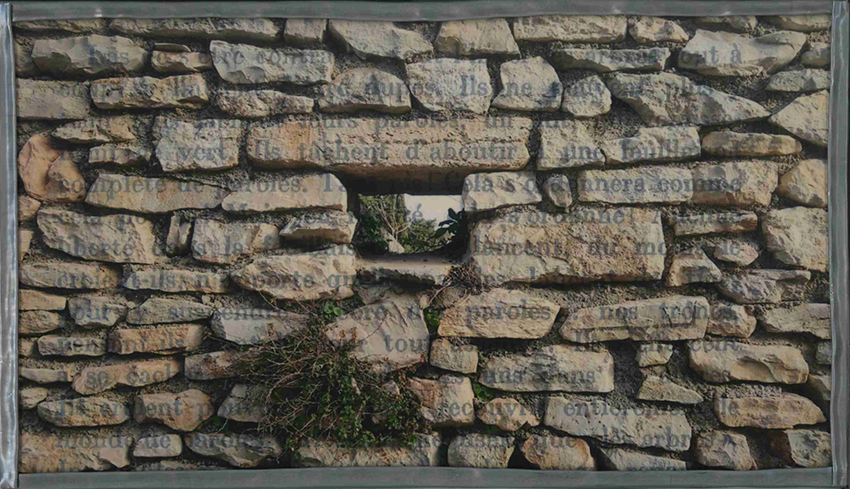
Histoire des monstres 11 (Laudun l’Ardoise), 24×42, 2021.
.
Garriga-Petrarca III, 32×32, 2021.
.
Au Temple de Diane 02, 20×30, 2020.
.
Ordinary Humans 10, 20×30, 2019.
.
Ordinary Humans 01, 20×30, 2019.
.
Nella garriga 08, 45×60, 2017.

.

Les sites représentés, en ordre chronologique : Font Verte (Gorges du Gardon), Nîmes, La Calmette, les alentours du Pont Saint Nicolas, Laudun l’Ardoise, le Mas Saint Nicolas, l’Oppidum de Nages, le Gardon de Mialet, les Salins d’Aigues Mortes, le Pont du Gard.


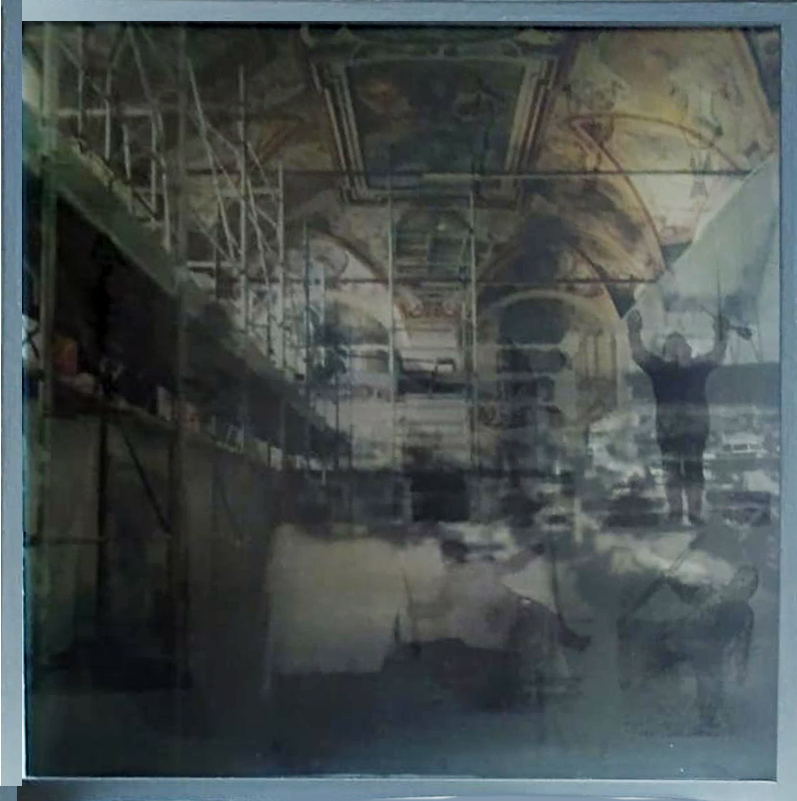
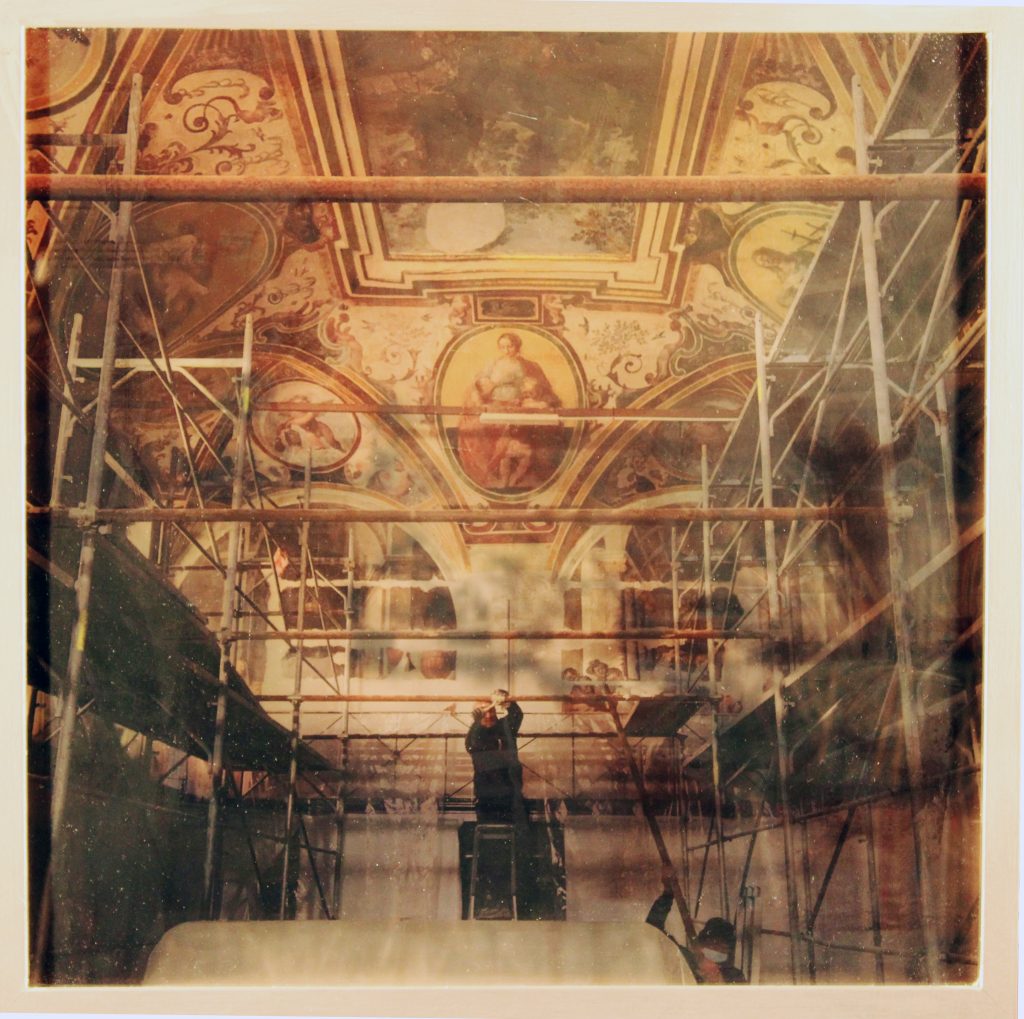
Affreschi rinvenuti, 2023.

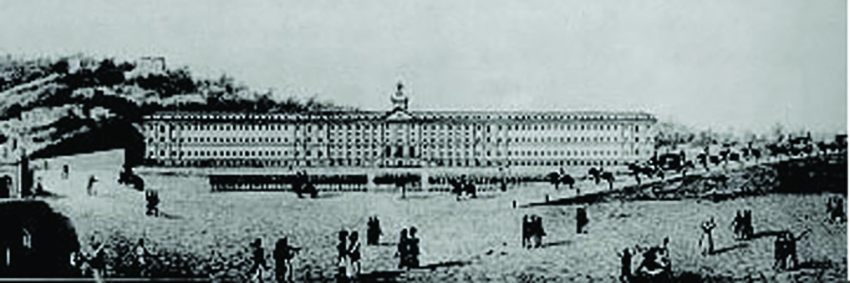
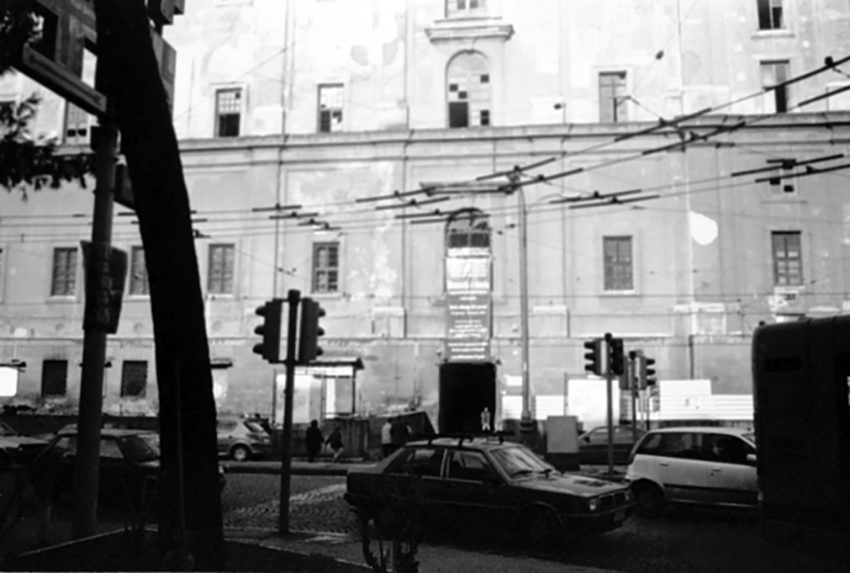
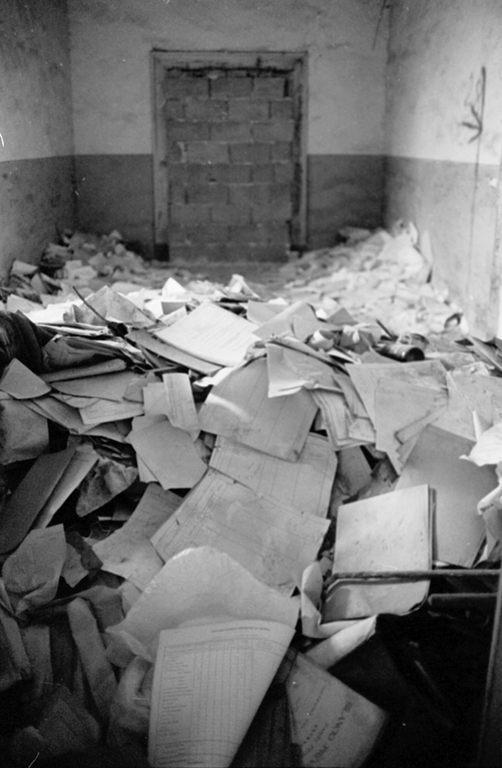
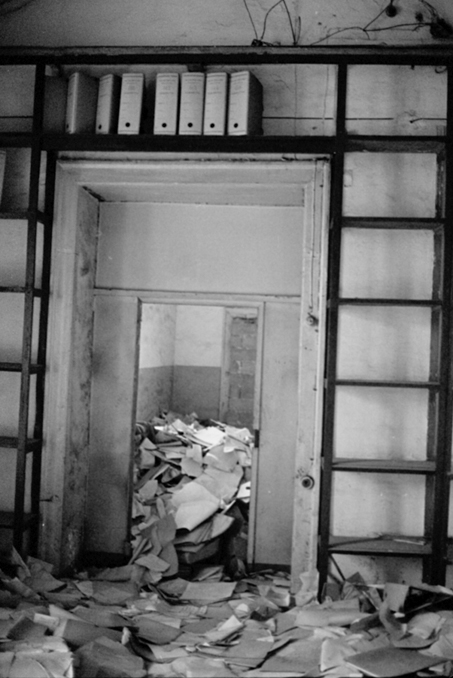
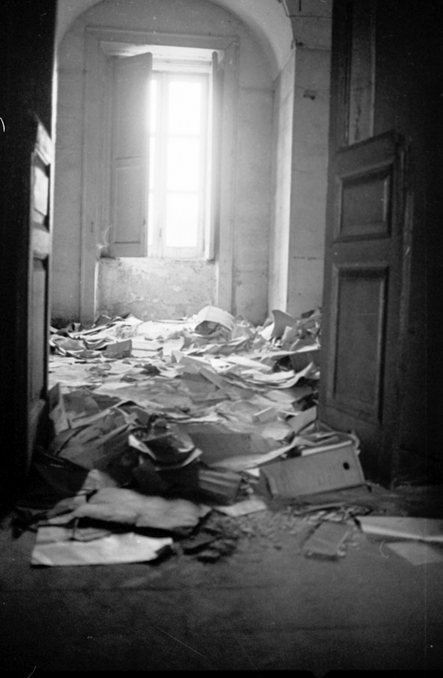
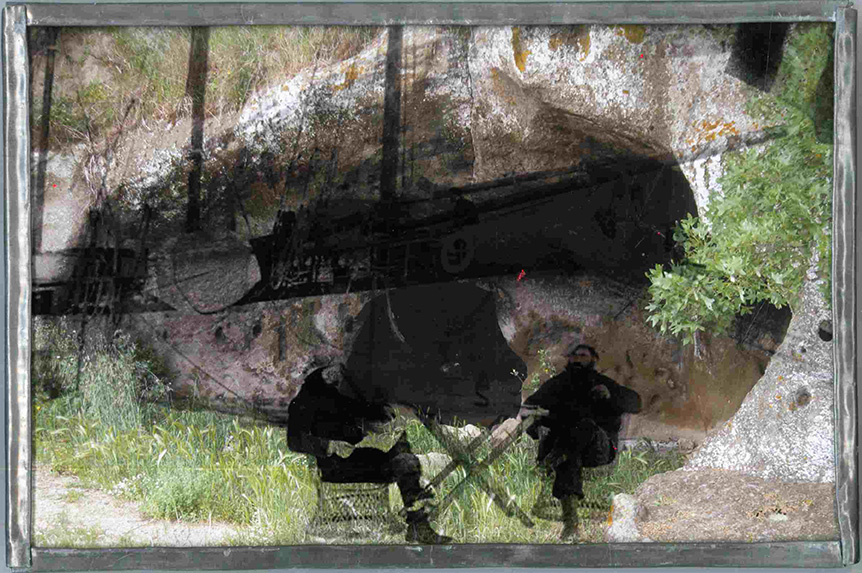
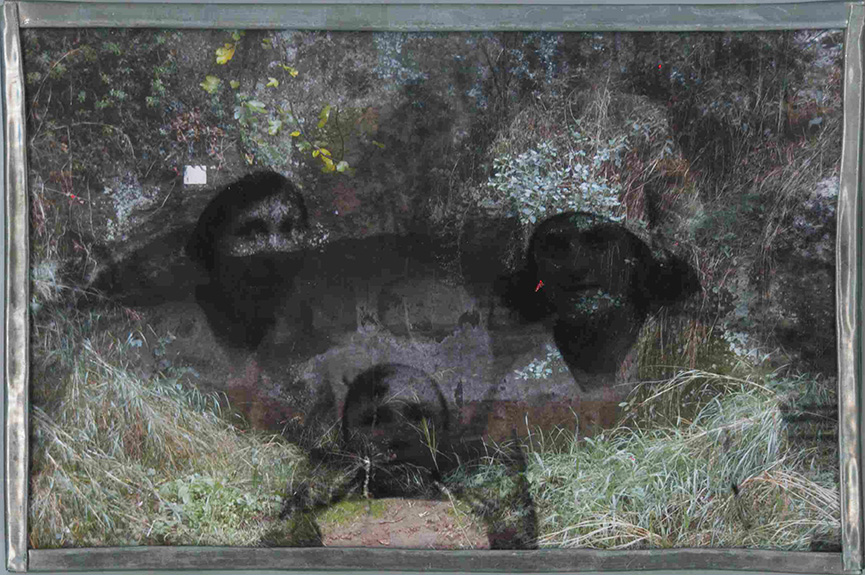
Works presented at the show Affreschi rinvenuti, Archivio di Stato di Napoli, April-May 2023.

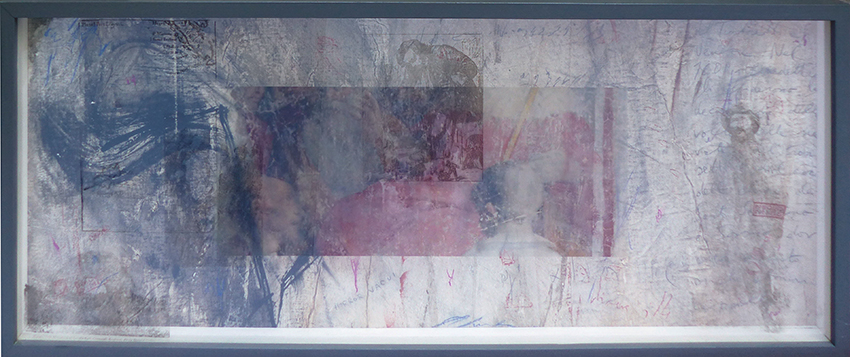
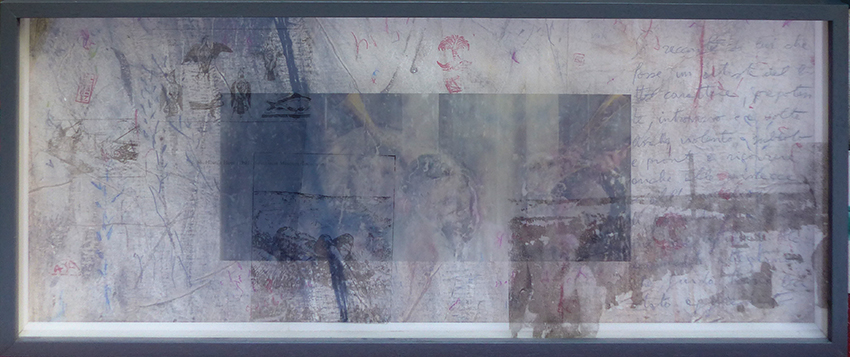
Corenzio-Gulliver 01, 44×102, 2021.
.

Corenzio-Gulliver 02, 44×102, 2021 (private collection).
.

Corenzio-Gulliver 03, 44×102, 2021.
.

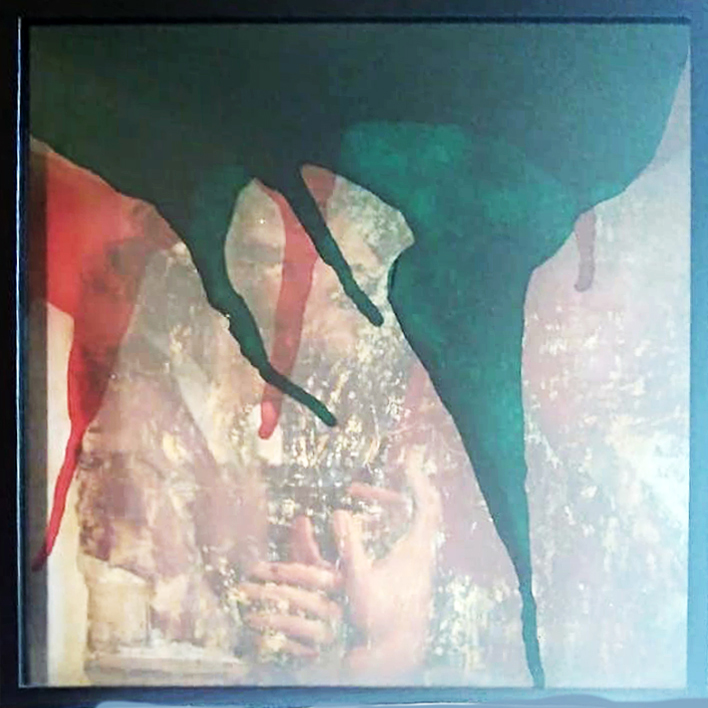
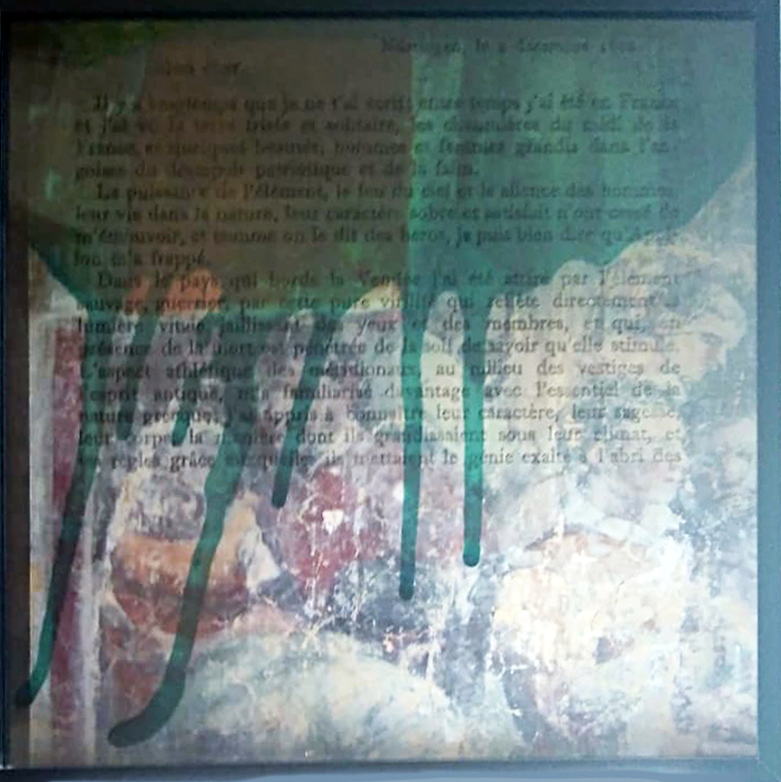
Corenzio-Hölderlin 01, 52×52, 2021.
.

Corenzio-Hölderlin 02, 52×52, 2021.
.

Corenzio-Hölderlin 03, 52×52, 2021.
.

Corenzio-Hölderlin 04, 52×52, 2021.
.

Corenzio-Robinson 01 a, 52×52, 2021.
.

Corenzio-Robinson 01 b, 52×52, 2022.
.

Land paintings 01 bis, 22×42, 2022 (private collection).
.

Land paintings 03 bis, 22×42, 2022 (private collection).
.

Corenzio-Drum songs 03, 25×62, 2023.


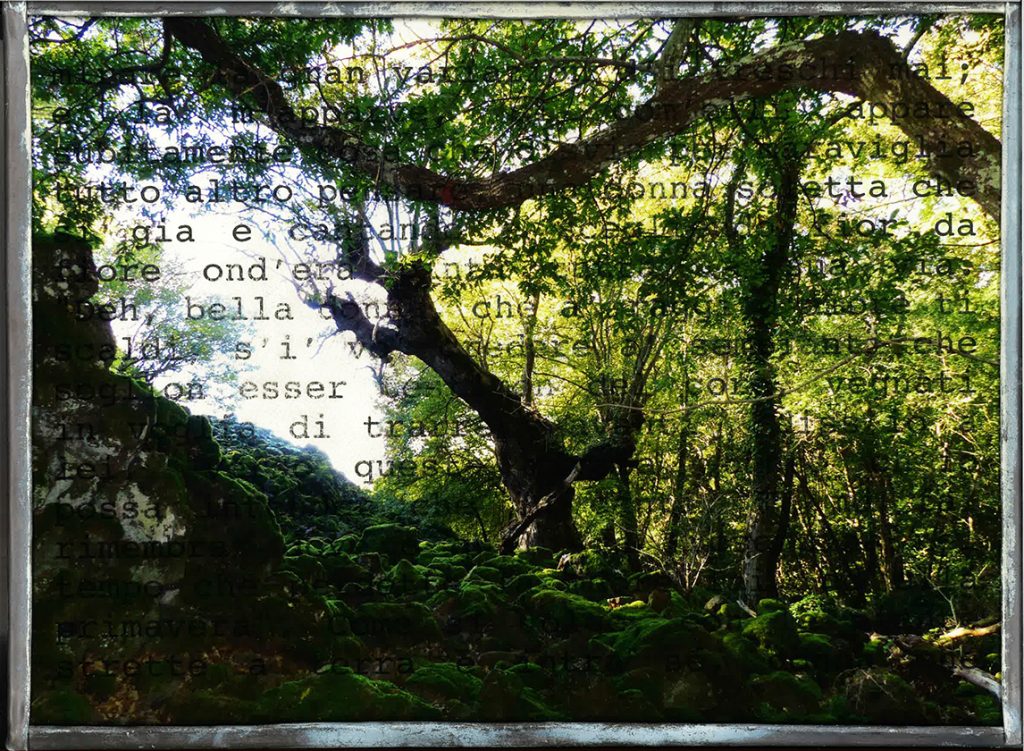
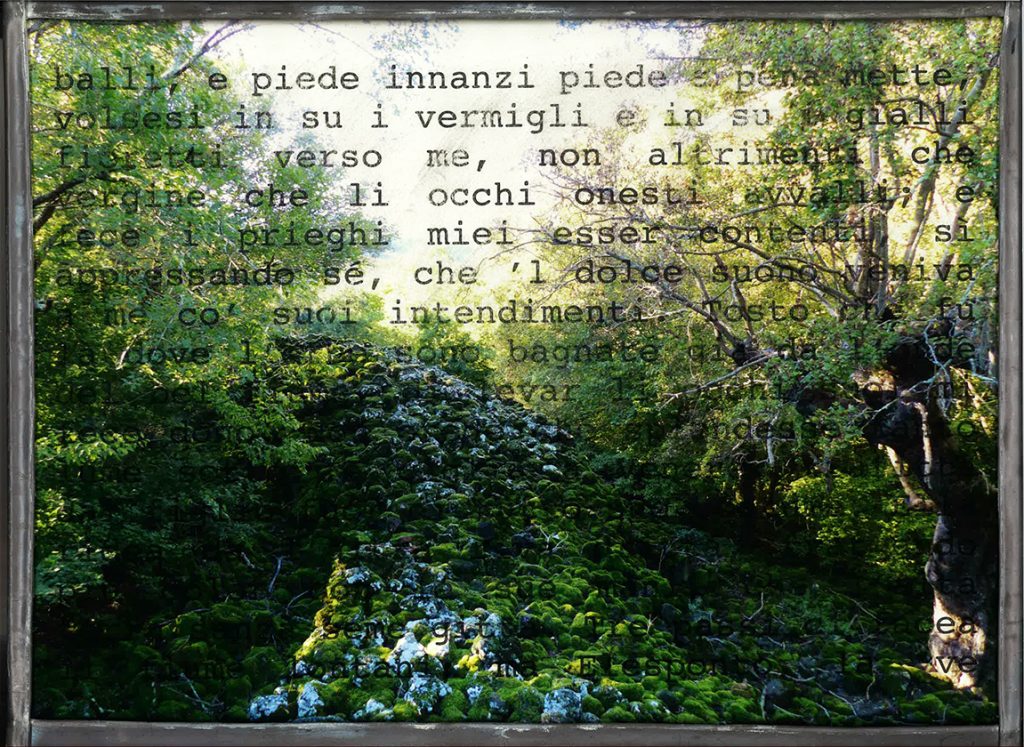
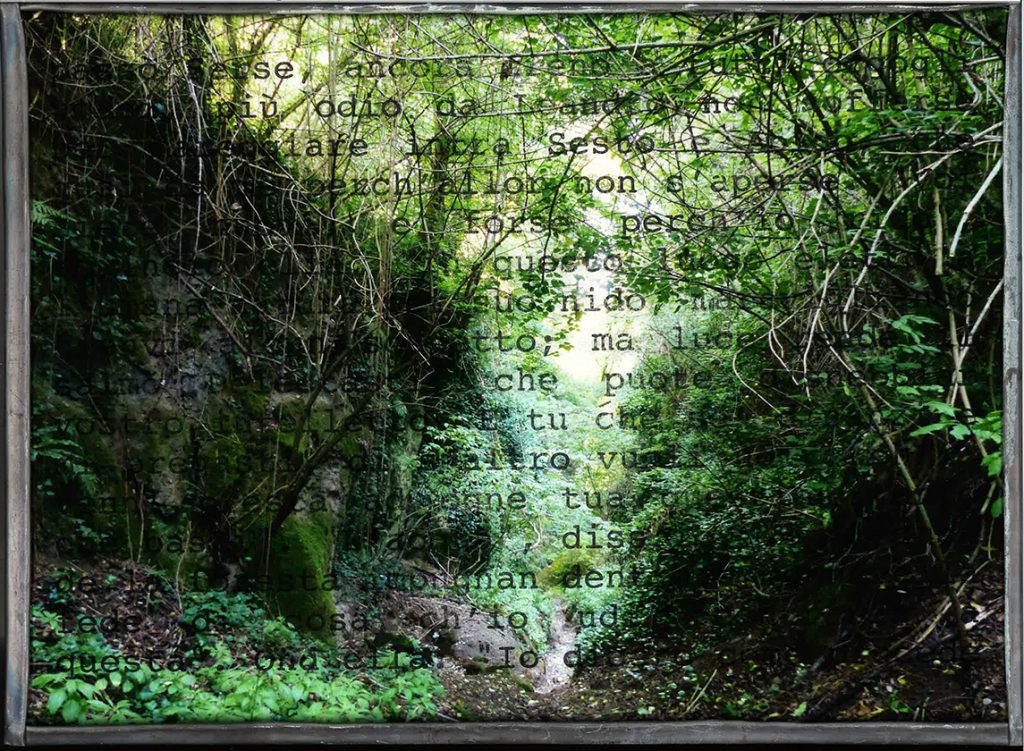
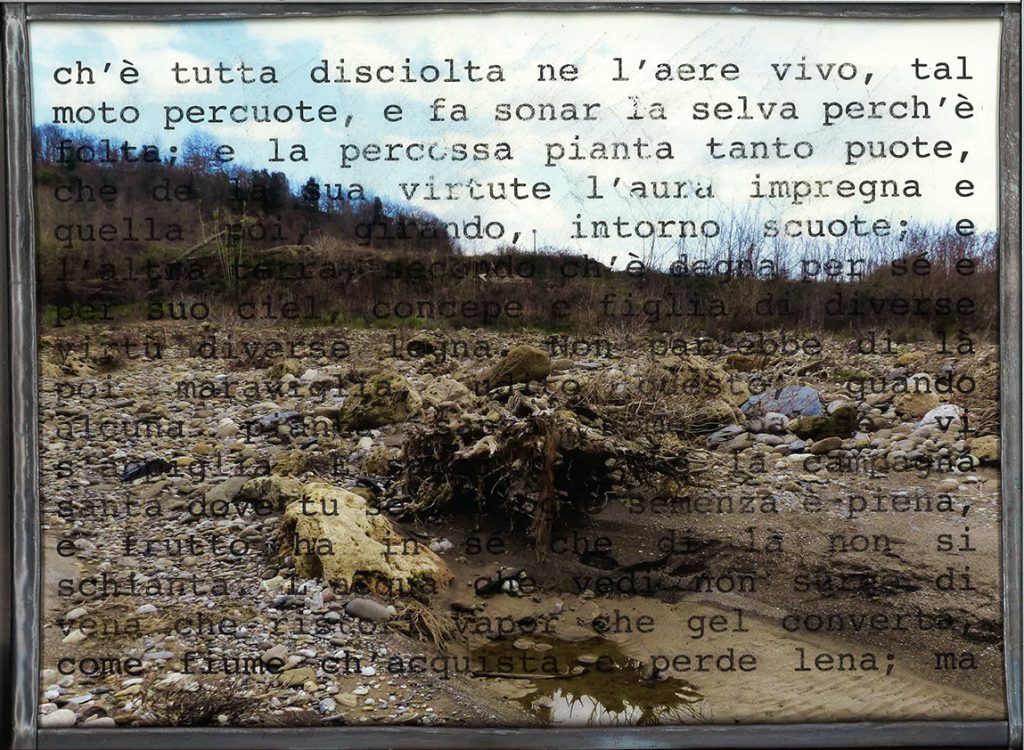
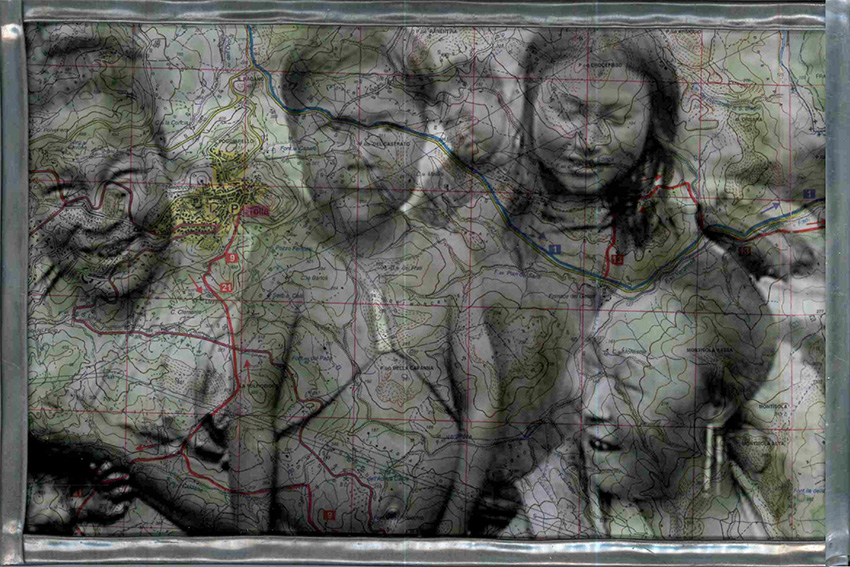
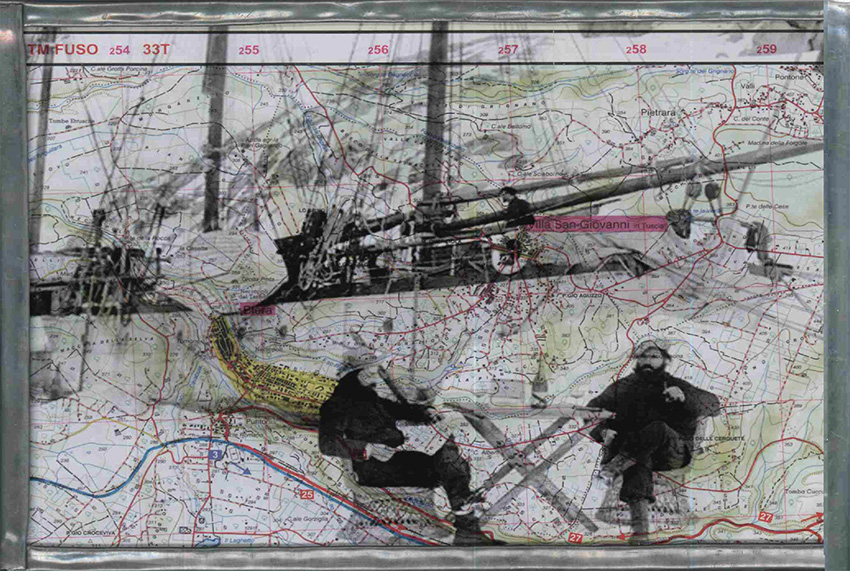
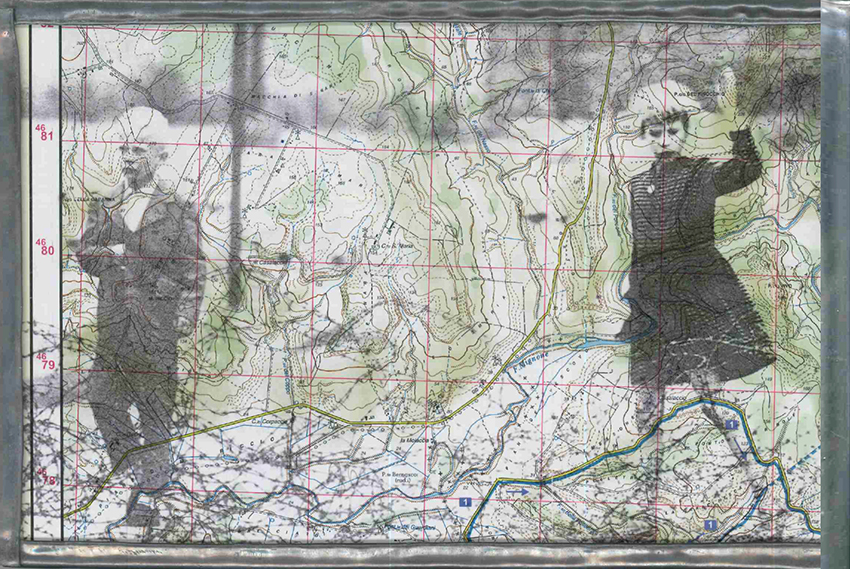
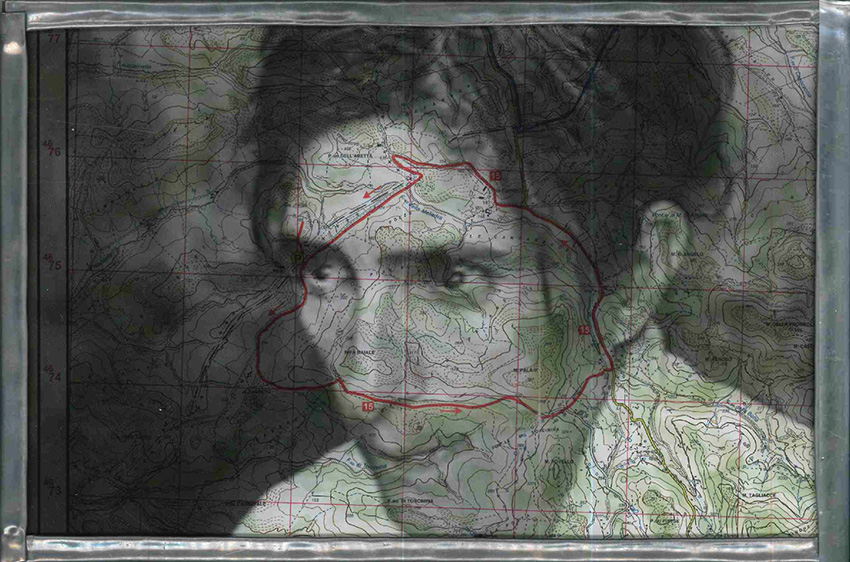
RnS, Rovine nella selva (2023).

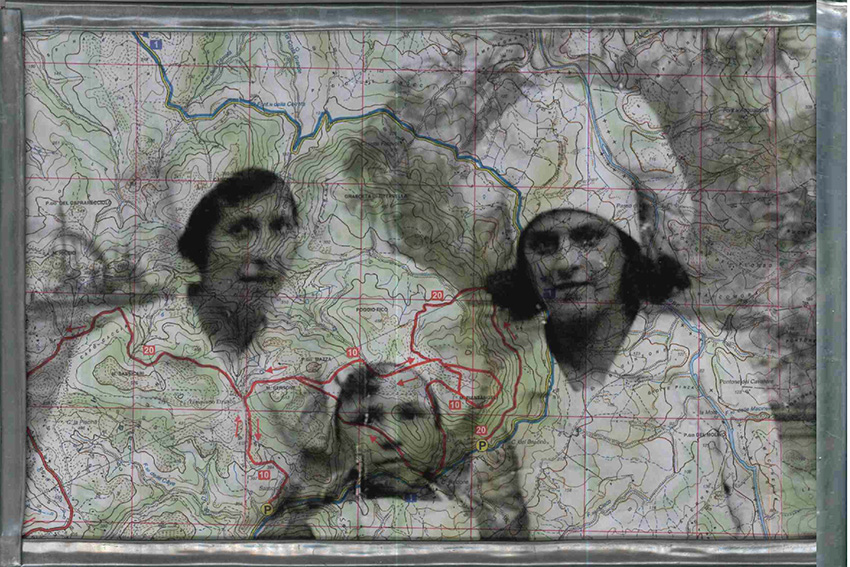
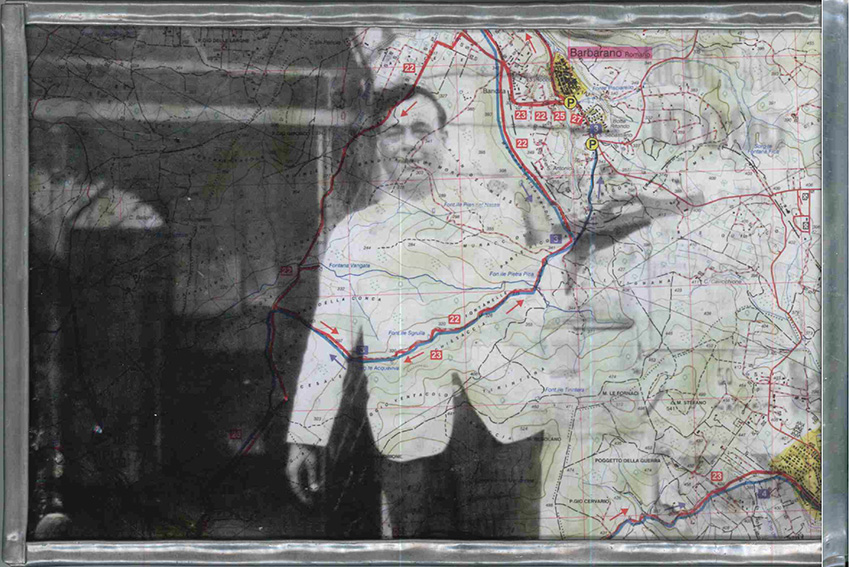
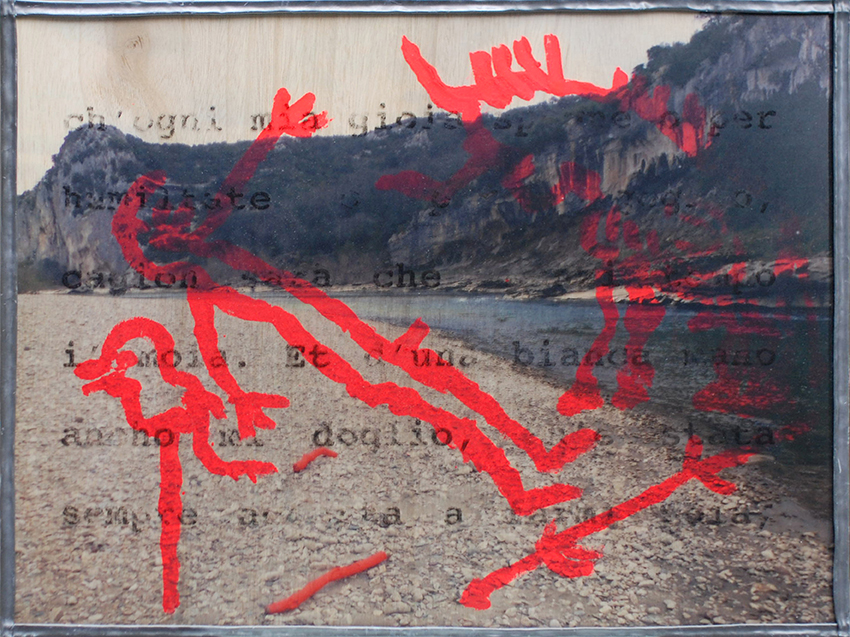
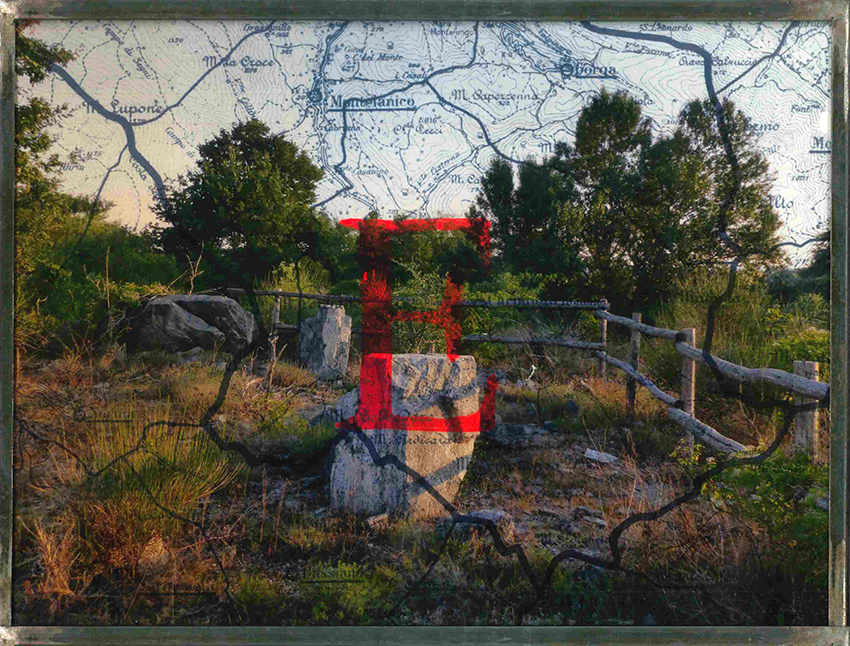
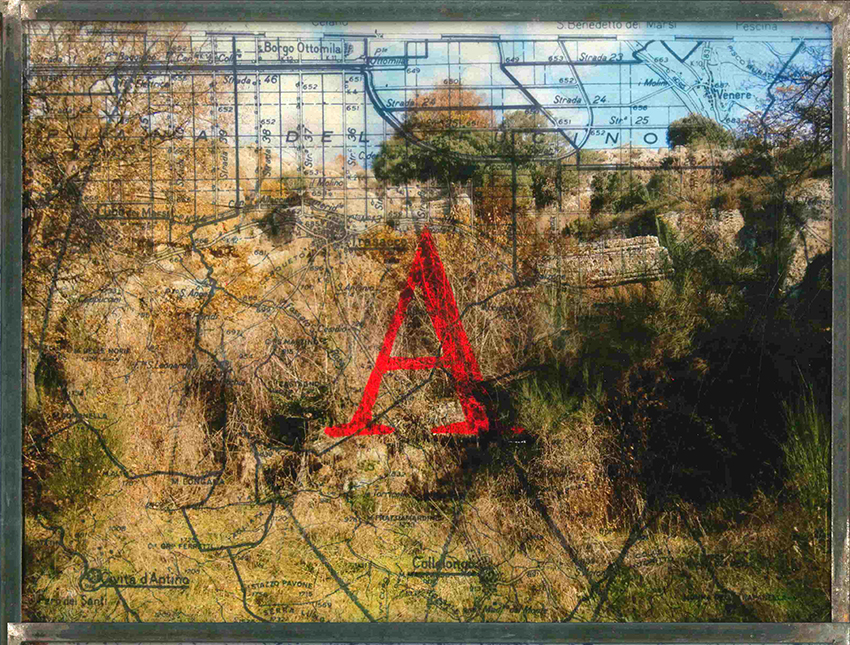
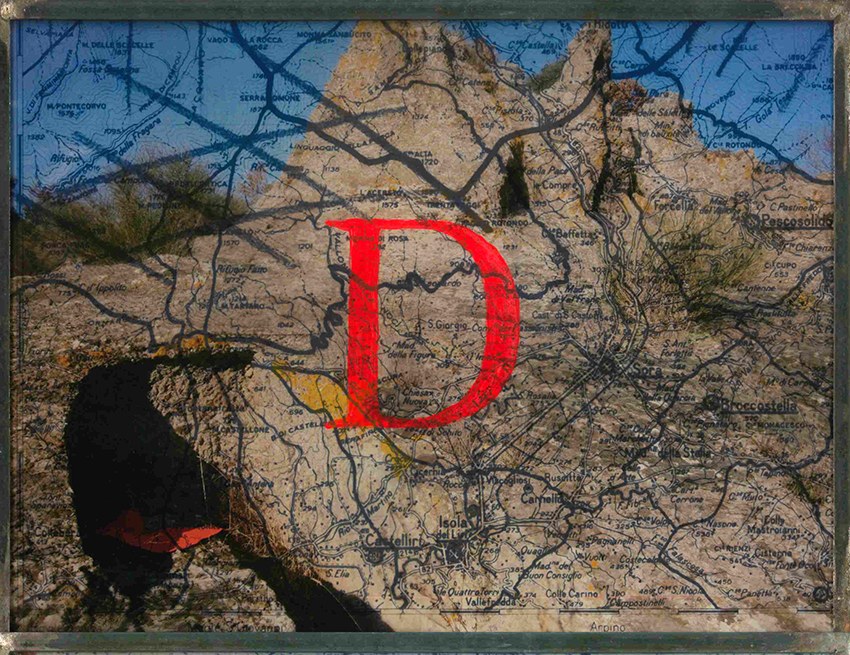
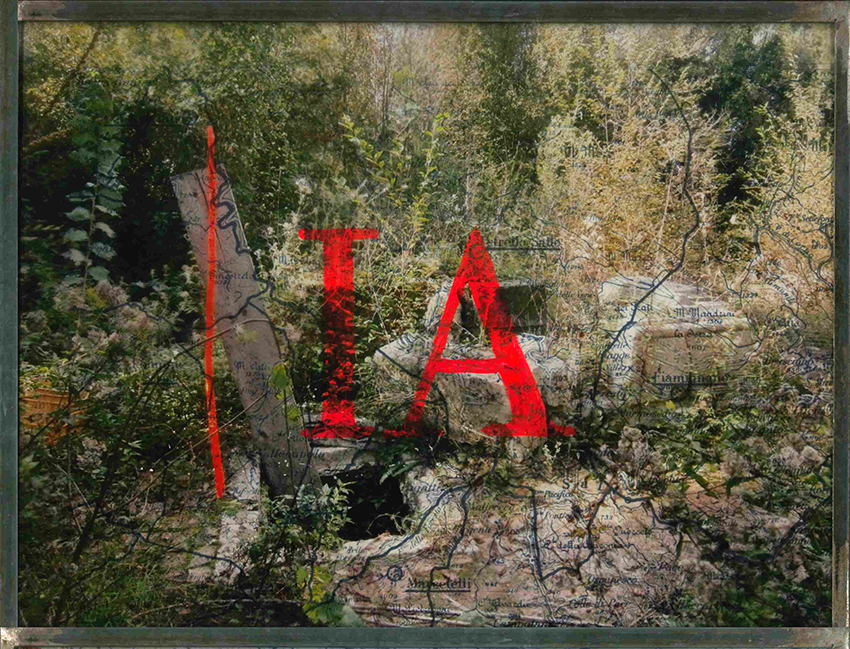
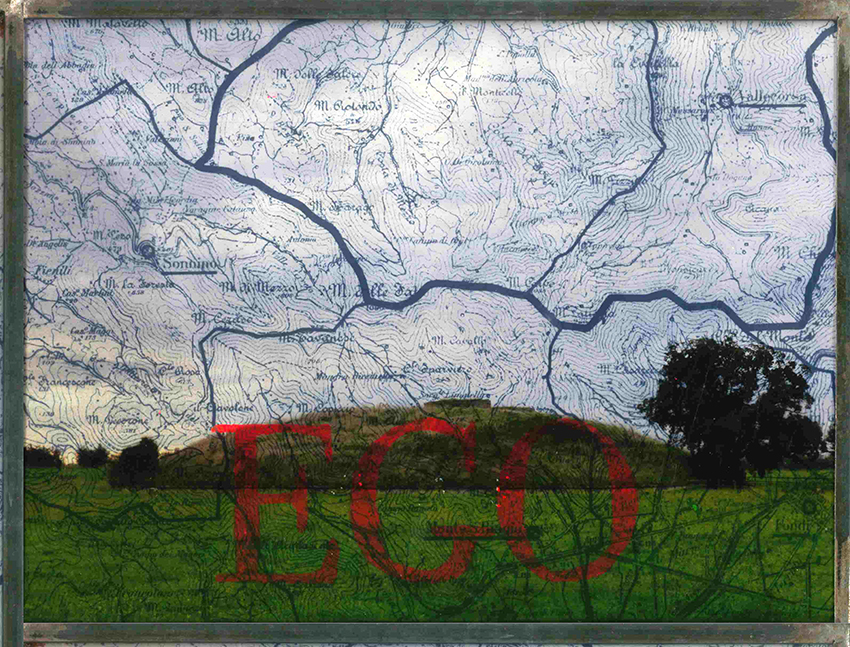
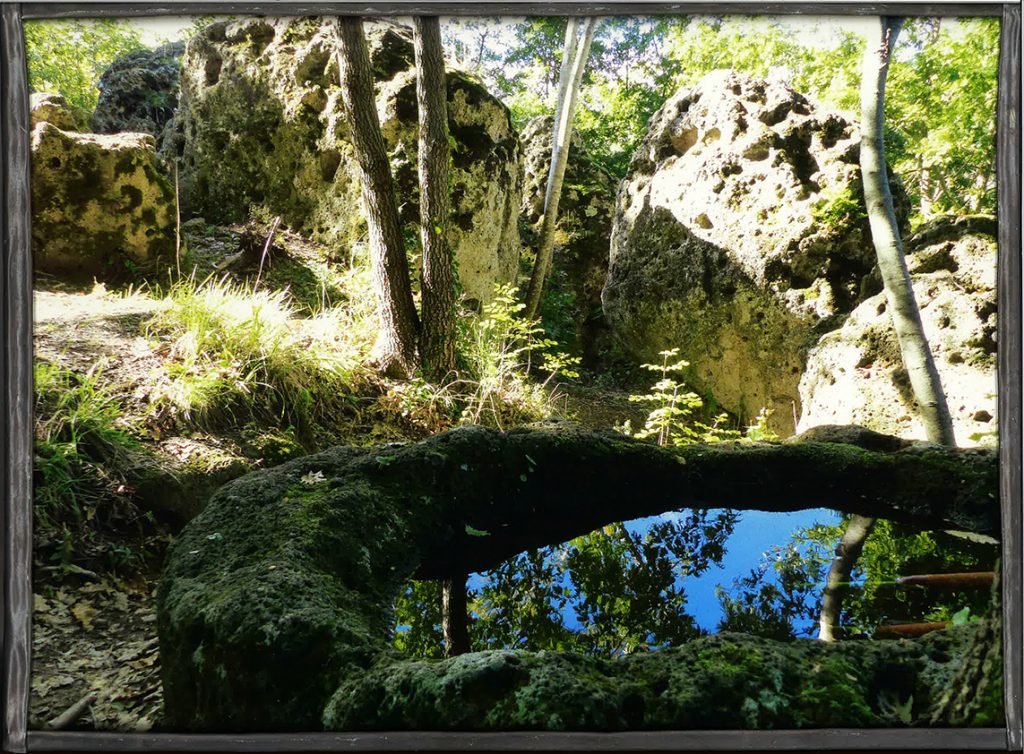
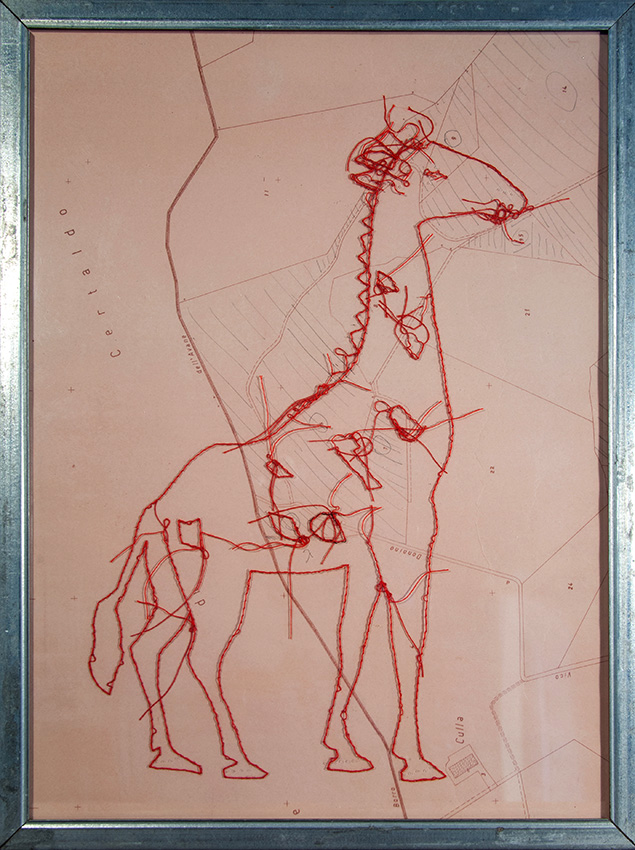
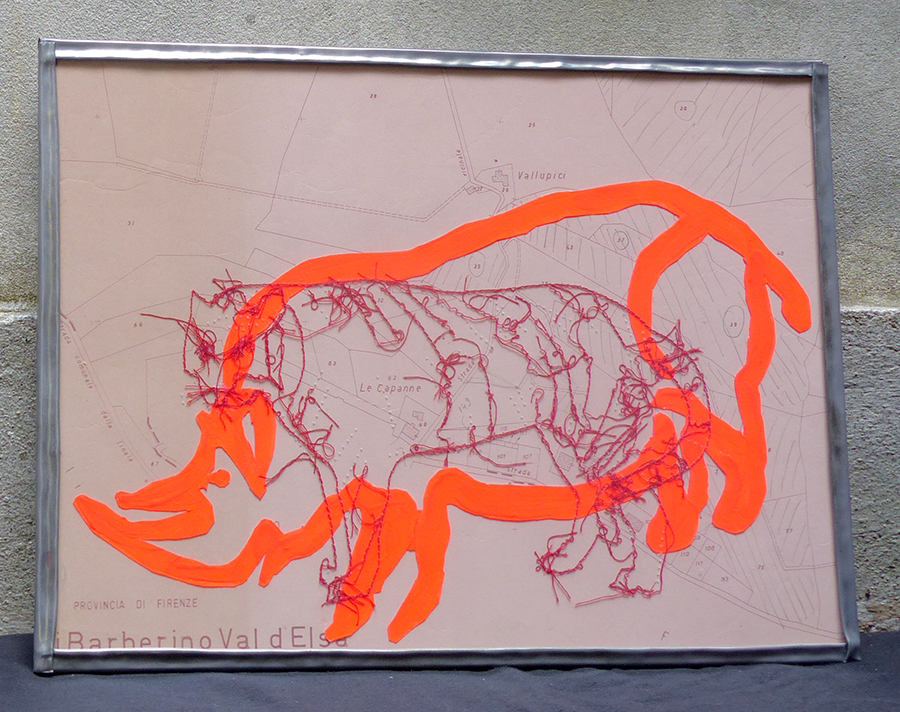
This just-completed series is the culmination of a work I have revisited several times in recent years (2016, 2022). The hiking maps previously used as a background were replaced by military maps. A striking addition is the phrase “Et in Arcadia Ego” (Guercino, Poussin) spelled out in a succession of red fluorescent letters.
For the short text (Italian) accompanying the work in its entirety, see:
Rovine nella selva 2022.
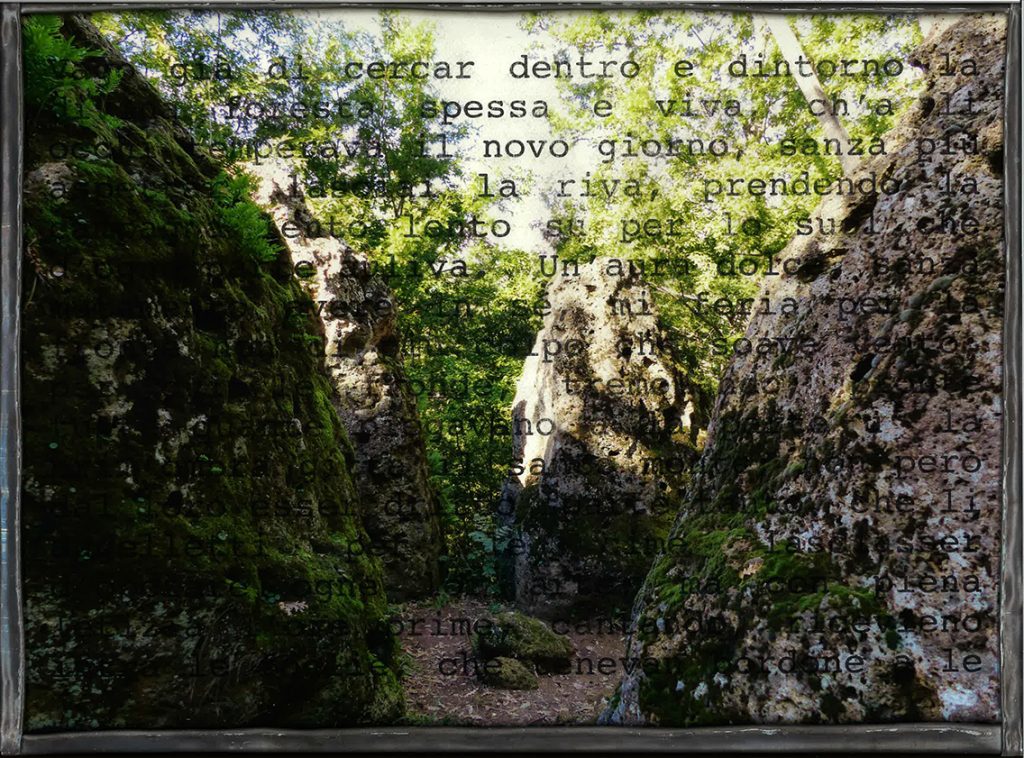
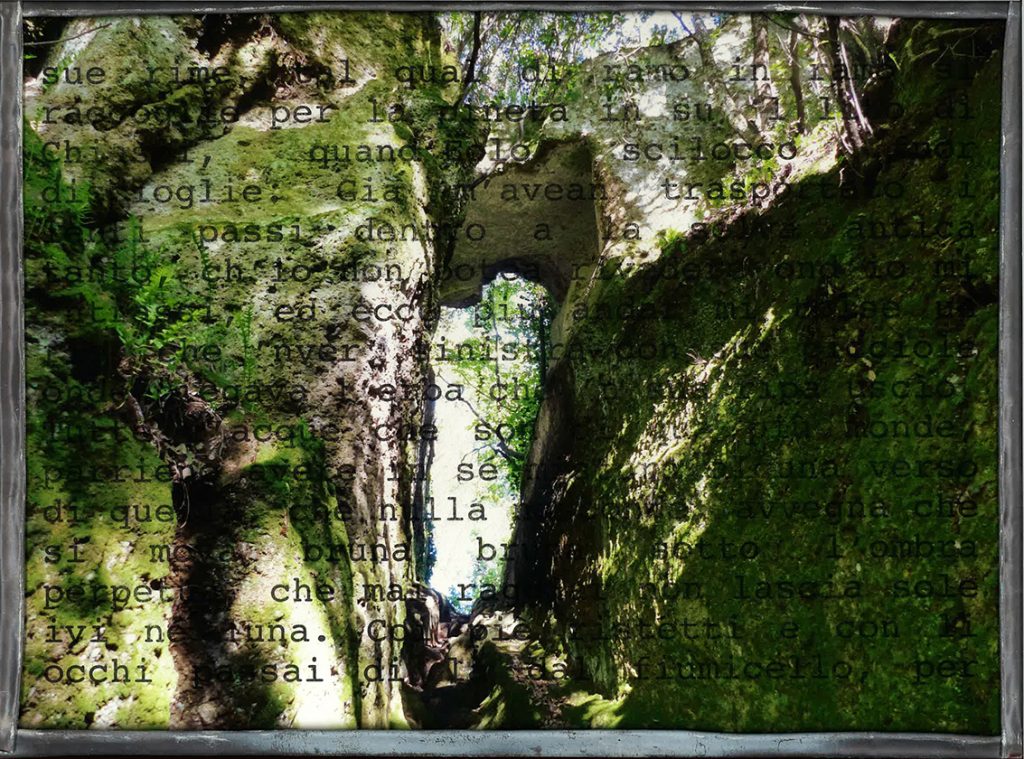
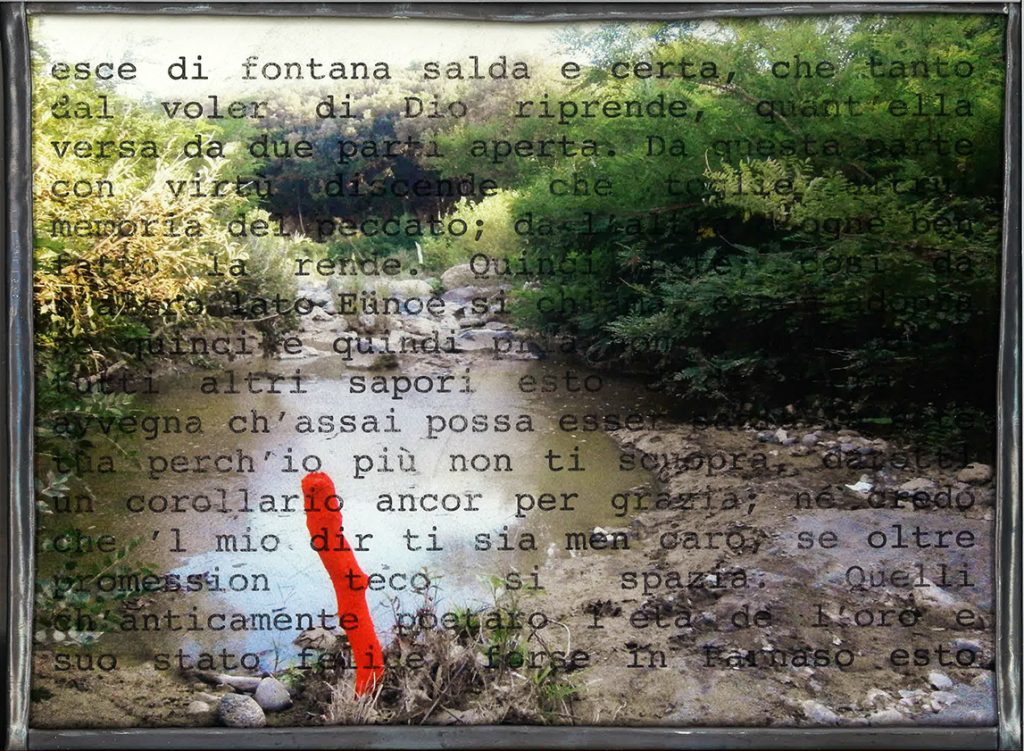
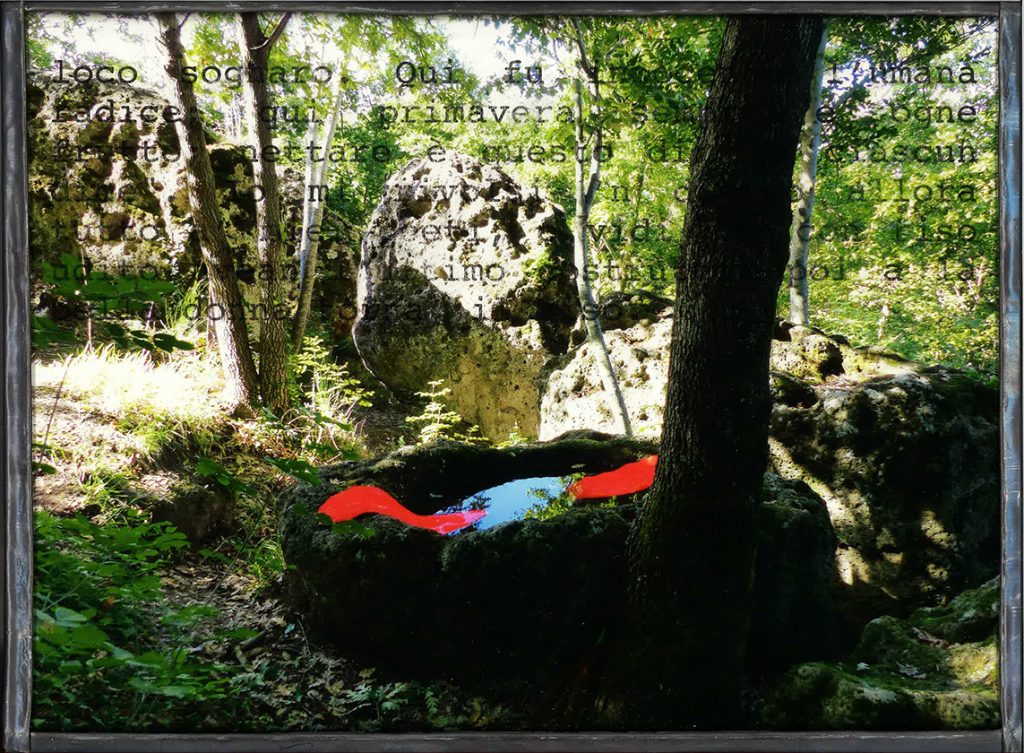
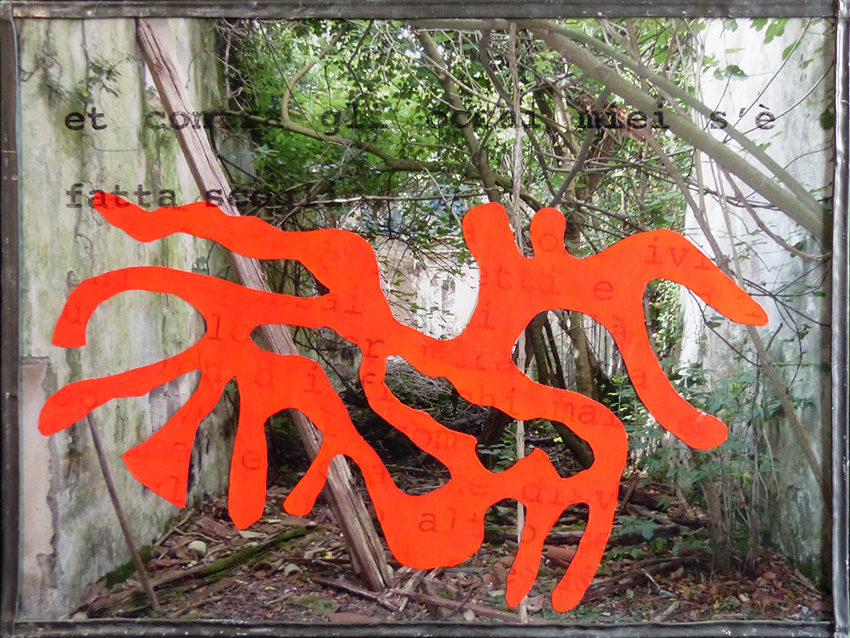
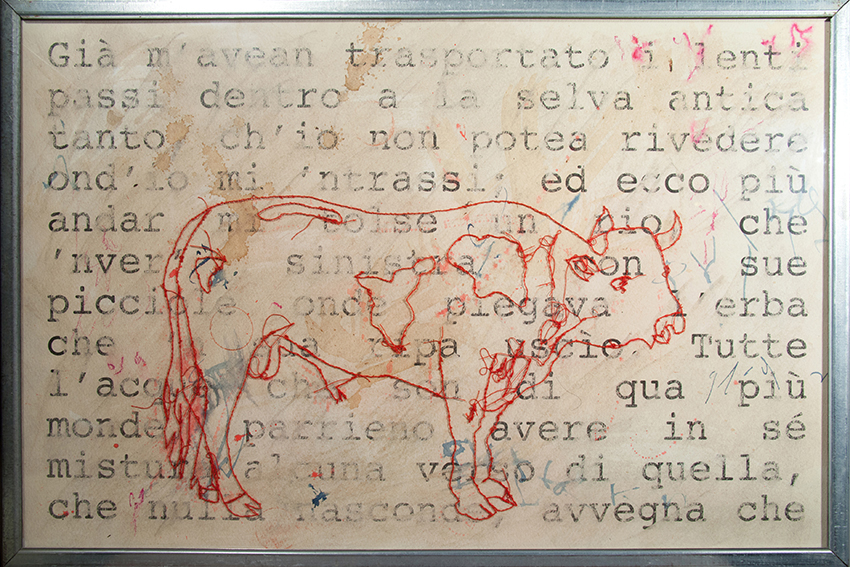
This series follows an earlier one (2016-2017), which features sites in the same region (Tuscia, Latium) and plays with the relationship between image and text, and specifically Dante Alighieri’s Purgatorio XXVIII (“dentro alla selva antica…”):
Ruins in the Forest series A.


RnS 01, Vallerosa.


RnS 02, Fratenuti.


RnS 03, Sutri.


RnS 04, Rofalco.


RnS 05, Civita.


RnS 06, Poggio Conte.


RnS 07, Norchia.


RnS 08, Grotta  Porcina.


RnS 09, Castro.


Rns 10, Cuccumella.


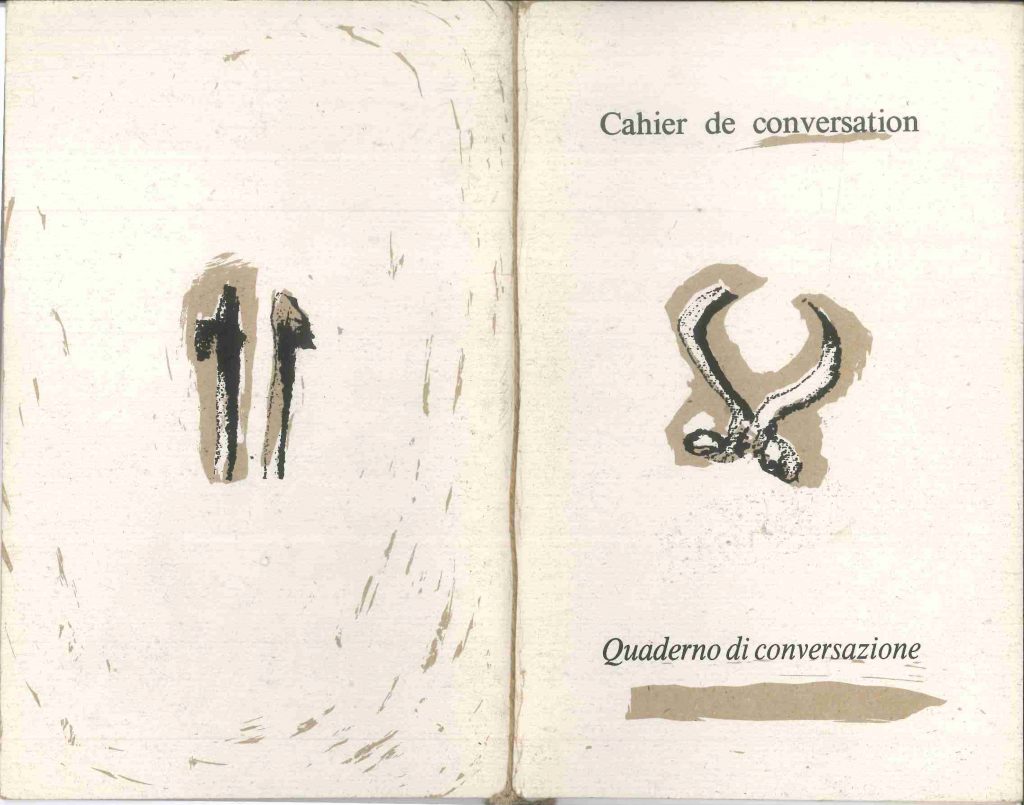
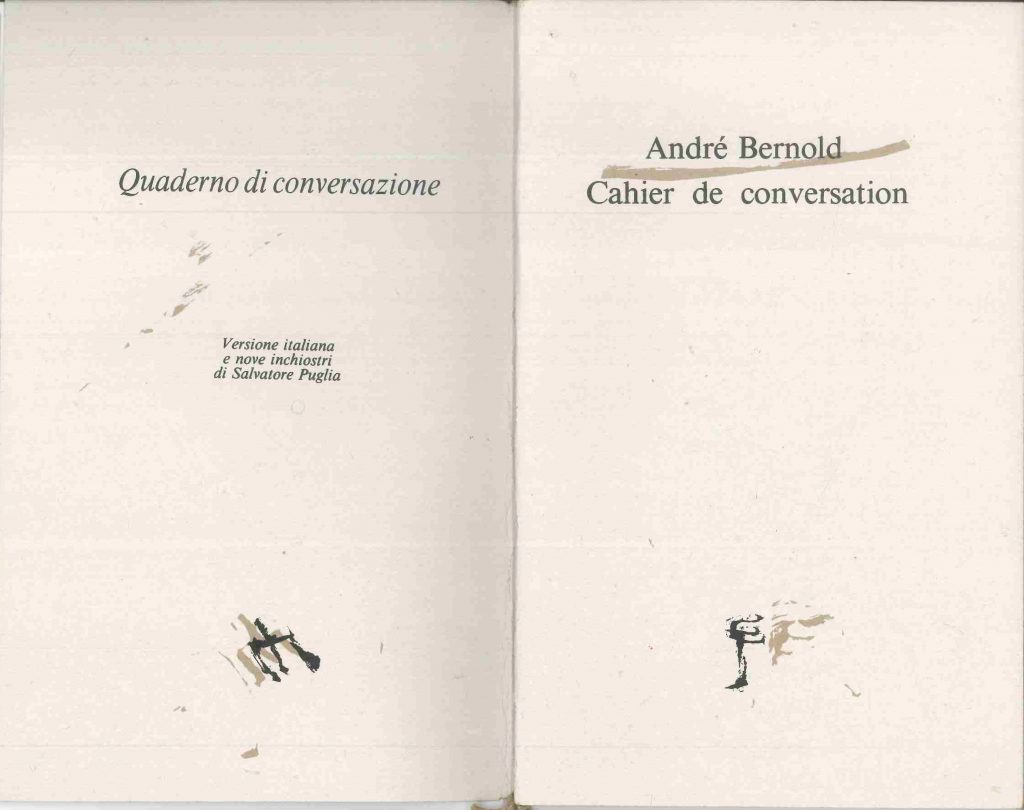
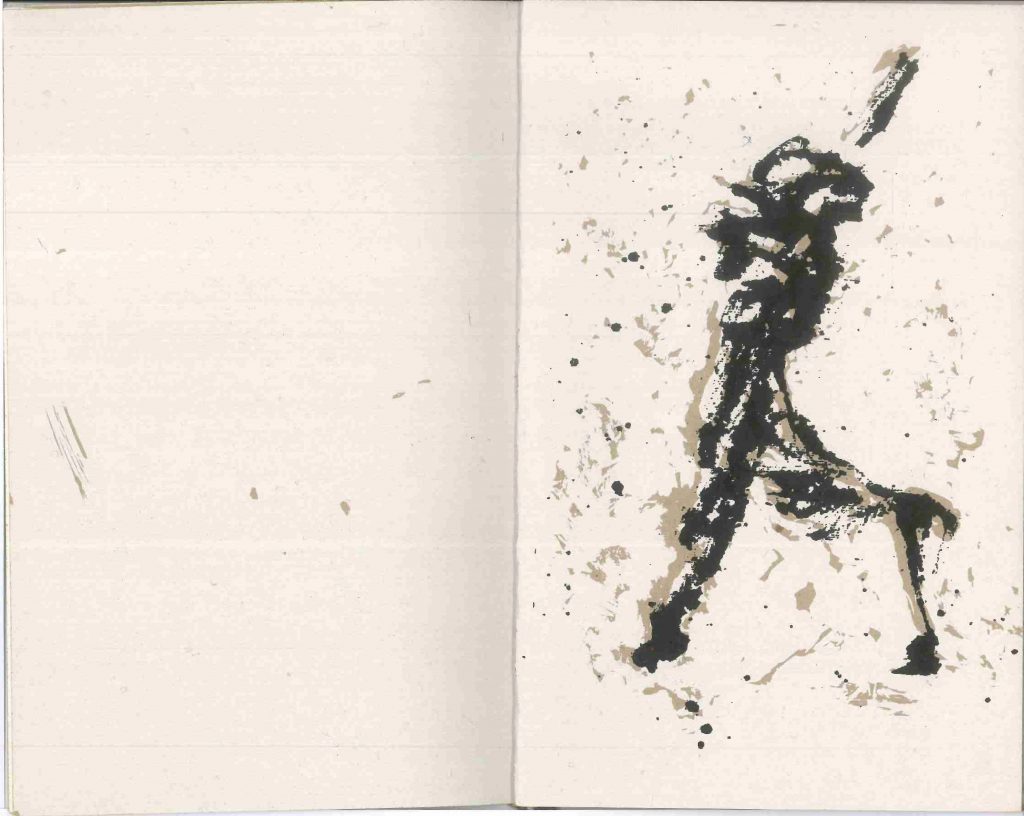
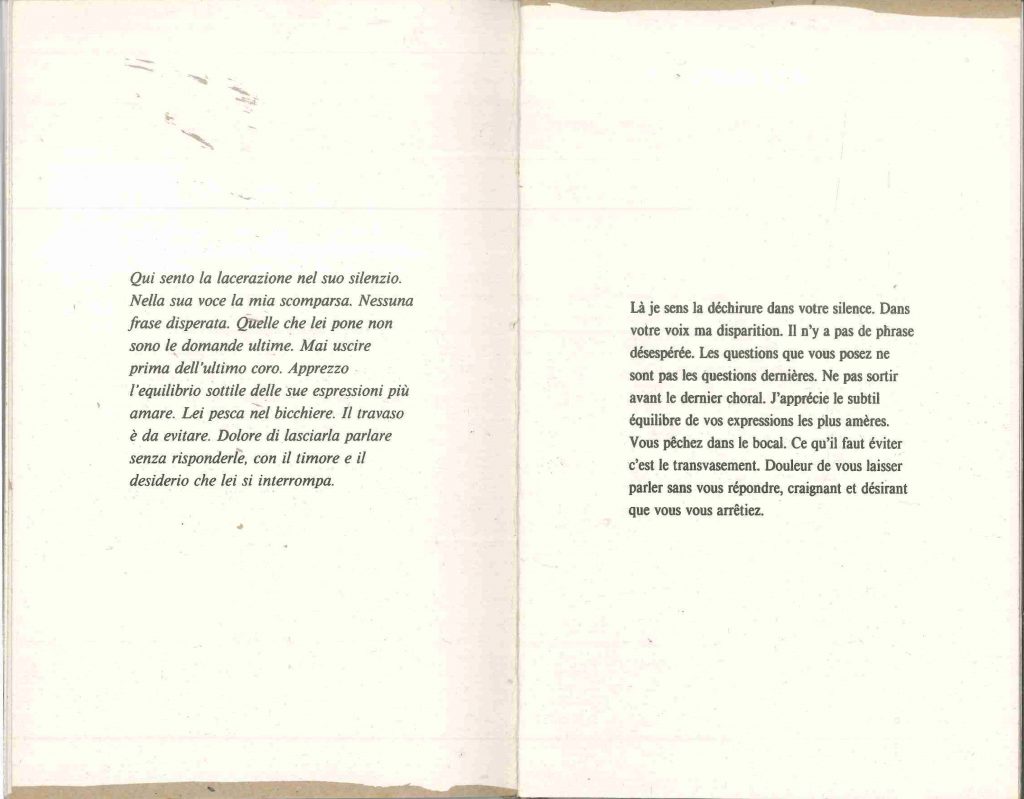
Cahier de conversation, 1988.

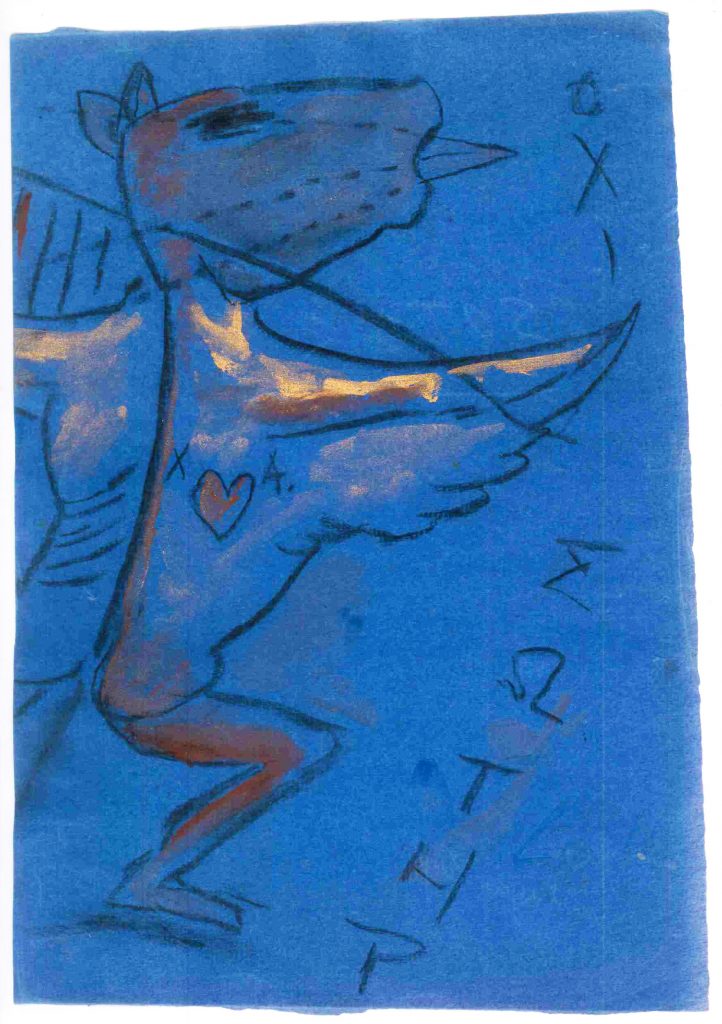
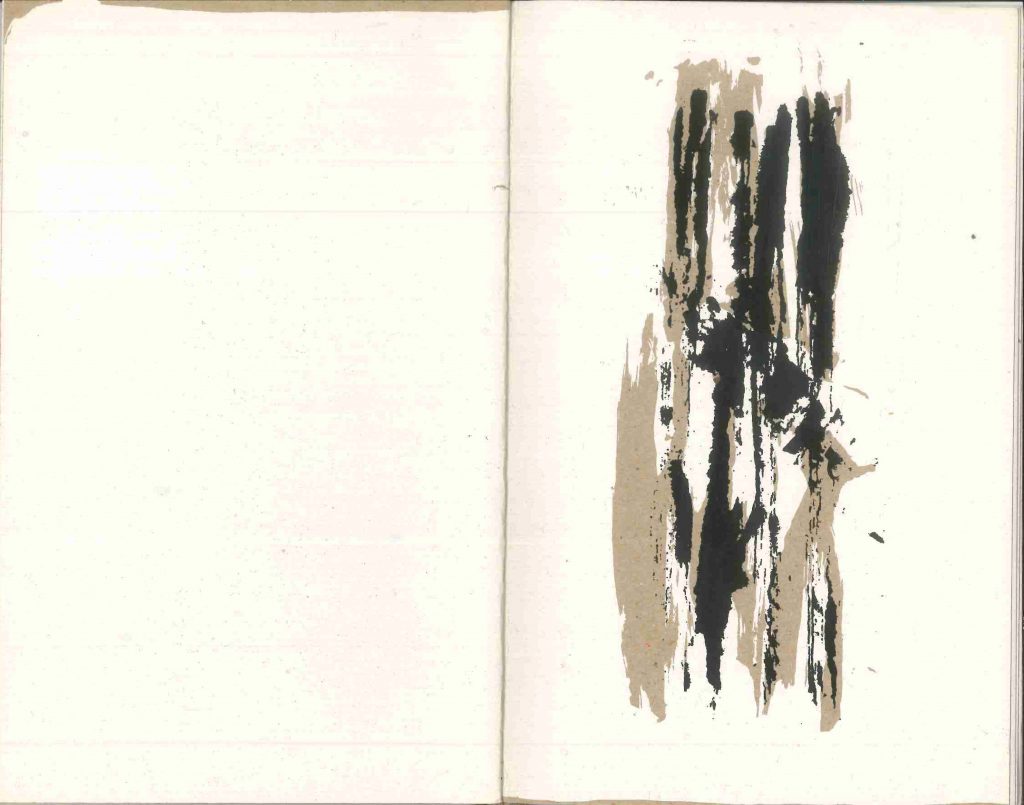
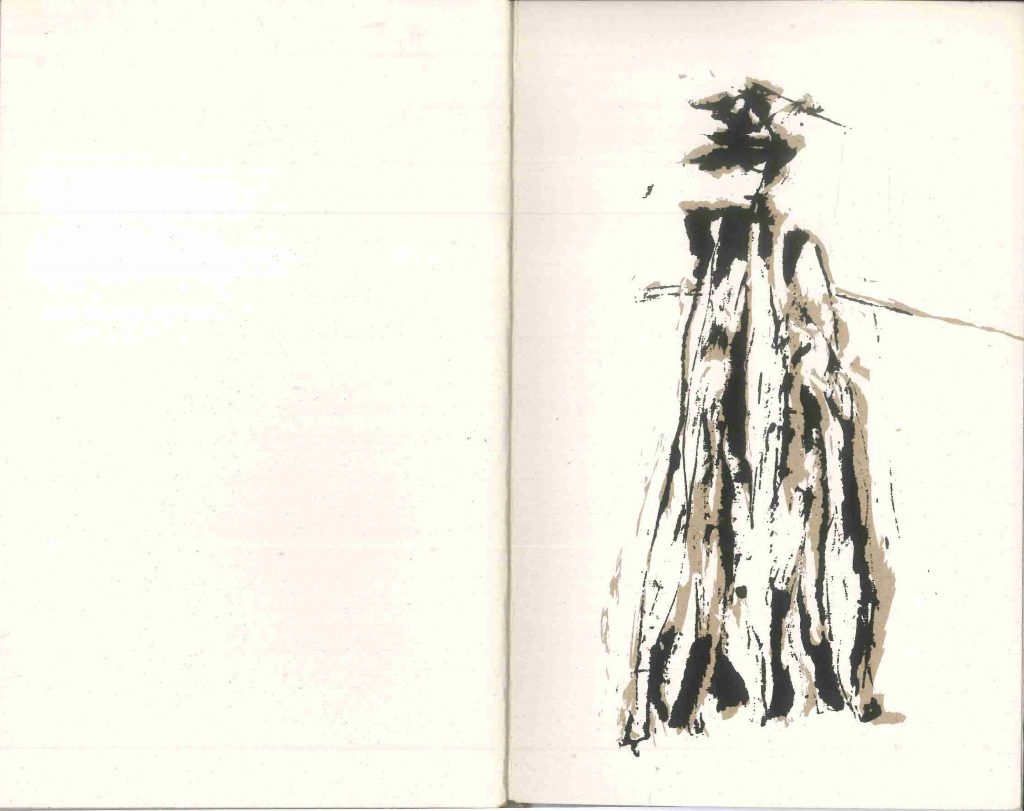
Seven inks illustrating André Bernold’s Cahier de conversation, edited by Philippe Poirier in Strasbourg in 1988.
A limited edition of 150.


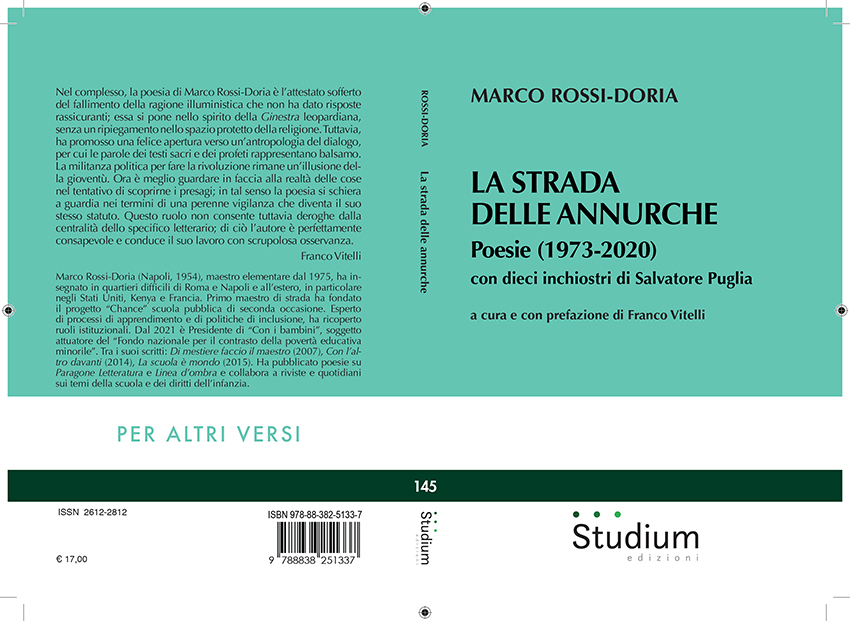
La strada delle annurche, 2023.

La strada delle annurche Poesie (1973-2020) è il titolo della raccolta poetica di Marco Rossi-Doria, a cura e con una prefazione di Franco Vitelli, per le edizioni Studium di Roma (2023).

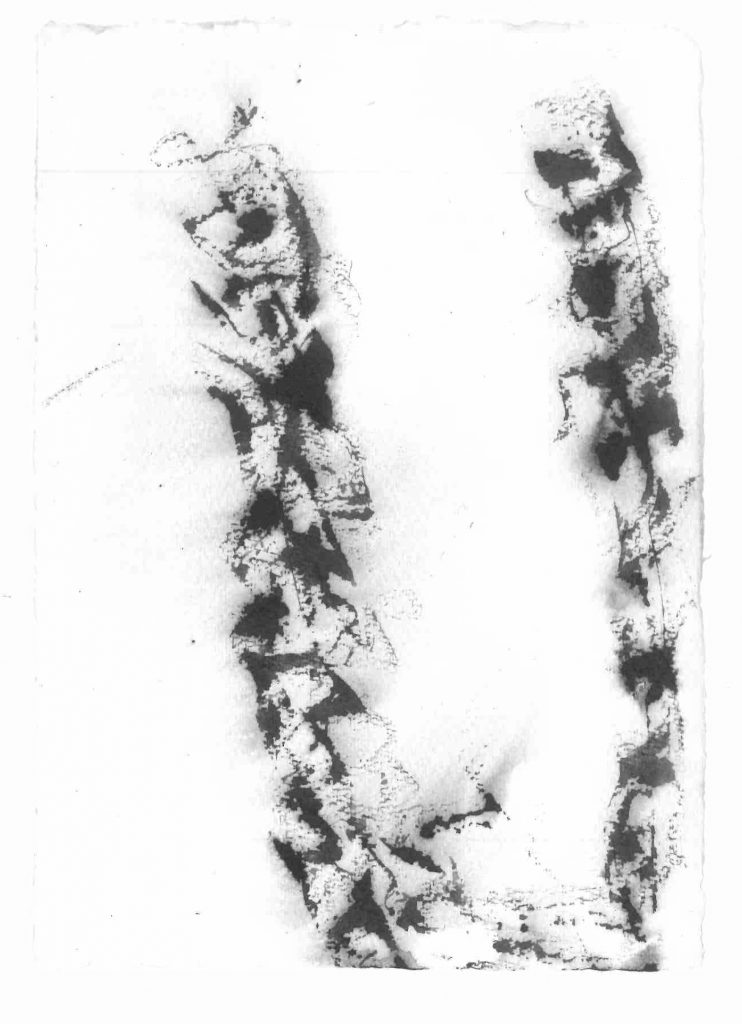
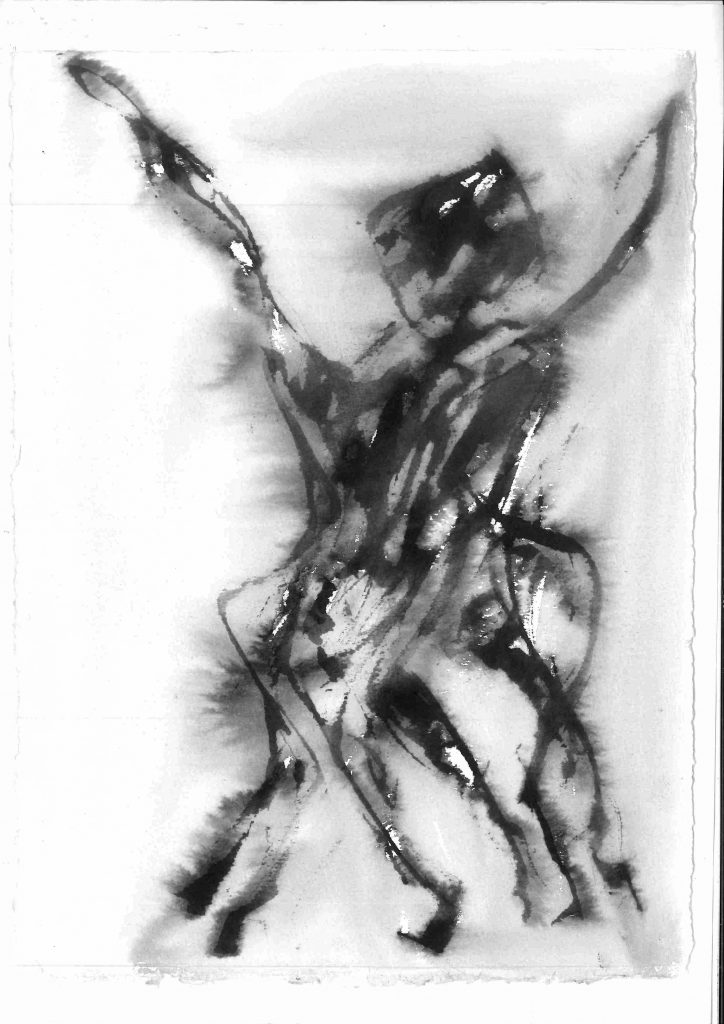
Gli inchiostri che accompagnano la raccolta datano della fine degli anni Ottanta, quando resi visita a Marco in Kenya, ove insegnava alla scuola elementare italiana. Li ho recentemente ripresi in una sorta di remix, quando mi ha chiesto di illustrare anche questo suo ultimo volume.
Dalla prefazione di Franco Vitelli:

NOTIZIA PER IL LETTORE

Il presente volume, sotto il titolo La strada delle annurche, raccoglie la produzione poetica di Marco Rossi-Doria strutturata in cinque sezioni che occupano lo spazio-tempo che va dal 1973 al 2020. L’autore, in verità, ha fatto un uso parsimonioso dell’espressione in versi e ha mostrato sempre una certa ritrosia nei confronti di un lavoro di sistemazione; ha dovuto cedere, infine, alle insistenze esterne che reclamavano la bontà dell’iniziativa.

Di ciascuna sezione, con titolazione d’autore, se ne dà in seguito notizia specifica, qui basti accennare al fatto che il libro raccoglie in successione cronologica poesie edite e inedite, riuscendo così a dare una fisionomia intera. 

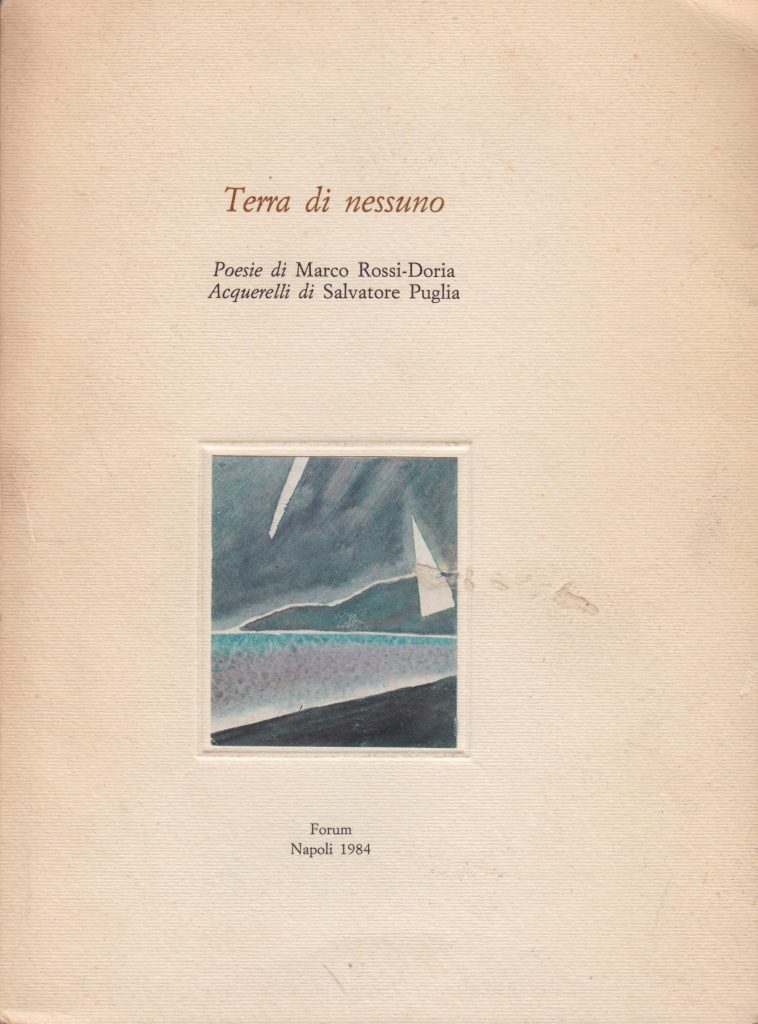
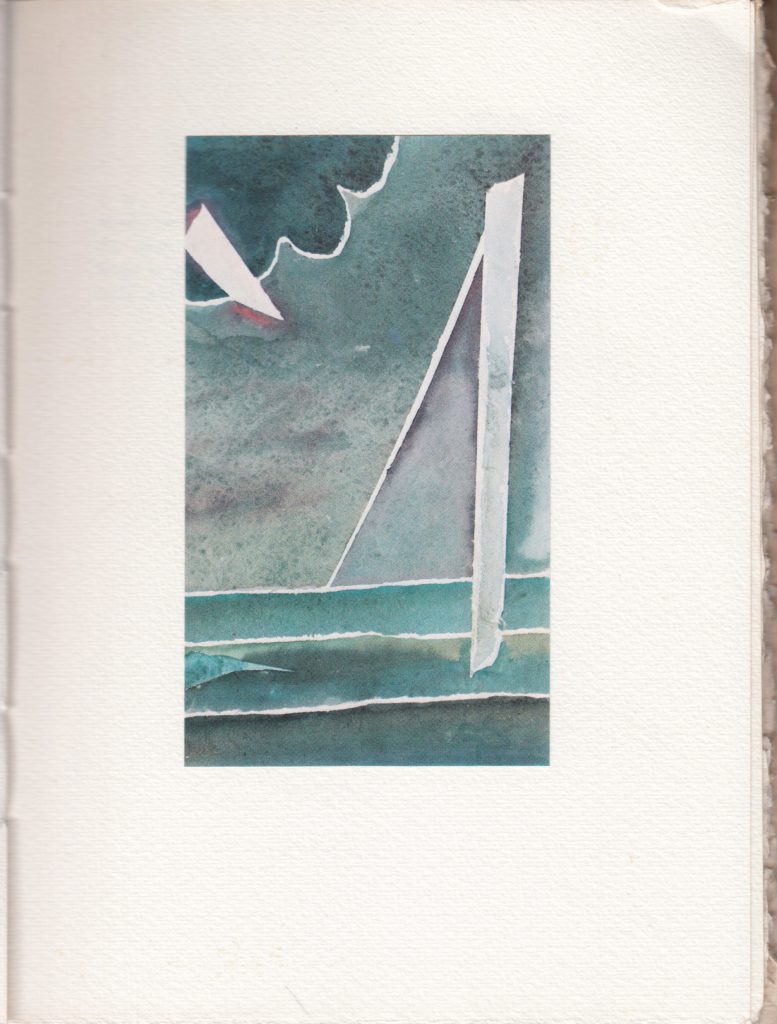
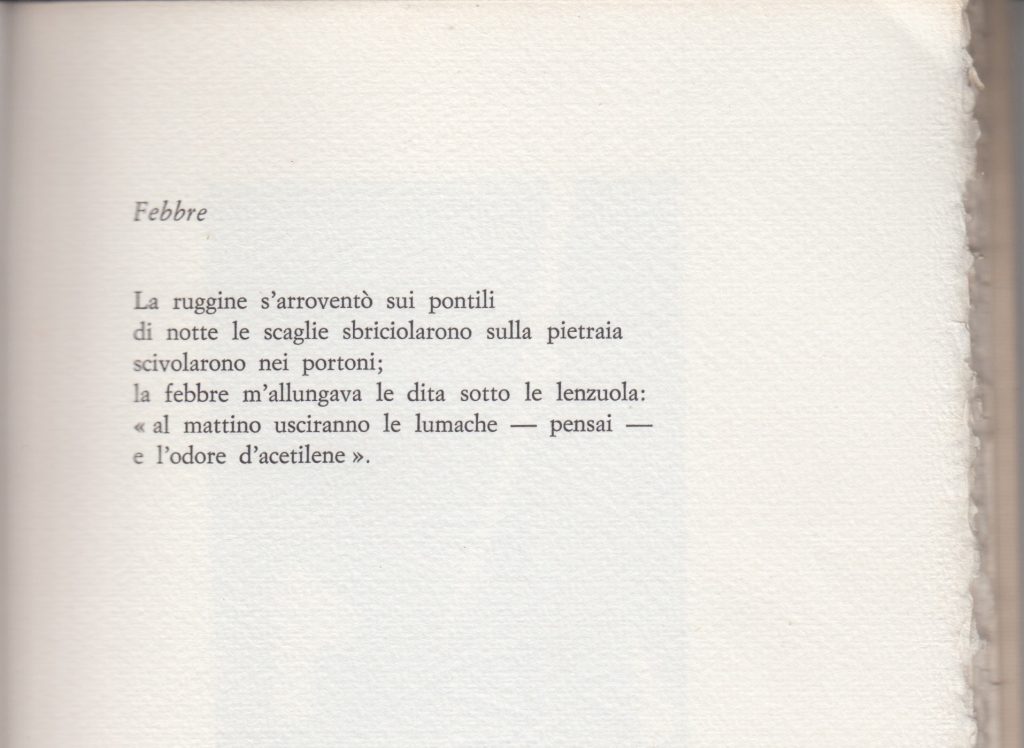
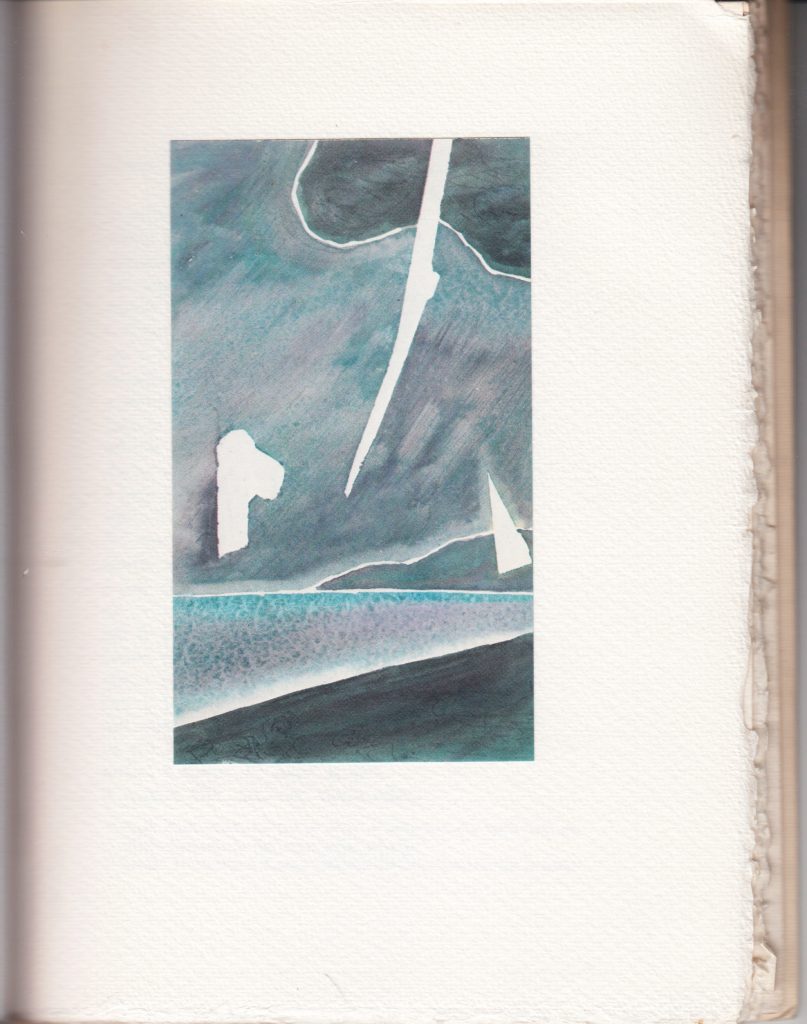
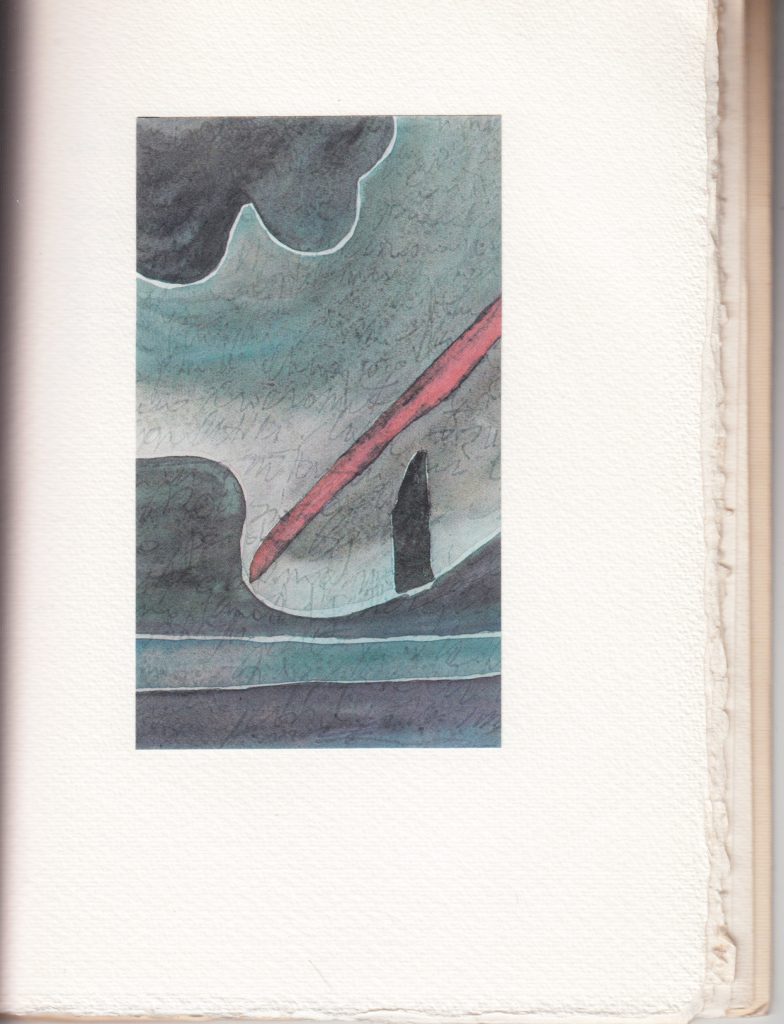
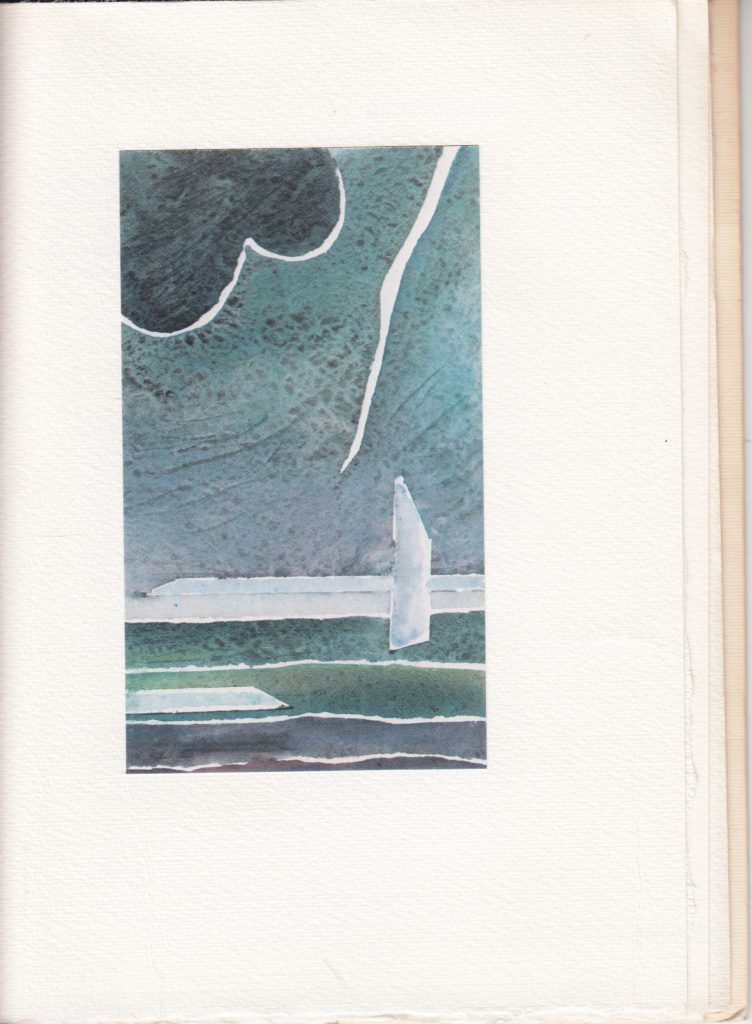
Terra di nessuno comprende 16 poesie degli anni 1973-1983. Esse sono già riunite in una plaquette in carta d’Amalfi pubblicata a Napoli da Forum nel 1984 in 239 esemplari numerati, con 4 acquerelli di Salvatore Puglia. La poesia Generazione è stata anche pubblicata in «Linea d’Ombra», febbraio 1989, p. 64. Rispetto alla plaquette, nella versione odierna l’autore ha apportato alcuni cambiamenti riguardanti la diversa misura dei versi, l’aggiunta o sostituzione di titoli, l’eliminazione di una poesia e di alcune dediche.

Il poemetto Laerte è stato composto tra il 1983 e il 1986 e pubblicato da Cesare Garboli su «Paragone/Letteratura», ottobre 1987, pp. 8-29.

Su proposta di Michel Deguy, Laerte è poi uscito su Po&sie (n. 47, 4° trimestre 1988), tradotto in francese da Caroline Peyron.

Giallonapoli riunisce 27 poesie scritte tra il 1984 e il 1988.

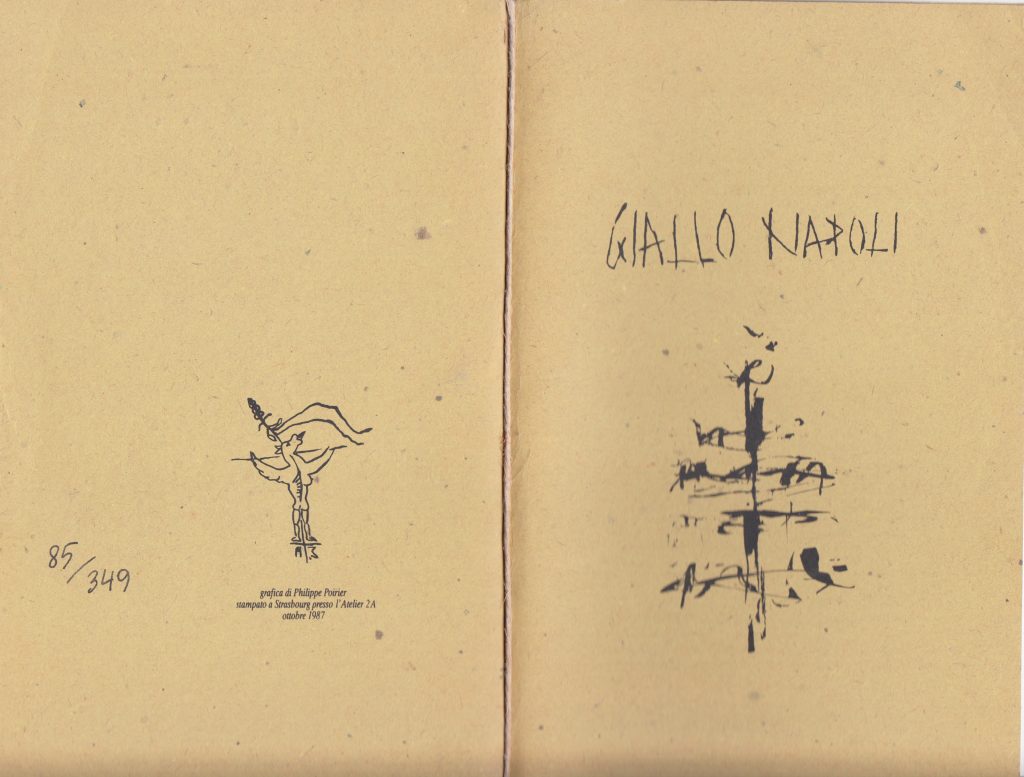
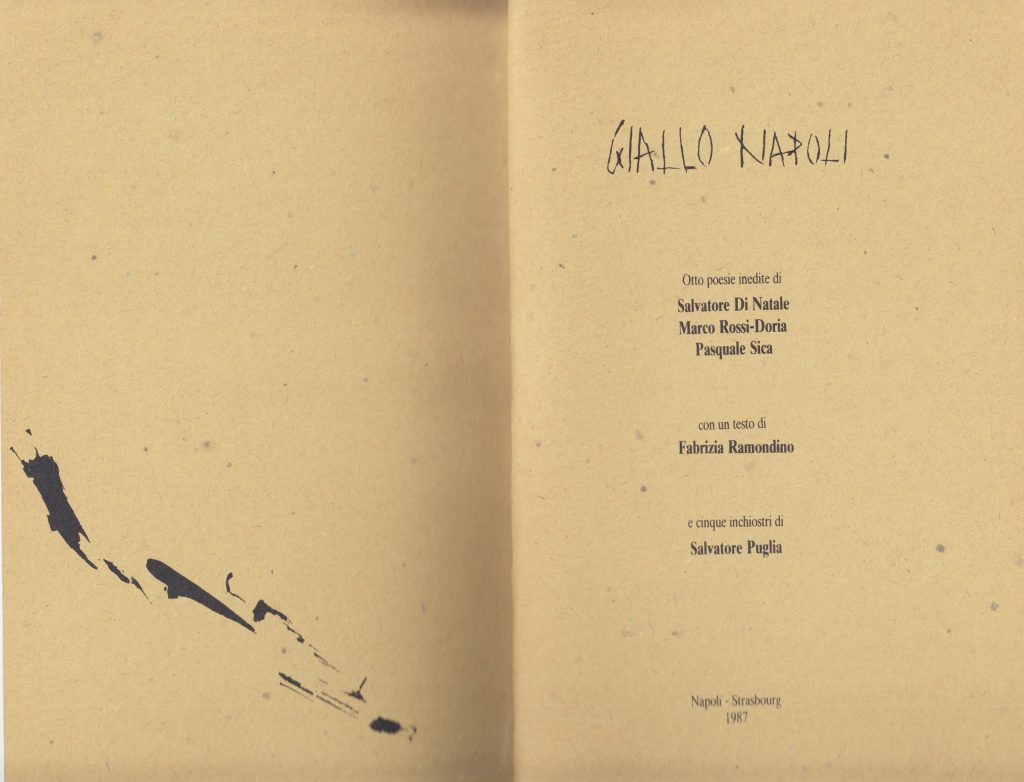
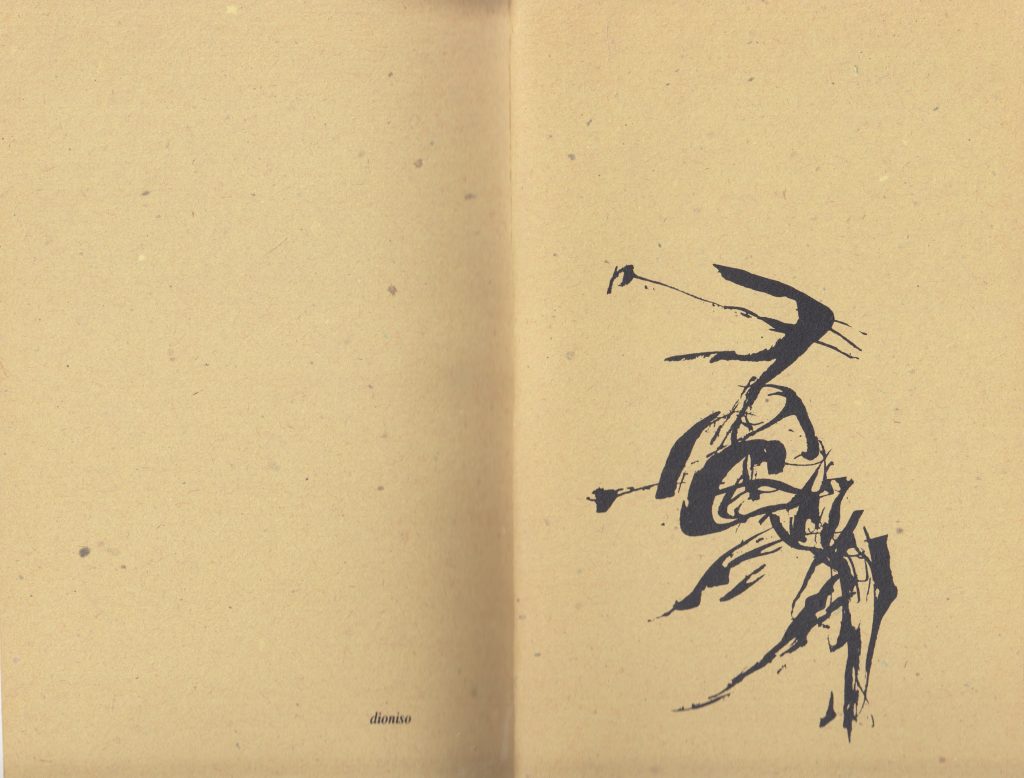
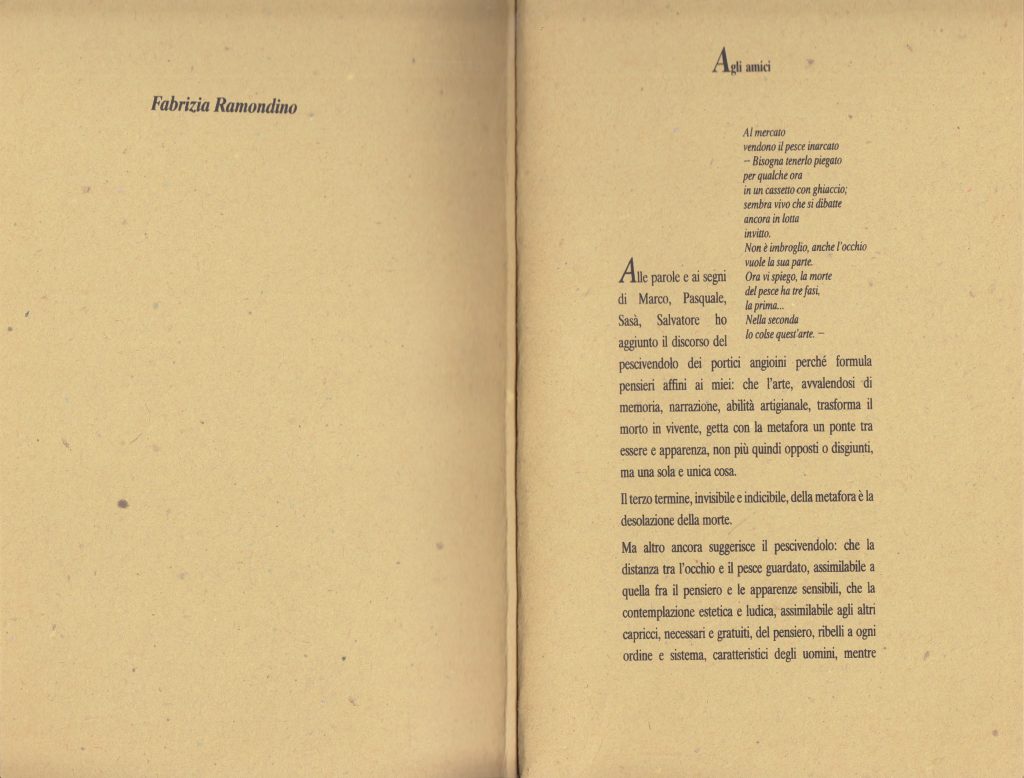
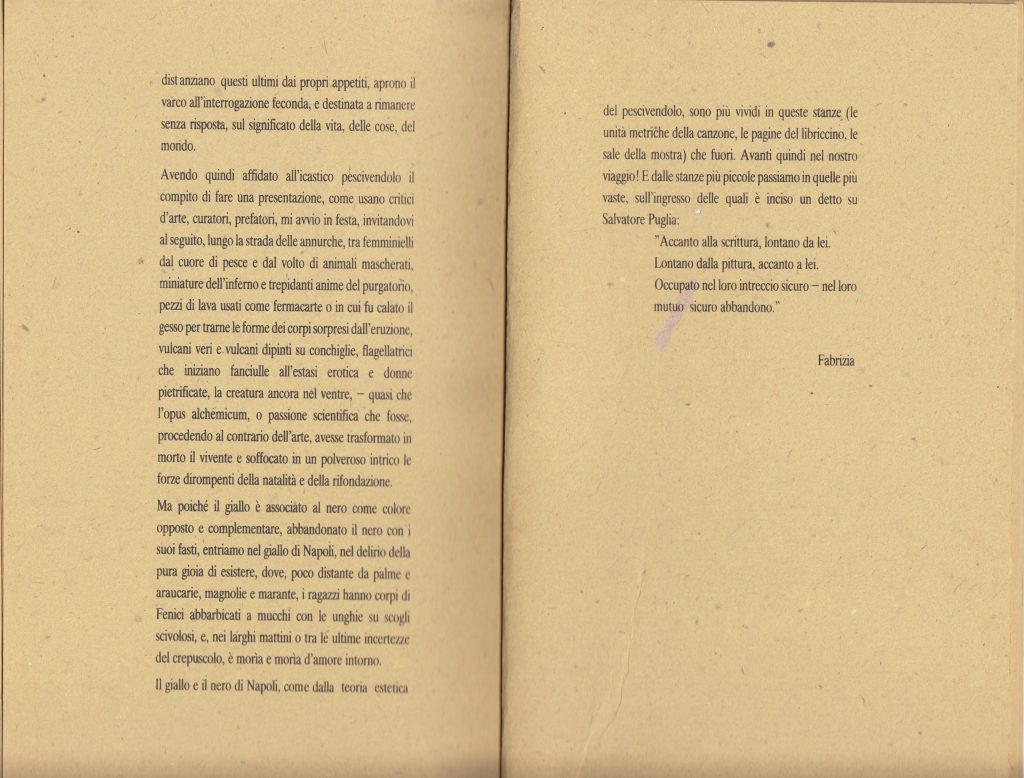
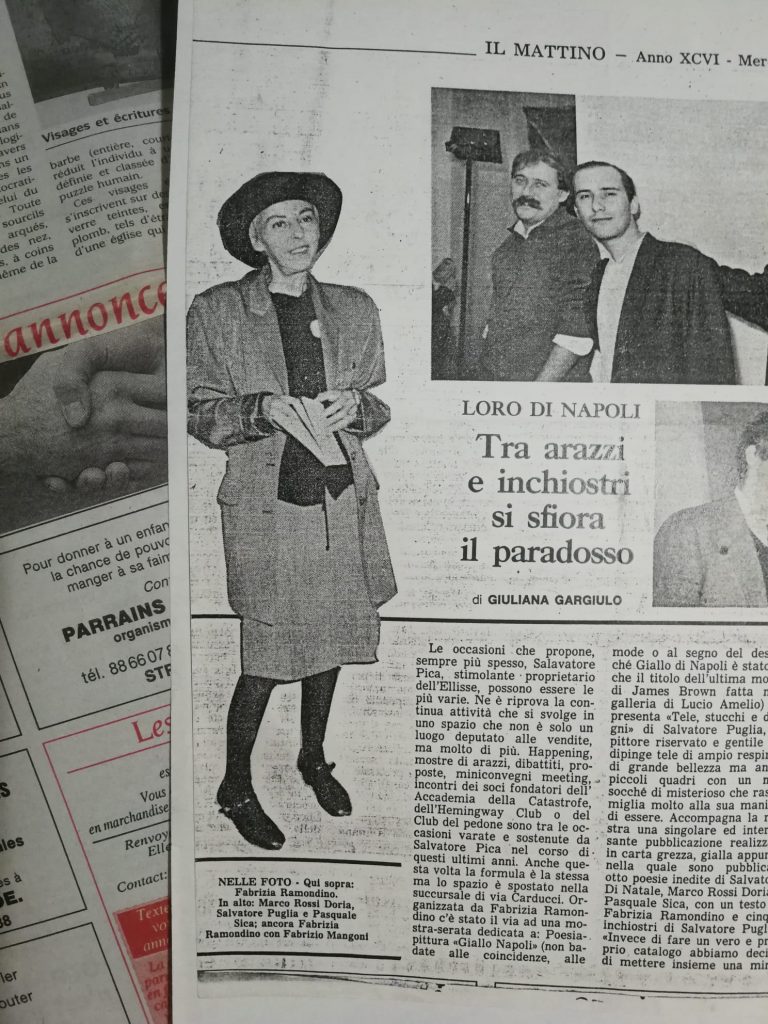
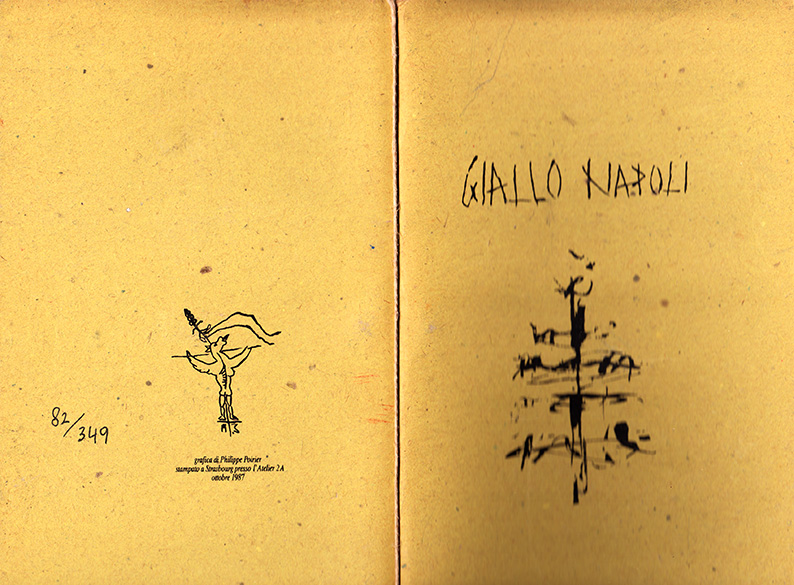
Di queste, tre (La dimora distante, Altri venuti (diverso titolo di Ziggurat), Giallo napoli) sono state stampate a Strasburgo nell’autunno del 1987, con grafica di Philippe Poirier, in un quaderno in carta da imballaggio in 349 copie numerate, titolato Giallo Napoli. Qui erano presenti anche poesie di Salvatore Di Natale e Pasquale Sica, con cinque inchiostri di Salvatore Puglia e un testo di Fabrizia Ramondino.

Nello stesso anno, sempre a Strasburgo, altre dieci poesie, in versione italiana e francese  – Port Bou, mezzogiorno, Selene e le sue compagne, non è la collera Eterna, mé at cori (diverso titolo di Balsamo), PilatoEstremo, Il fantasma nelle stanze (con testo ridotto), il geco che rivedo, da aggiungere  – sono apparse in edizione numerata in 100 copie (Dix poèmes de Marco Rossi-Doria), su carta povera, con disegni di Philippe Poirier.


Giallo Napoli, 1987.

Una mostra e la presentazione di una raccolta di poesie al Centro Ellisse, Napoli, novembre 1987.
Otto poesie inedite di Salvatore Di Natale, Marco Rossi-Doria, Pasquale Sica e un testo di Fabrizia Ramondino.
Cinque inchiostri di Salvatore Puglia su carta paglia. Grafica: Philippe Poirier.
Edizione limitata a 349 esemplari.


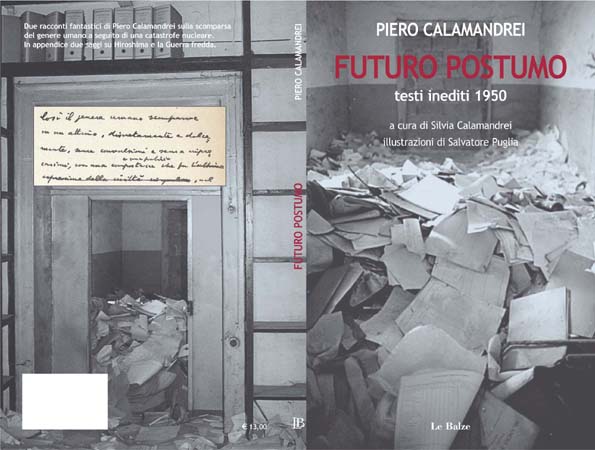
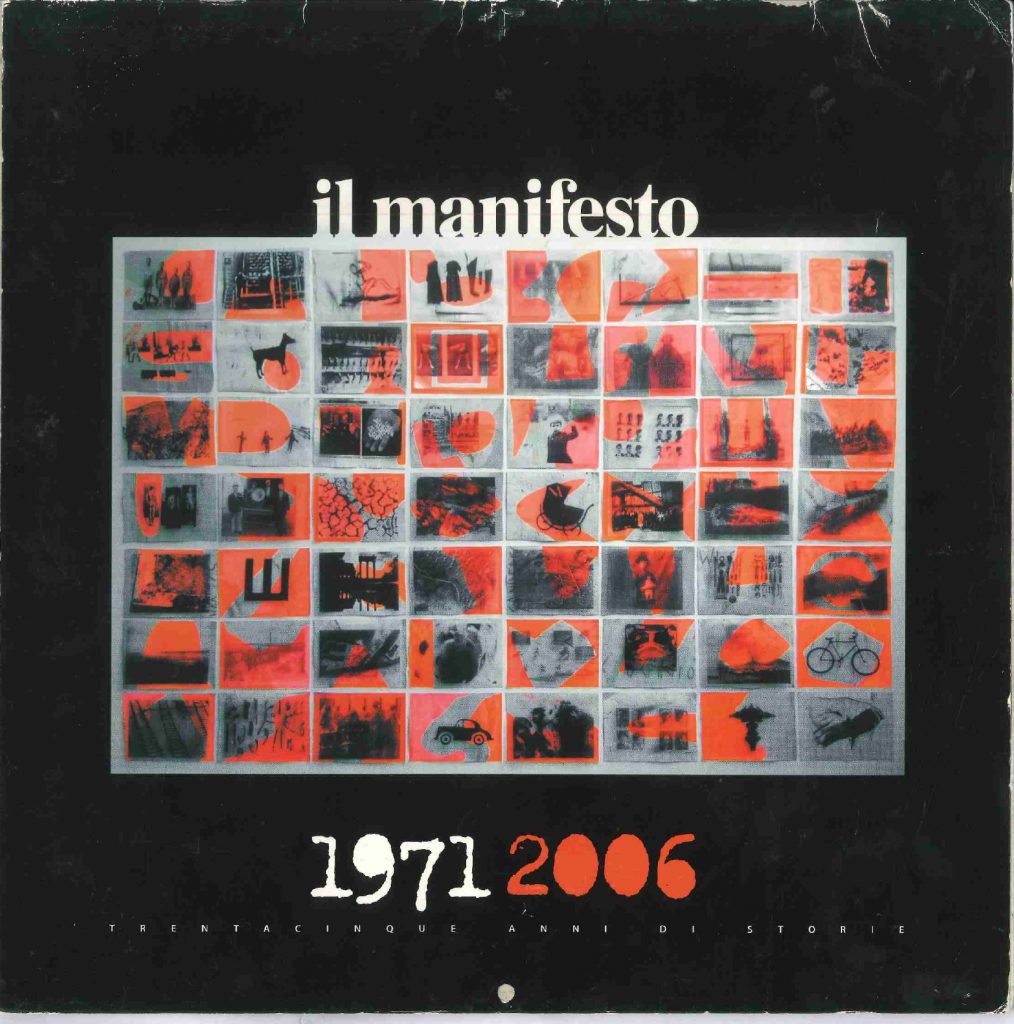
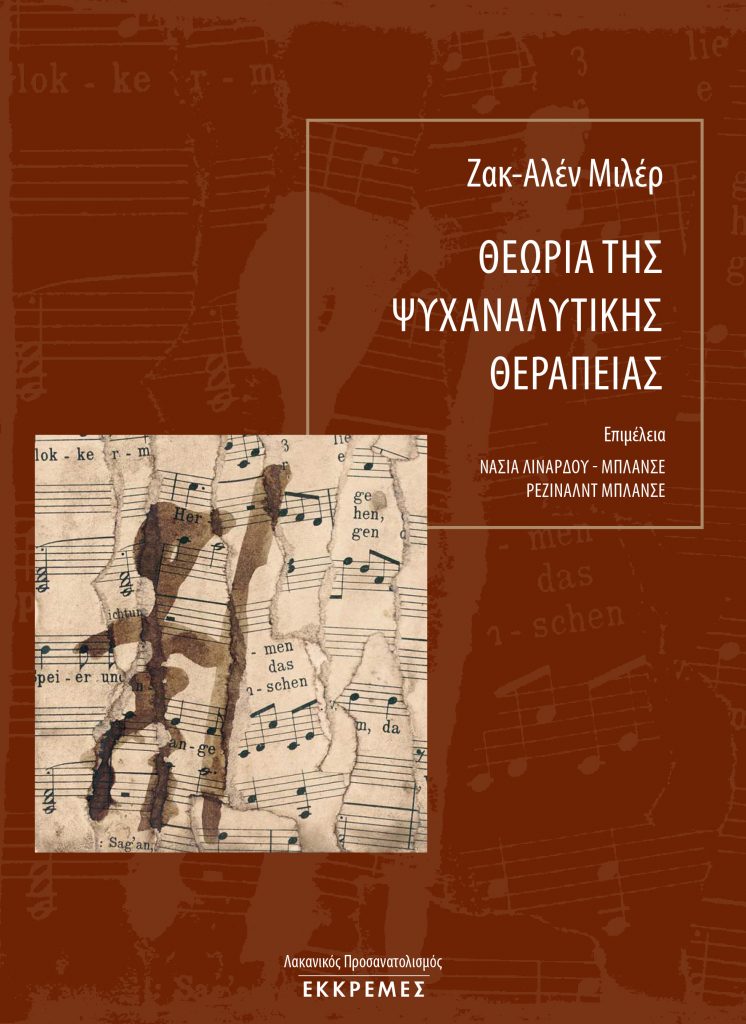
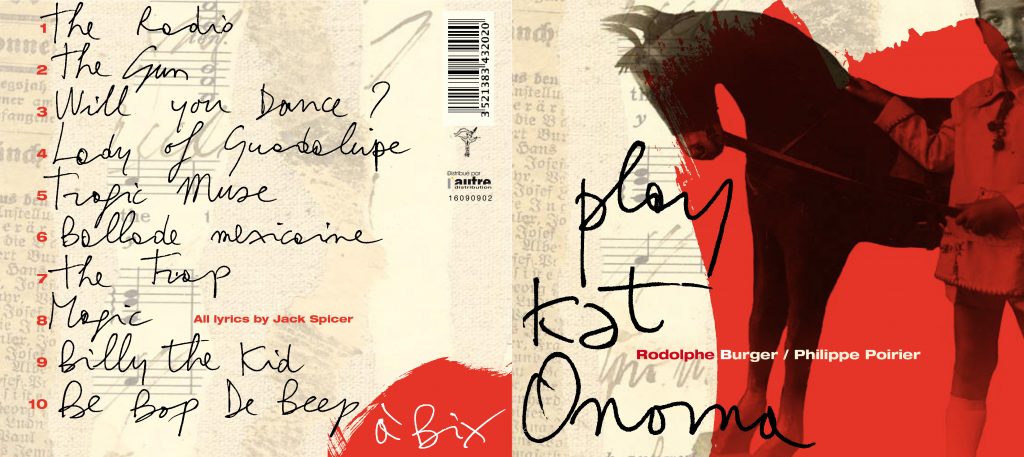
Book and record covers, posters 1987-2020.


(Cover design: Carole Peclers)


(Cover design: Carole Peclers)


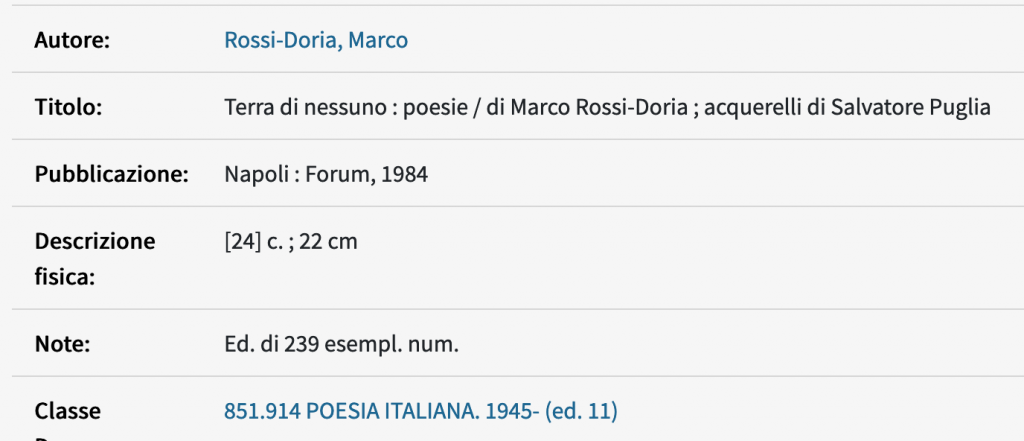
Terra di nessuno, 1984.

This collection of poems by a dear friend, Marco Rossi-Doria, contains my first published artworks. Some of the watercolors illustrating the book were executed at Marco’s home on the Sorrento Peninsula outside of Naples, while others were done during a wintertime visit to Venise, on a pier overlooking the Island of the Giudecca.


(https://opac.bncf.firenze.sbn.it/bncf-prod/resource?uri=CFI0081055)


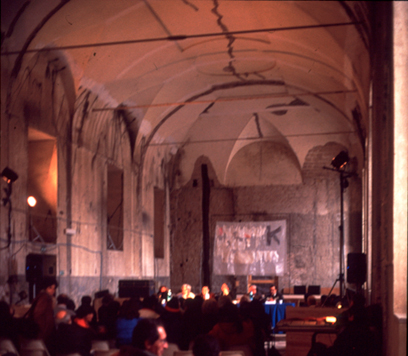
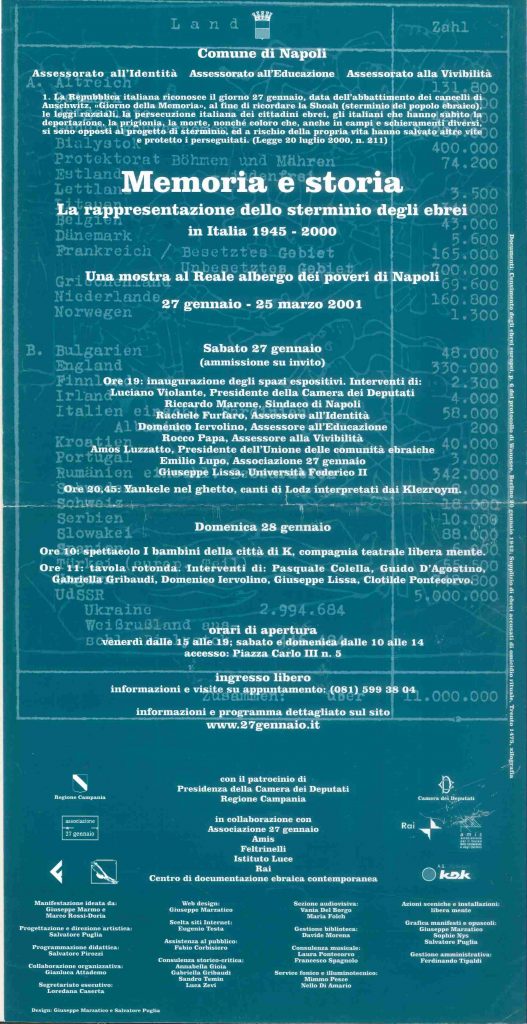
Asylum 2001

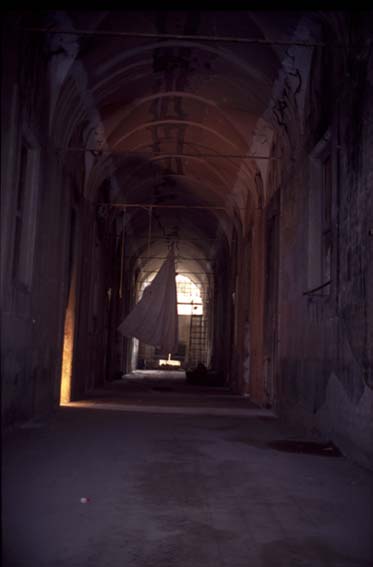
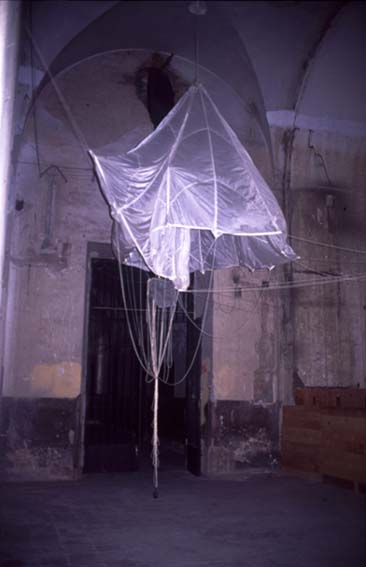
An installation and a performance in Naples, at the Albergo dei Poveri, for the first Day of the memory (January 2001), recorded by Leonardo di Costanzo (short version: 6’46”).

.
Performance realized by the libera mente theater company.
.
And a few images (for the related text, refer to
Asylum English (2001)
and Asylum. Morale d’une installation muséographique (2010)


.

Febbraio 2023: nota per i cortesi lettori italofoni.

Durante la preparazione dell’evento del 27 gennaio 2001, a partire dal luglio precedente, ho tenuto un Giornale.
In parallelo appuntavo in un Taccuino le riflessioni suscitatemi dall’esperienza vissuta e registravo in un Bollettino gli scambi epistolari di tipo amministrativo.
Feci di questi testi paralleli una stampa A4 su tre registri, con un diverso carattere tipografico per ogni sezione. Intendevo così proporre una lettura aleatoria e occasionale dell’insieme, che avevo intitolato Documenti napoletani. Ho perso questo montaggio, tanto nella versione cartacea che in quella digitale. Mi rimangono il diario e il taccuino. Trascrivo qui quest’ultimo.

Taccuino napoletano


Inks and drawings


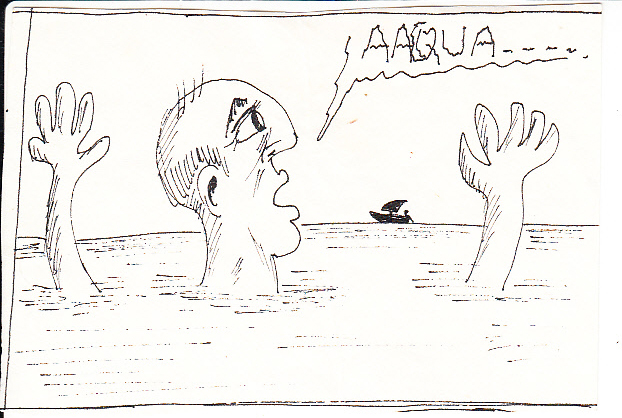
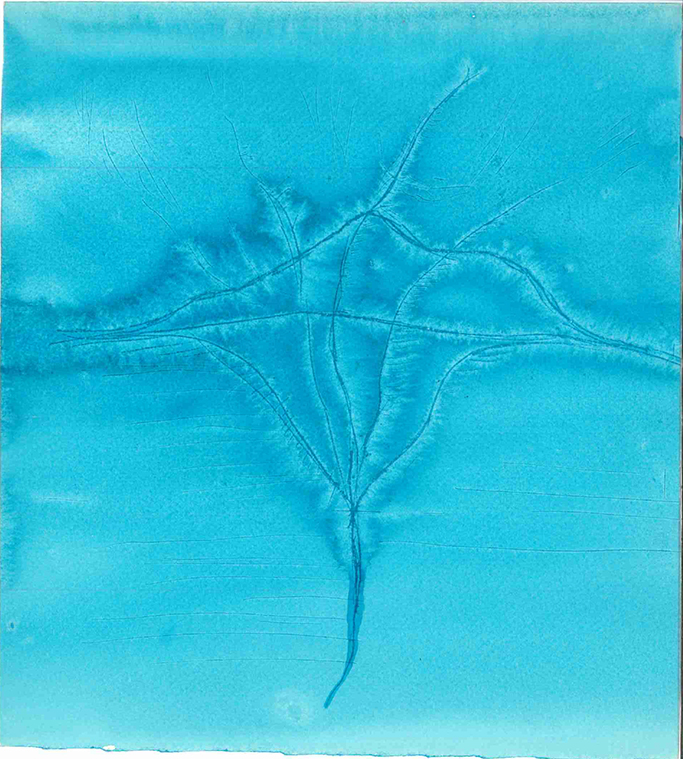
1973, Acqua.
.

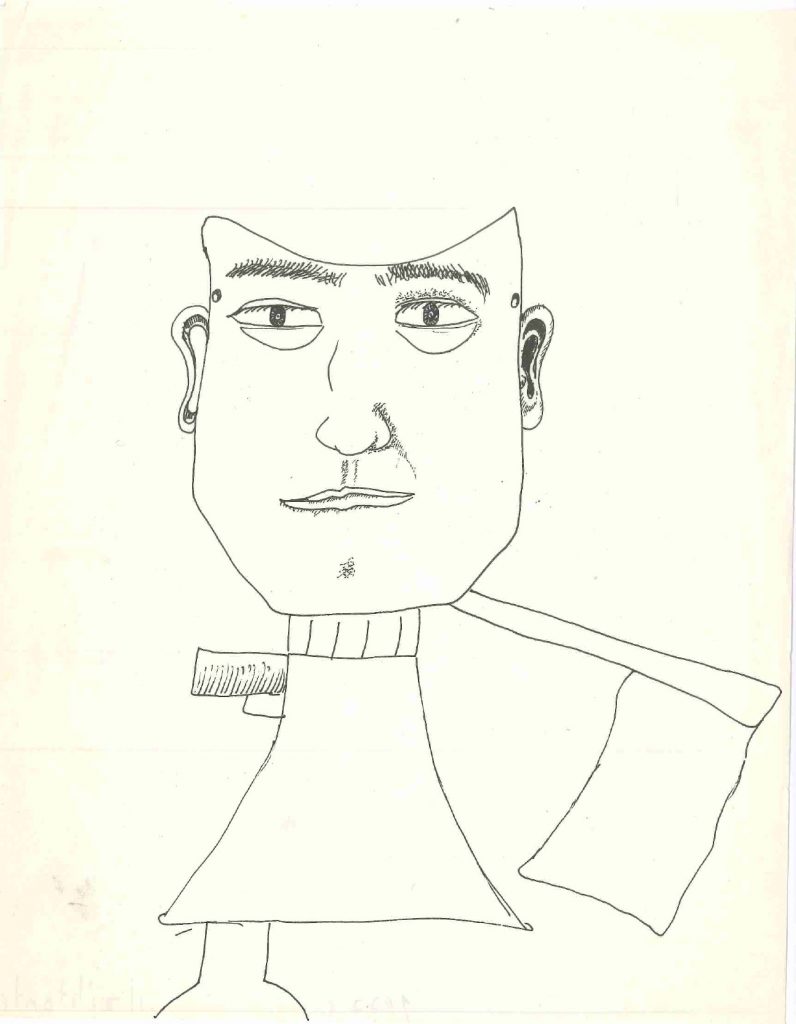
From the very first one, a self-portrait, to the latest, made in Brittany facing a menhir.


1977, Il militante.
.


1980, Linee della mano 04.
.

1986, Soter.
.


1987, Giallo Napoli.
.


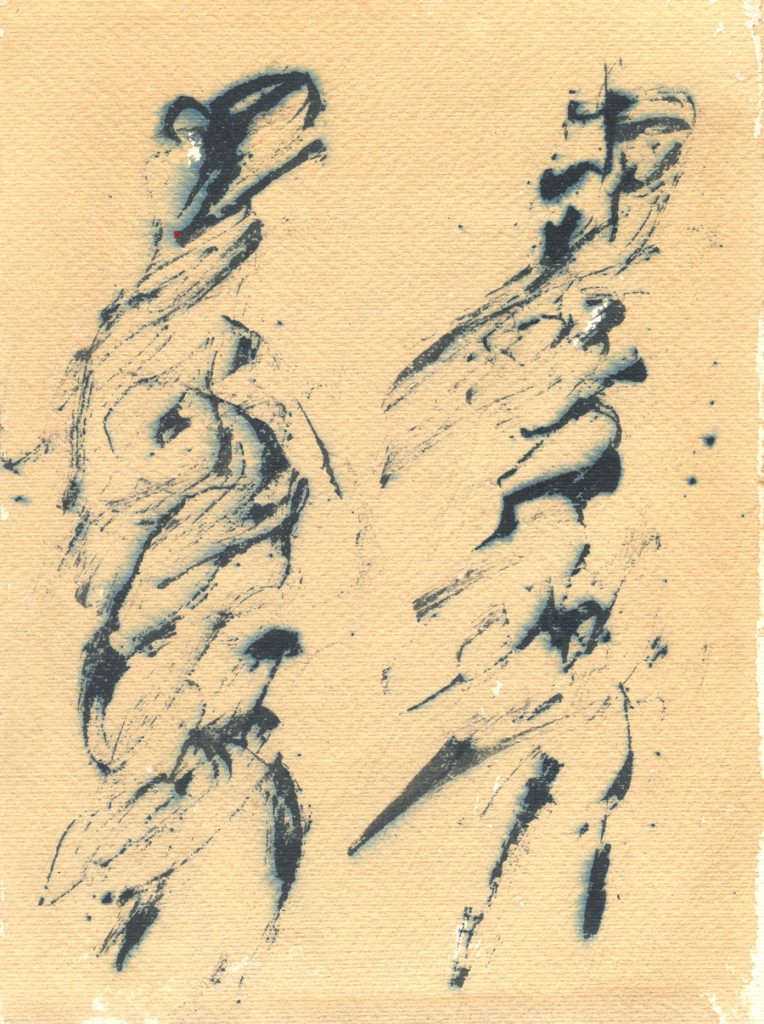
1988, Due Mamotii.
.


1988, Nairobi 08.
.


1988, Transit.
.


1990, Stèle mobile.
.


1990, Figurine 01.
.

1990, Mamotii-Schiller 03.
.


2002, Pathosformeln 01.
.


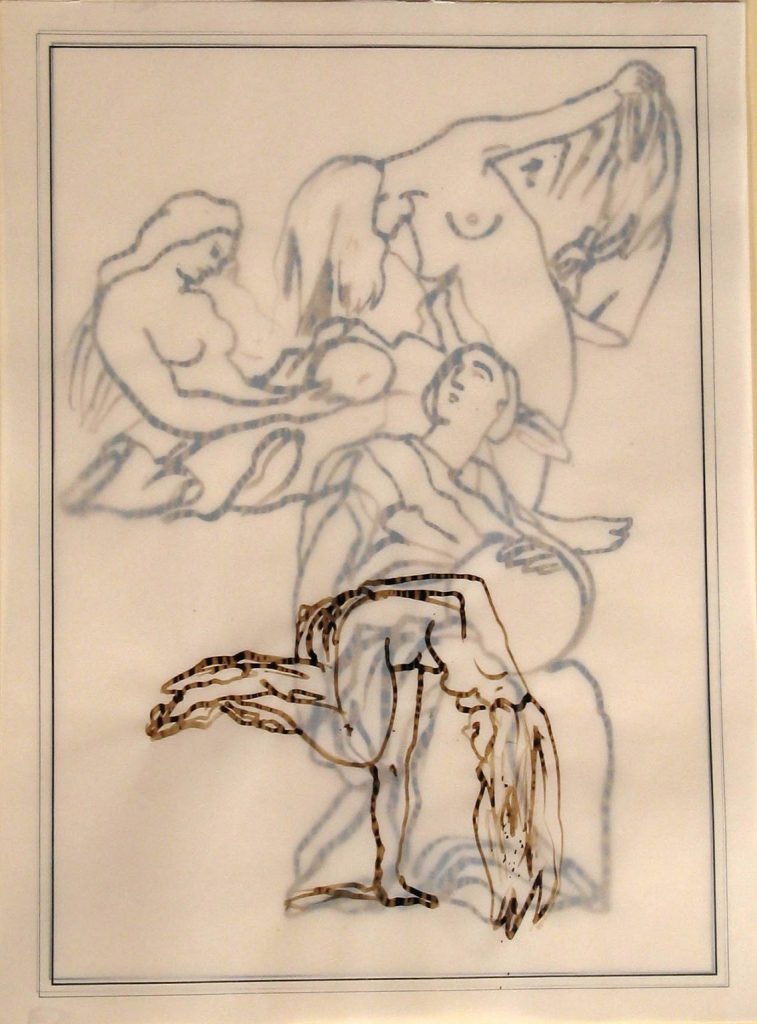
2003, Fra Urania e Maddalena 03.
.


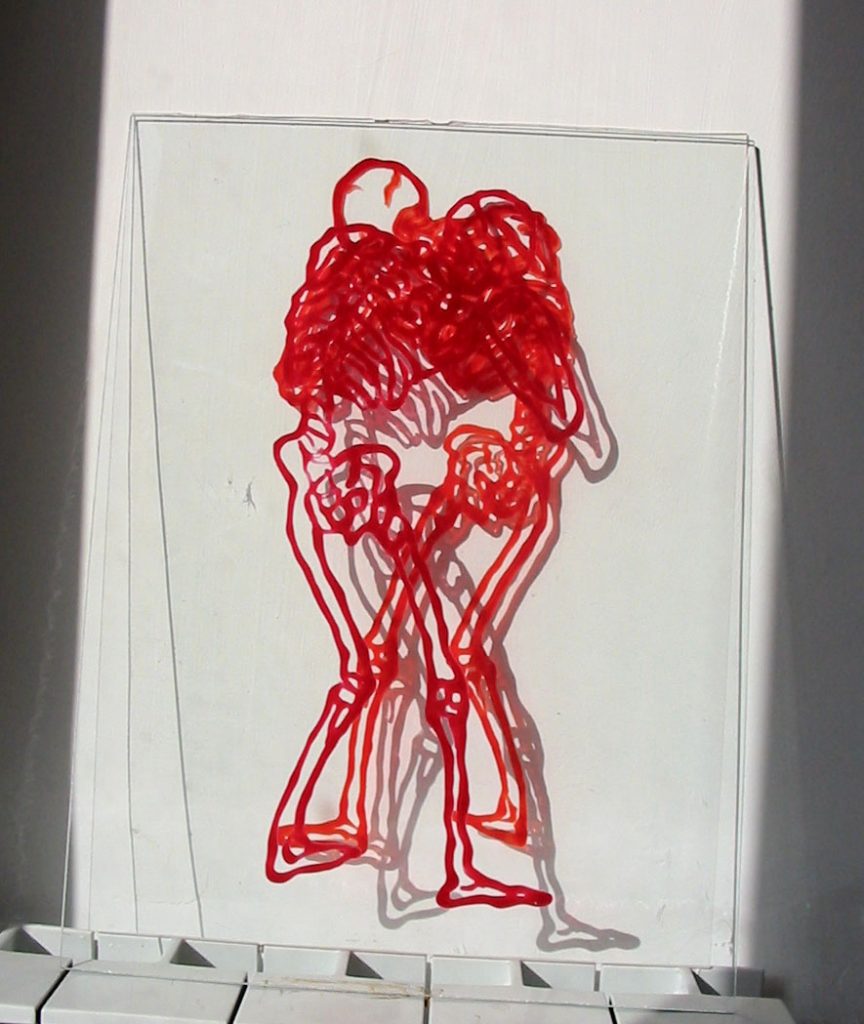
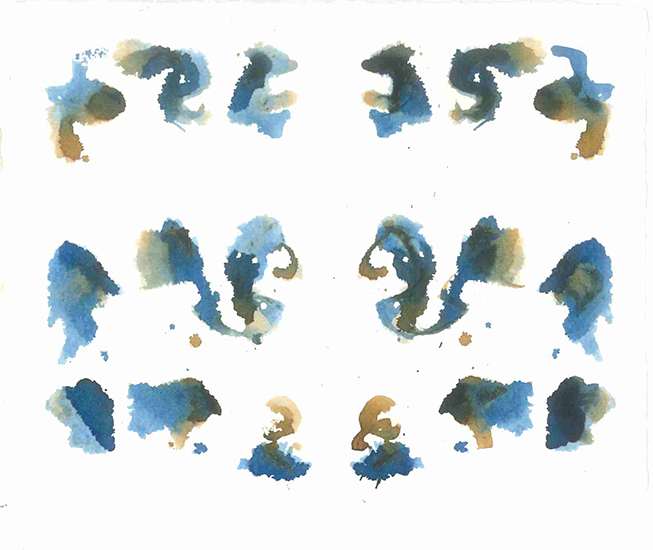
2004, Rorschach 14.
.


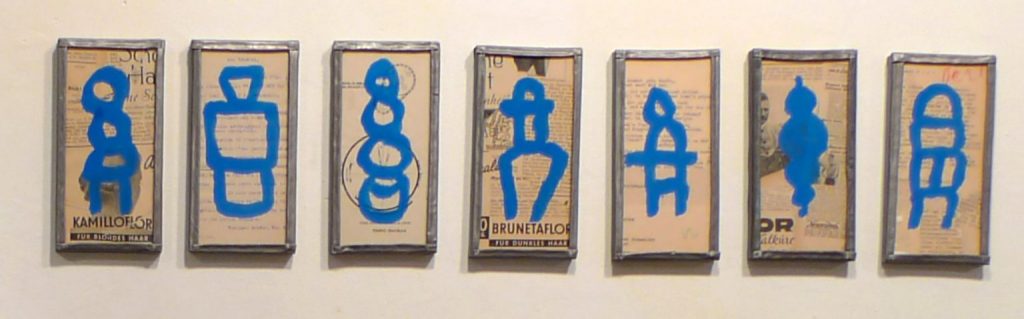
2009, Fragments en bleu.
.


2022, Canope 01 et 02.
.


2022, Canopo-Pinocchio 10.
.


2022, Menhir 00.
.


2022, Menhir 01.
.


2022, Menhir 02.
.


O. H. Remix (2022)

A remaking of an older work (Ordinary Humans, 2019).


O. H. 05 Remix, 2022, 20×30.
.

O. H. 01 Remix, 2022, 20×30.
.

O. H. 11 Remix, 2022, 20×30.
.

O. H. 03 La Nova, 2022, 20×30.
.

O. H. 10 Castel d’Asso, 2022, 20×30.
.


Zoological illustrations 2020-2022

Three series of “zoological illustrations” :


Birds of Lent 2022,
.


Predators 2021,
.


and Raubtiere 2020 .
.

The first presentations of the series Raubtiere and Predators:
Bordeaux March-May 2021 and Nîmes December 2021

.

Ruins in the Forest. Series A (2016-2017)


RnF A 01, 2016, 30×40.
.


RnF A 02, 2016, 30×40.
.


RnF A 03, 2016, 30×40.
.


RnF A 04, 2016, 30×40.
.


RnF A 05, 2016, 30×40.
.

RnF A 06, 2016, 30×40.
.


RnF A 07, 2016, 30×40.
.

RnF A 08, 2016, 30×40.
.


RnF A 09, 2016, 30×40.
.


RnF A 10, 2016, 30×40.
.

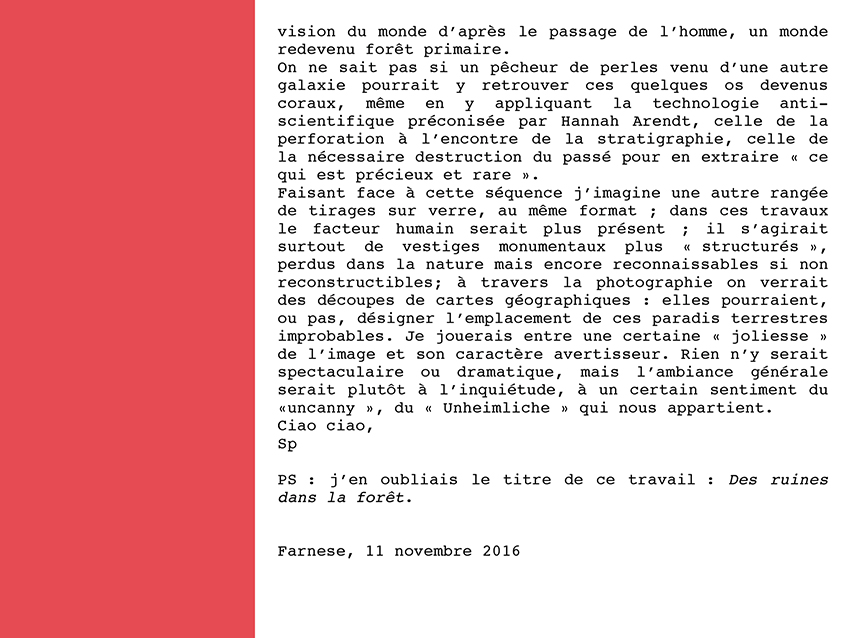
Spuglia lettre 1

Spuglia lettre 2


.

Sur le retour (Reworks 2022)

Pieces from 2010 to 2016, rediscovered and reworked with the addiction of red fluo shapes.


Aborigènes à Fos-sur-Mer, 40×60 (Gulliver à Fos-sur-Mer, 2010).
.


Rupestri bis 03, 45×60 (Rupestre 03, 2012).
.

.
Rupestri bis 04, 45×60 (Rupestre 04, 2012).
.


Ruins in the Forest B 12, 30×40 (2016).
.


Museum, carnet 1992

A notebook from thirty years ago, recently found.


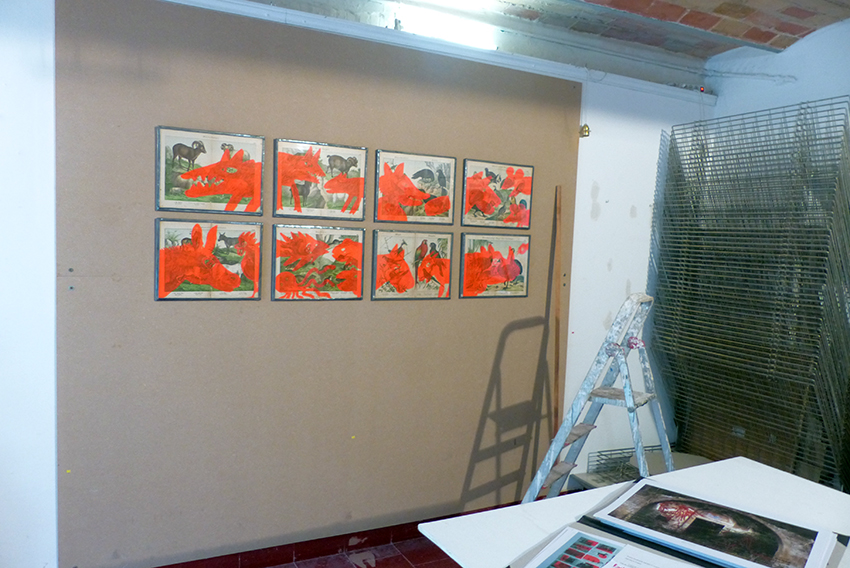
Predators (2021).

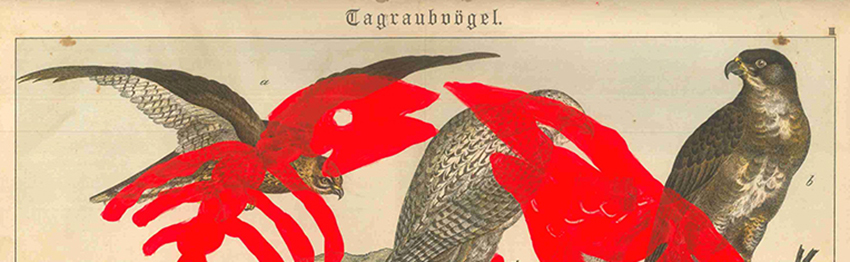
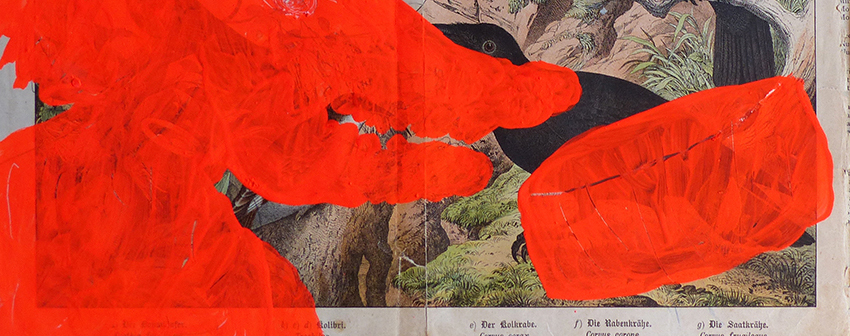
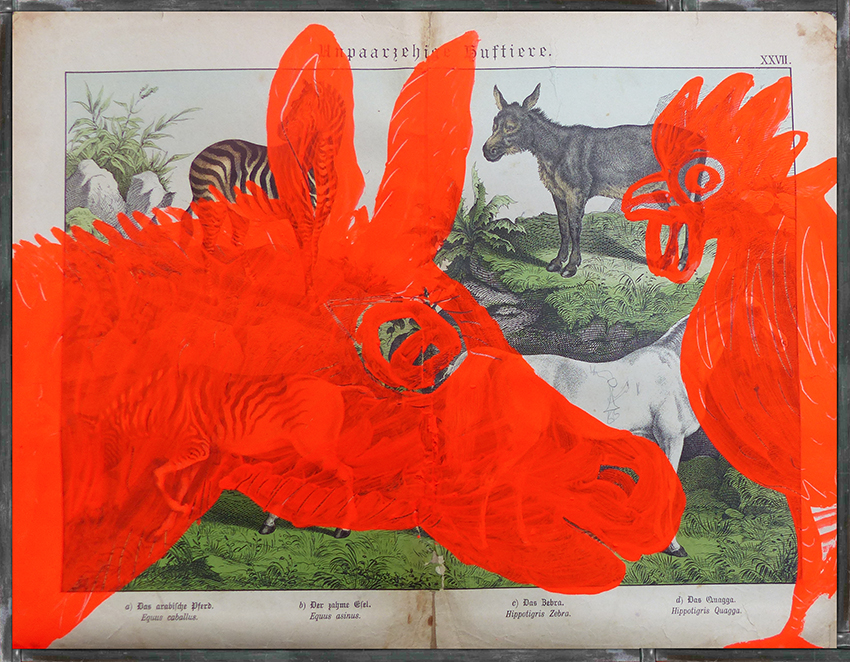
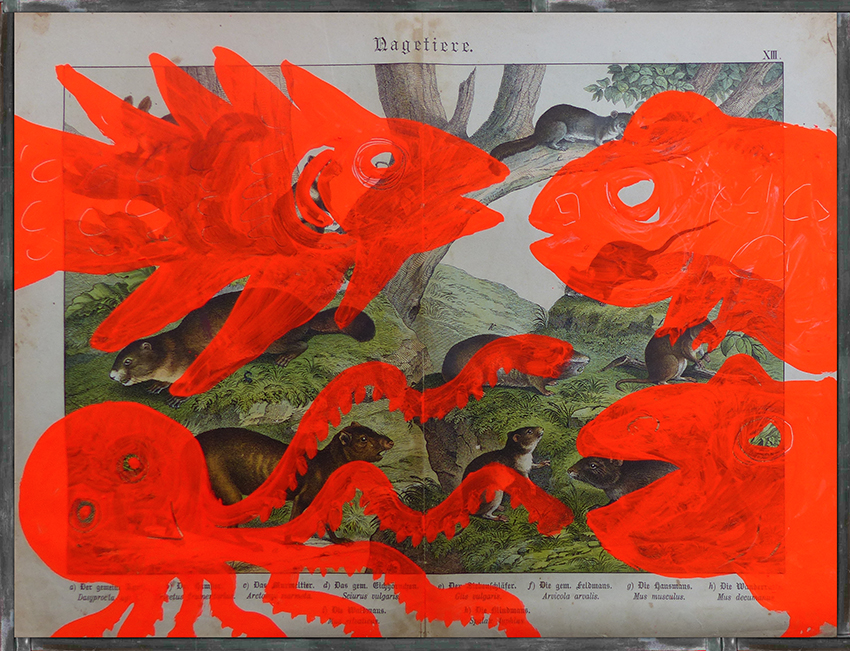
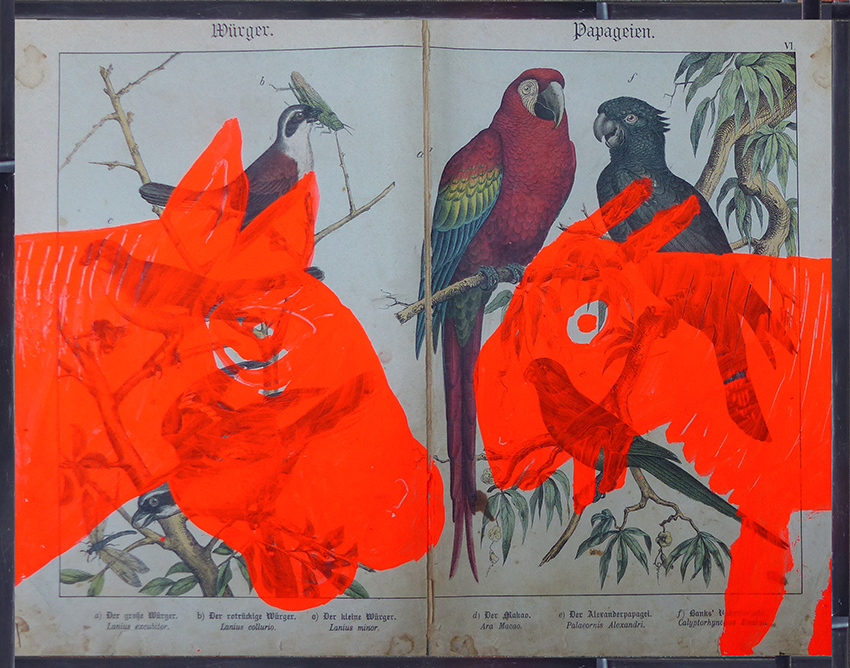
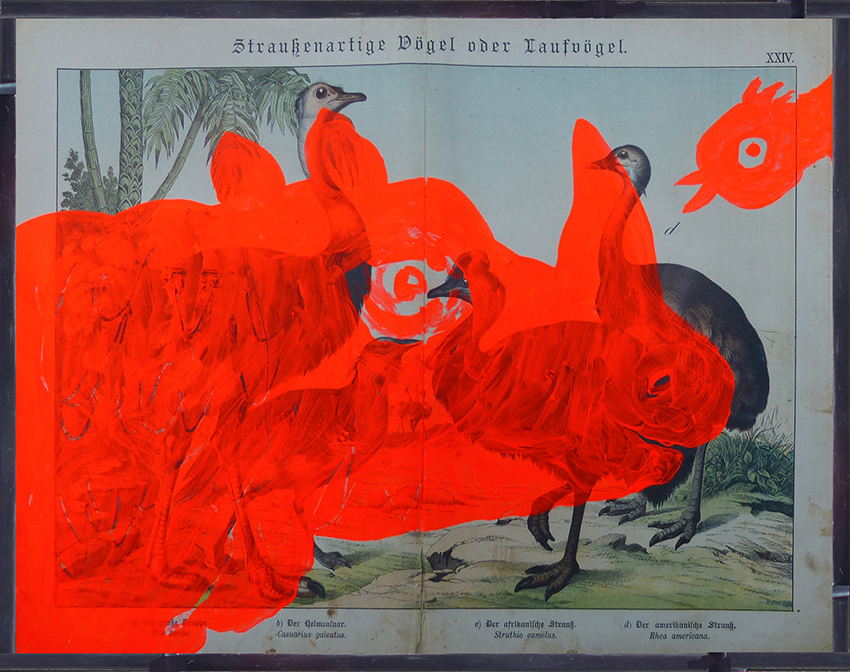
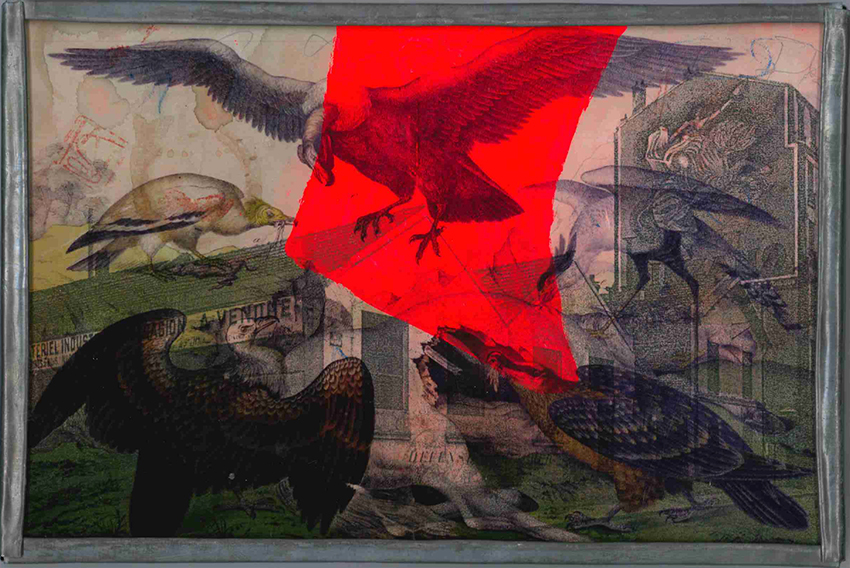
Superb 19th-century German zoological prints that I disfigured by superimposing fluorescent acrylic silhouettes, some of which refer to features depicted in the prints, while others are totally unrelated. The source of this inspiration was my vague recollection of the never-reread  17th-century French literary classic, La Fontaine’s Fables or of various French or German animal tales, which I attribute to the Age of Enlightenment.

Des planches zoologiques allemandes du XIXe siècle, superbes, que je me suis autorisé à abimer en leur superposant des silhouettes à l’acrylique fluorescent, prenant appui sur des éléments de l’image, ou les ignorant. Dans la tête, le vague souvenir des jamais relues Fables de la Fontaine ou de certains contes animaliers, français ou allemands, que je situe à l’âge des Lumières.


Predators 01 (Raubtiere bis 01), 33×42 (sold).
.

Predators 02 (Raubtiere bis 02), 33×42.
.

Predators 03 (Raubtiere bis 03), 33×42.
.

Predators 04 (Raubtiere bis 04), 33×42.
.


Predators 05 (Raubtiere bis 05), 33×42.
.

Predators 06 (Raubtiere bis 06), 33×42.
.

Predators 07 (Raubtiere bis 07), 33×42.
.

Predators 08 (Raubtiere bis 08), 33×42.
.

The first presentation of this series here.


.

Slideshow Four Theses

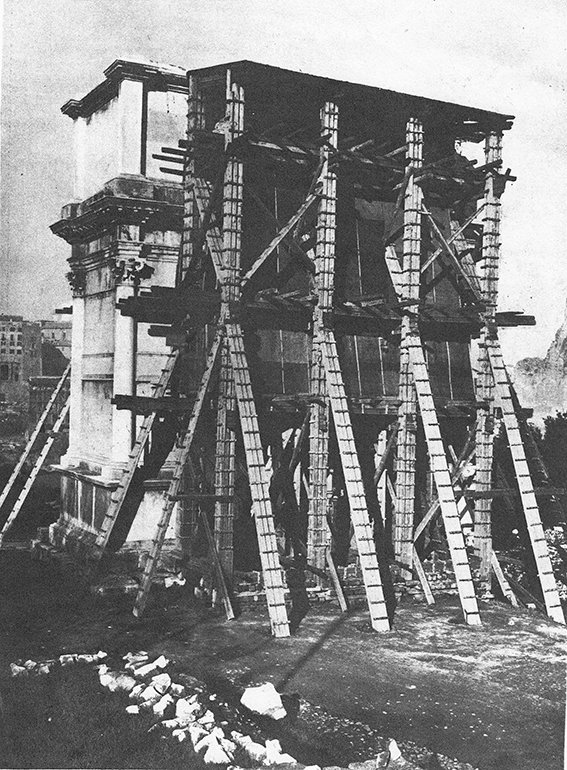
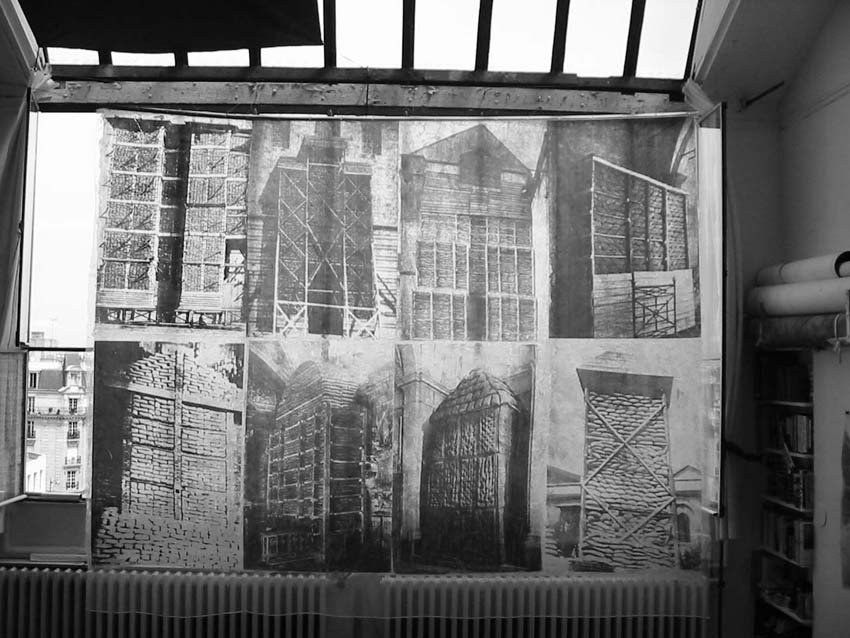
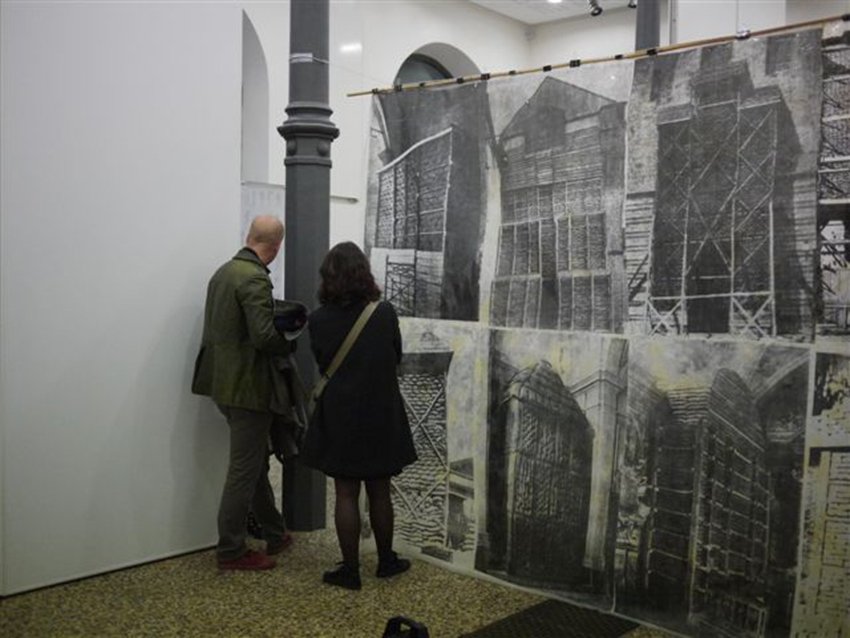
Thesis #1: The Solitude of Monuments.


.

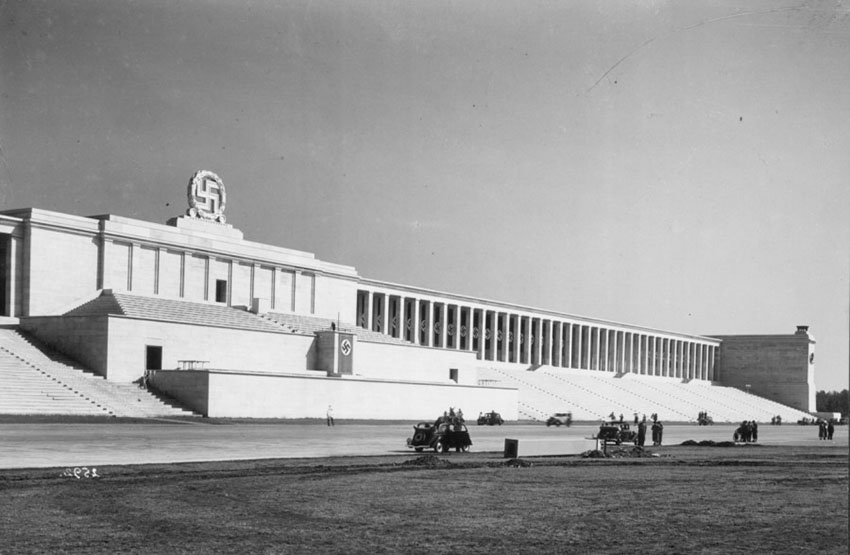
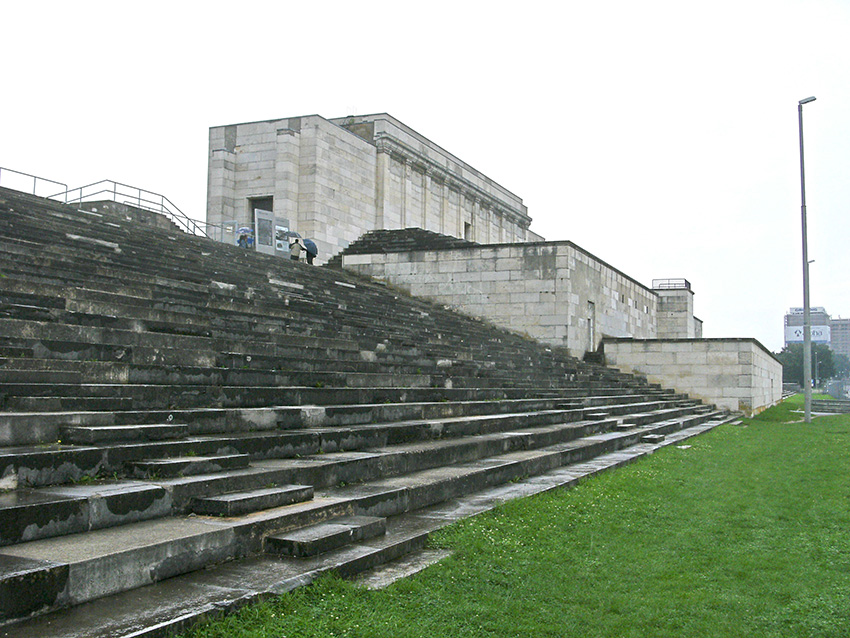
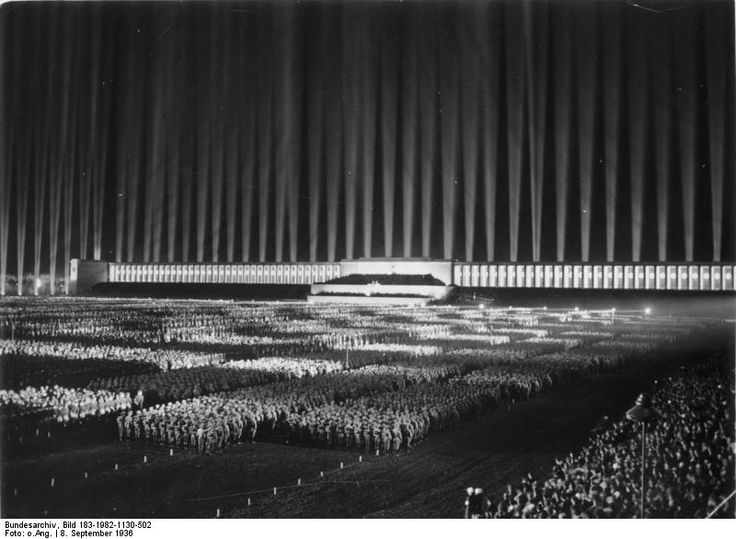
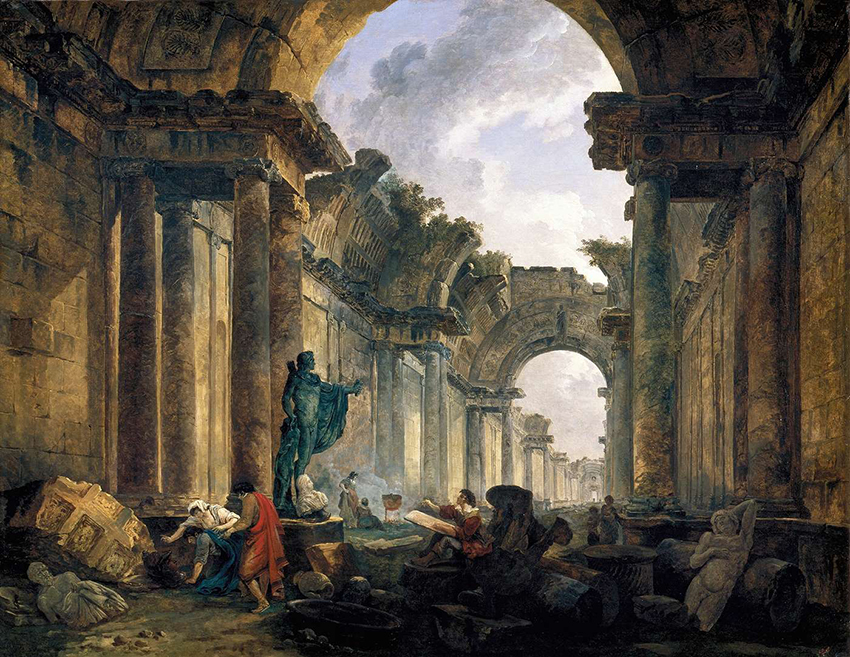
Thesis #2 Die Ruinenwerttheorie/The Theory of Ruin Value.


.
Thesis #3: Sentimentalisierung ist Verbrechen / Sentimentalizing is a crime.

.
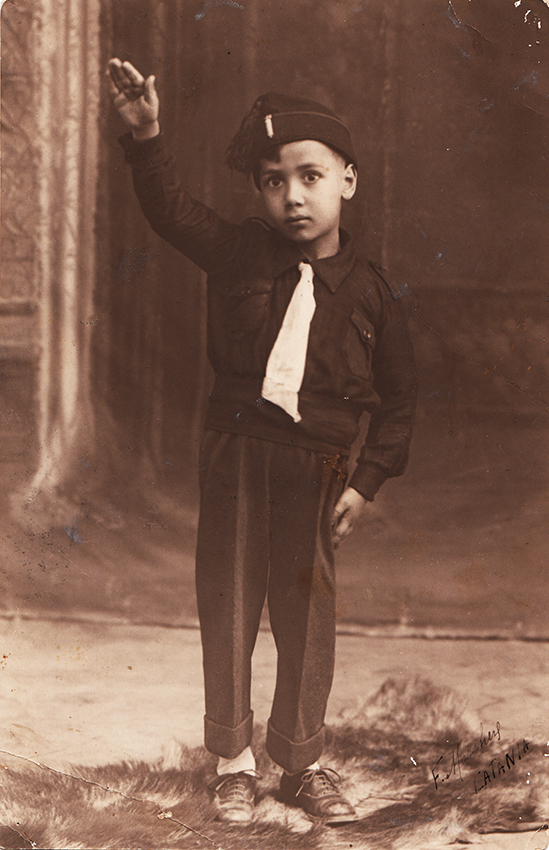
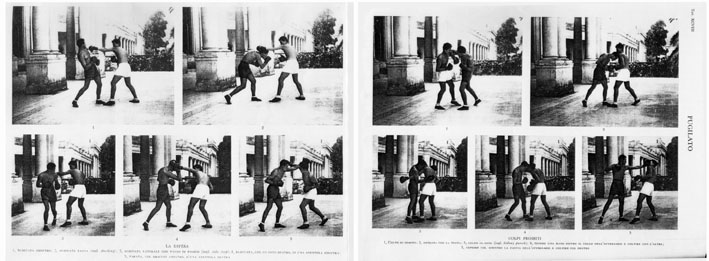
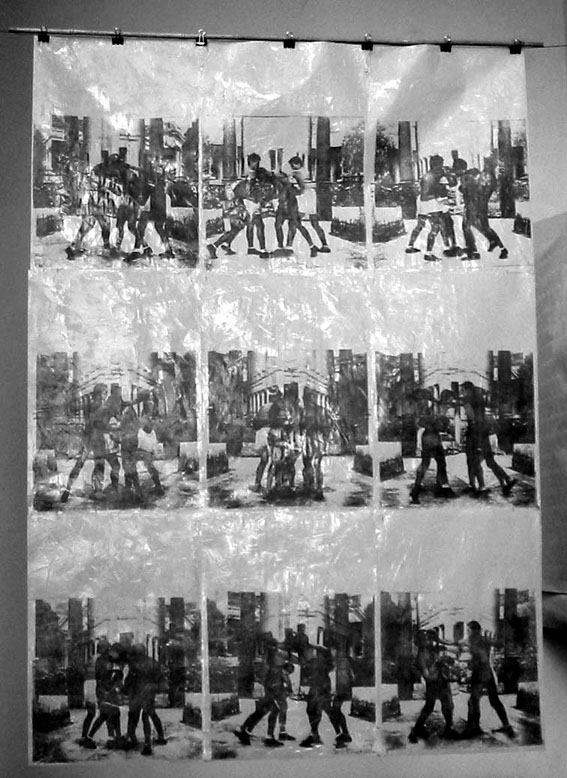
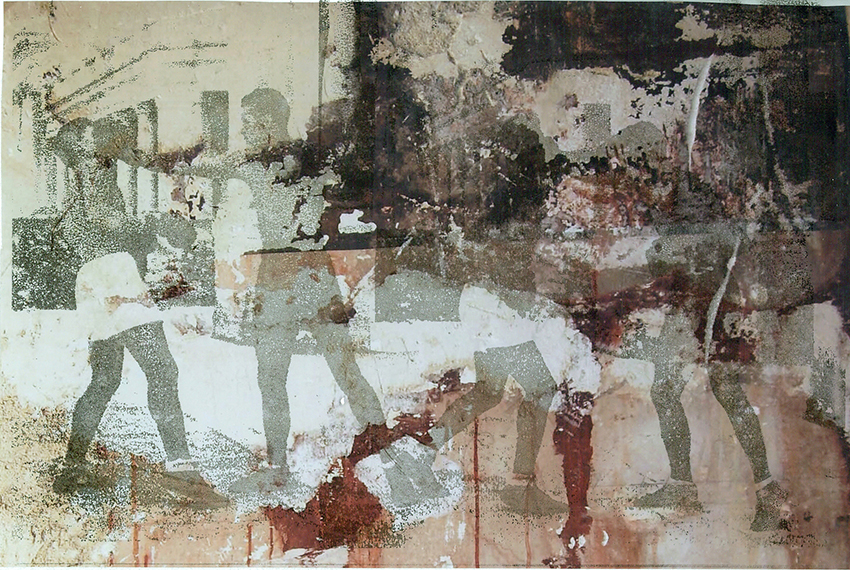
Thesis #4. Colpi proibiti/Forbidden Blows.


The English version of the text:
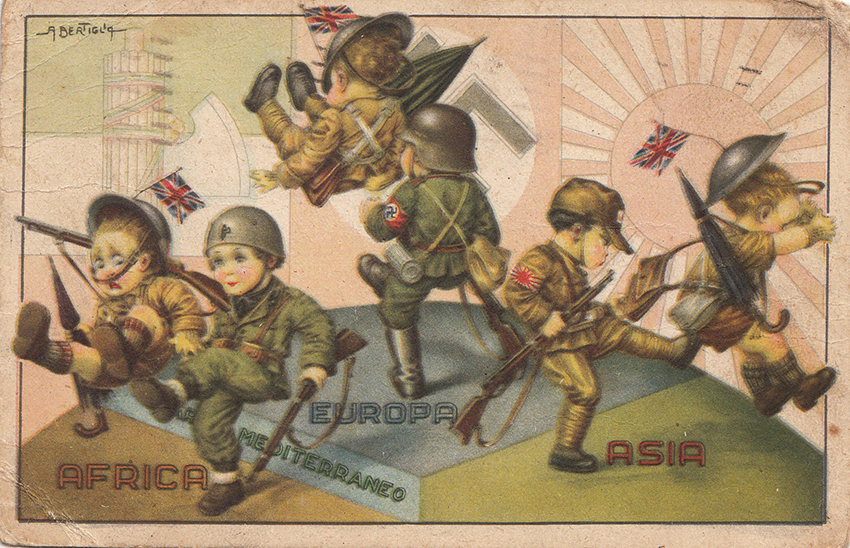
Four Theses on the Aesthetics of Fascism (2003-2015)

La version française :
Quatre thèses sur l’esthétique du fascisme (2003-2015)


Zoology, works 2019-2023

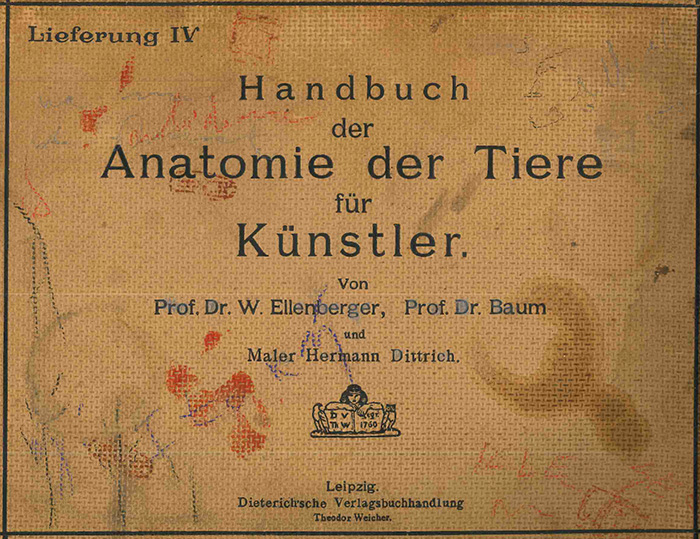
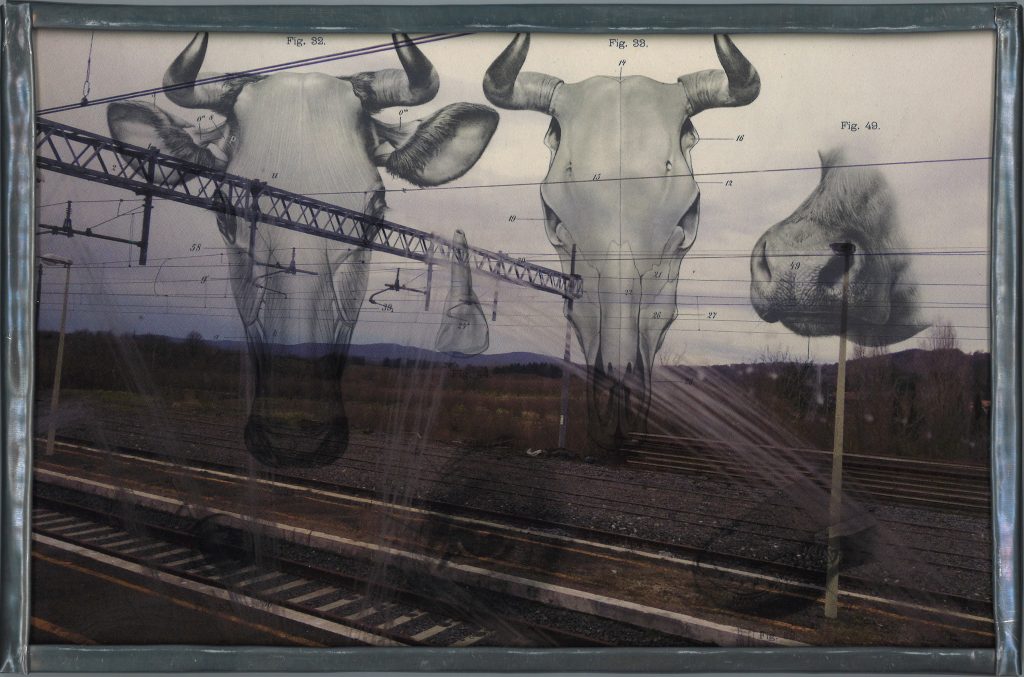
Handbuch

TR 24063 01, 20×30, 2019.
.

Spuglia Zoology 03Zoology 01, 31×50, 2019.
.

Spuglia Zoology 02Zoology 02, 31×50, 2019.
.Spuglia Zoology 03Zoology 03, 31×50, 2019.
.

Spuglia Zoology 04Zoology 04, 31×50, 2019.
.

Au temple de Diane 02, 20×30, 2020.
.

Spuglia From The Road 01 32x50From the Road 01, 32×50, 2019.
.

Spuglia From The Road 02 32x50From the Road 02, 32×50, 2019.
.
From the Road 02 bis, 32×50, 2023.
.
Zoology 01 bis, 31×50, 2023
.
Zoology 04 bis, 31×50, 2023.

.
See also some recent, non-photographic series related to this matter :

Eden (2018)

Raubvögel (2018)

Polifilo, Raubtiere (2018)

RT und RV (2019)


Raubtiere (2020)


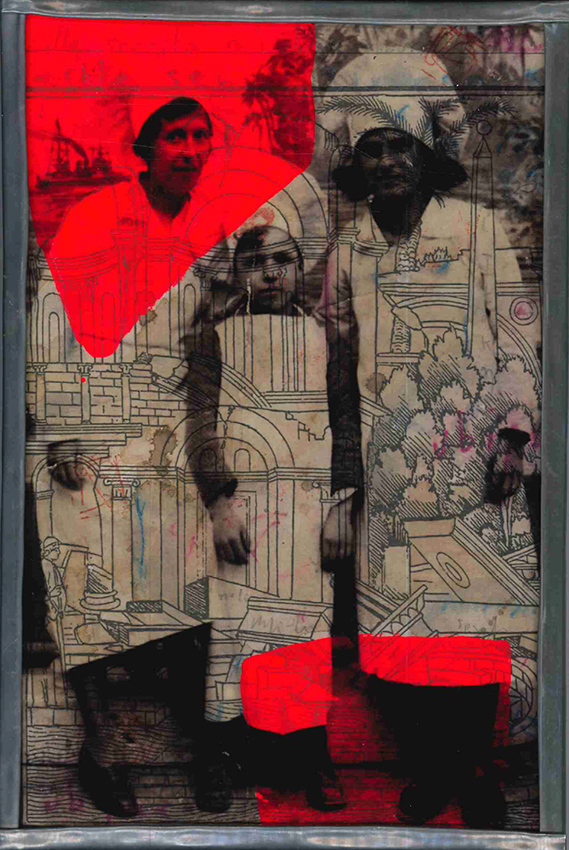
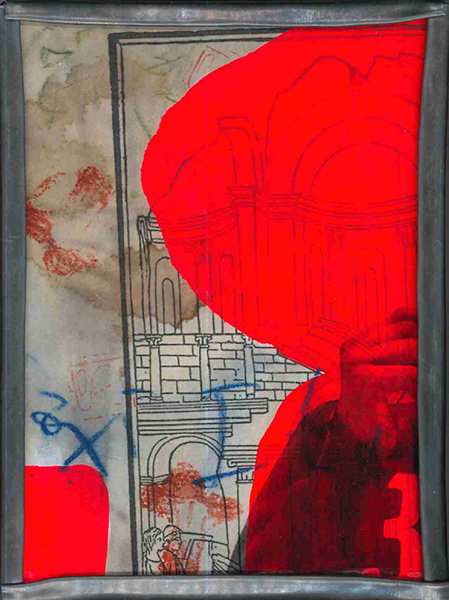
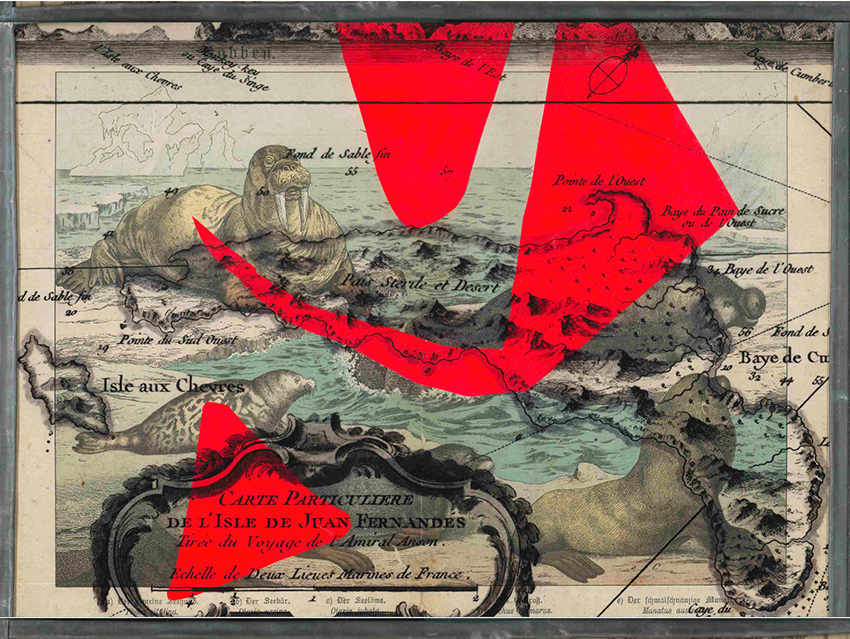
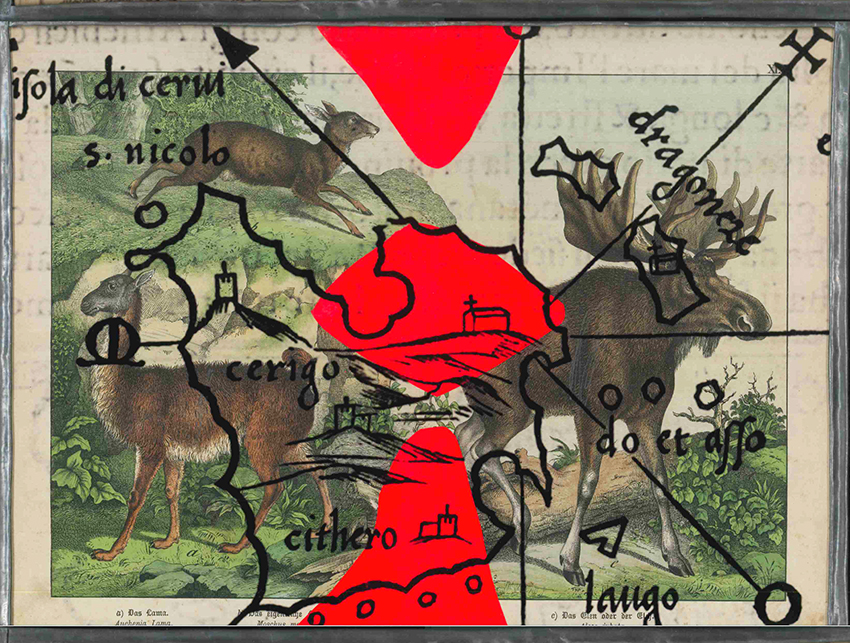
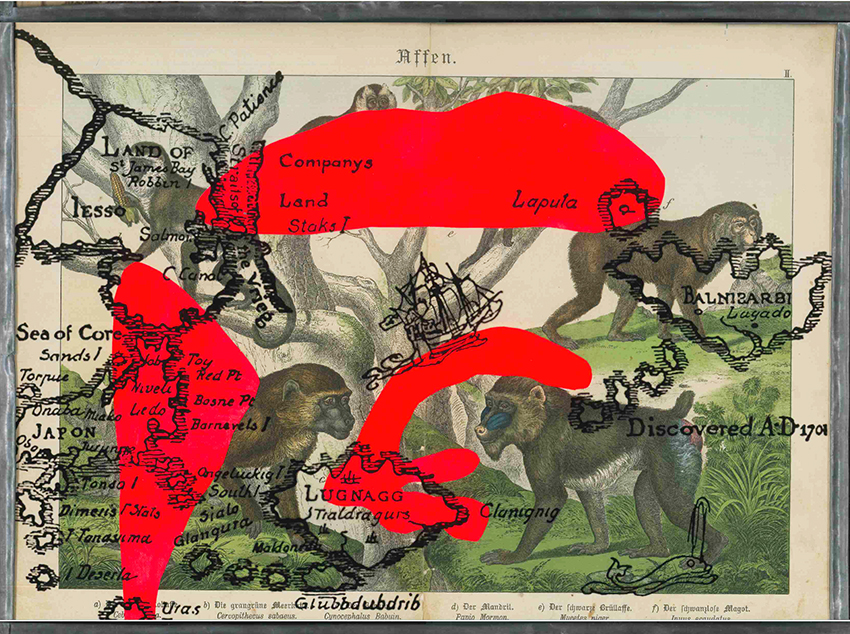
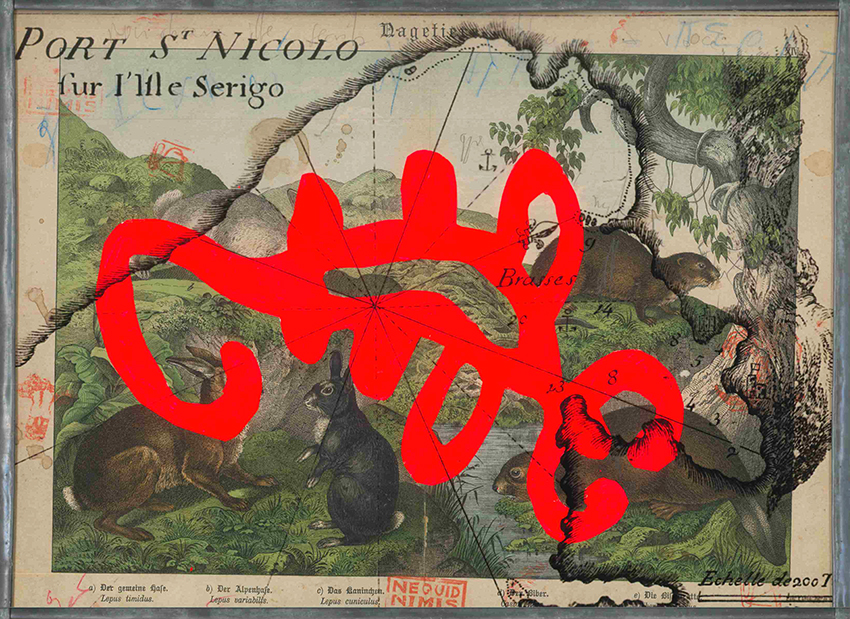
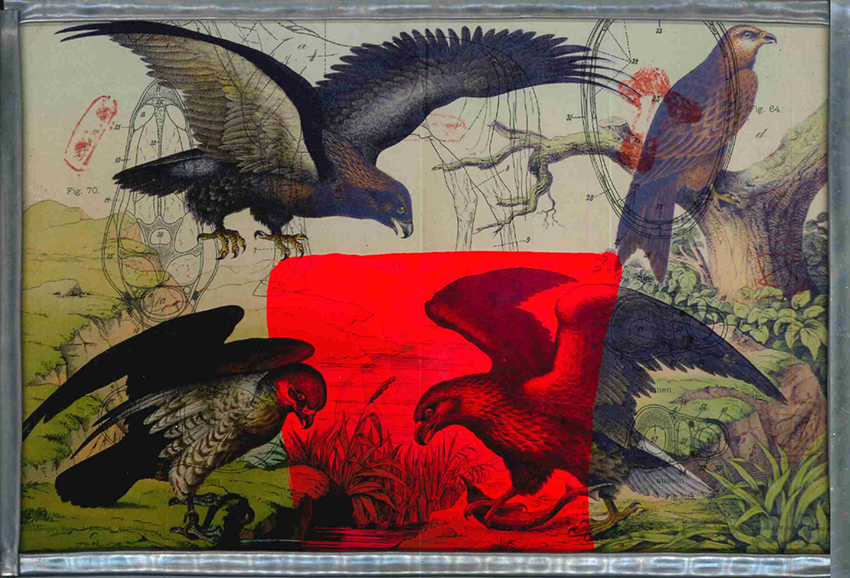
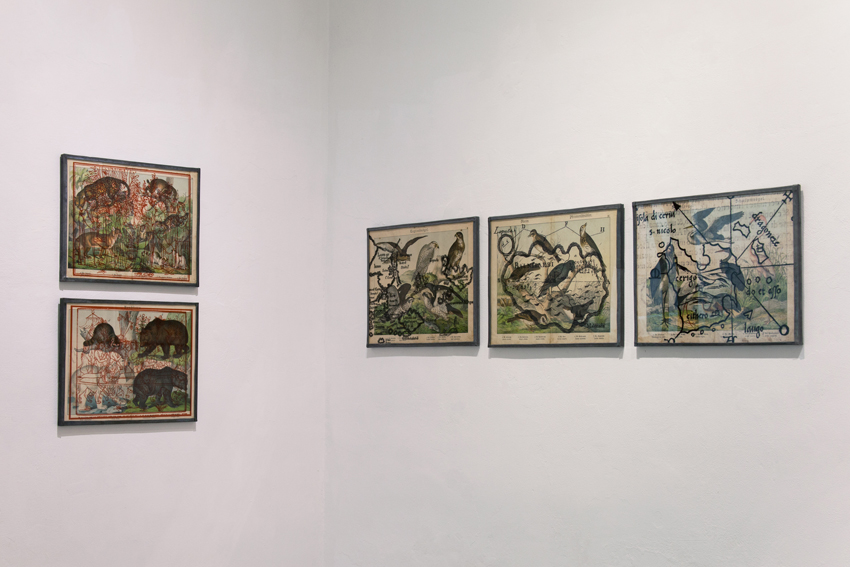
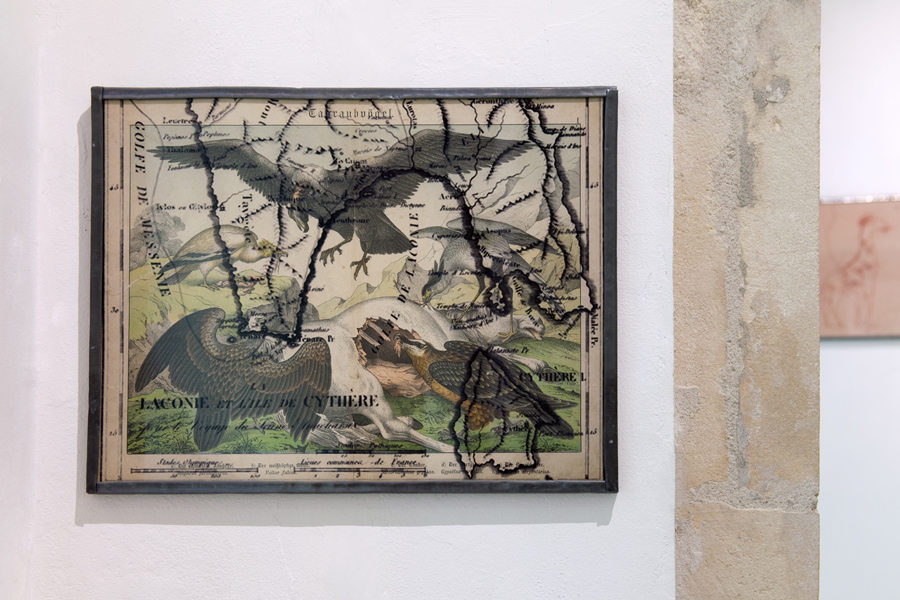
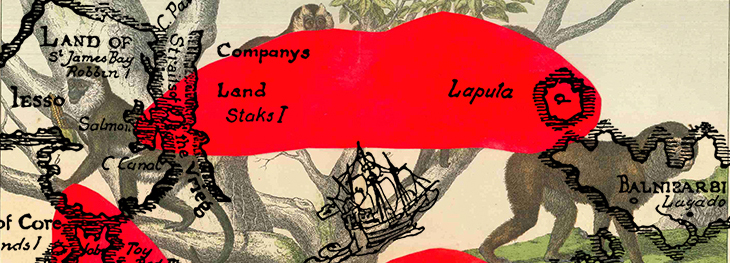
As a follow-up to Zoology (2019), this new series, entitled Raubtiere (Predators), features red fluorescent paper markings applied to original 19th-century animal prints. These prints initially appeared in Naturgeschichte der Vögel für Schule und Haus (1887), a renowned study on ornithology published by G. H. von Schubert in 1887. I did somehow “respect” these magnificent images, not daring to paint directly over them; instead I superimposed  paper cut-outs painted in fluorescent red. These two layers are set under a glass plate on which I have printed reproductions of old engravings depicting real or imaginary islands such as Balnibarbi, Laputa or Cythera.
.


Raubtiere 10, 30×40.

.


Raubtiere 11, 32×42.

.


Raubtiere 12, 32×42 (sold).

.


Raubtiere 13, 32×42.

.


Raubtiere 14, 32×42.

.

Raubtiere 17, 32×42.

.

Raubtiere 18, 32×42.

.

.
Bordeaux, Troisième oeil gallery, March-April 2021.

.
TR 24063 (2019)

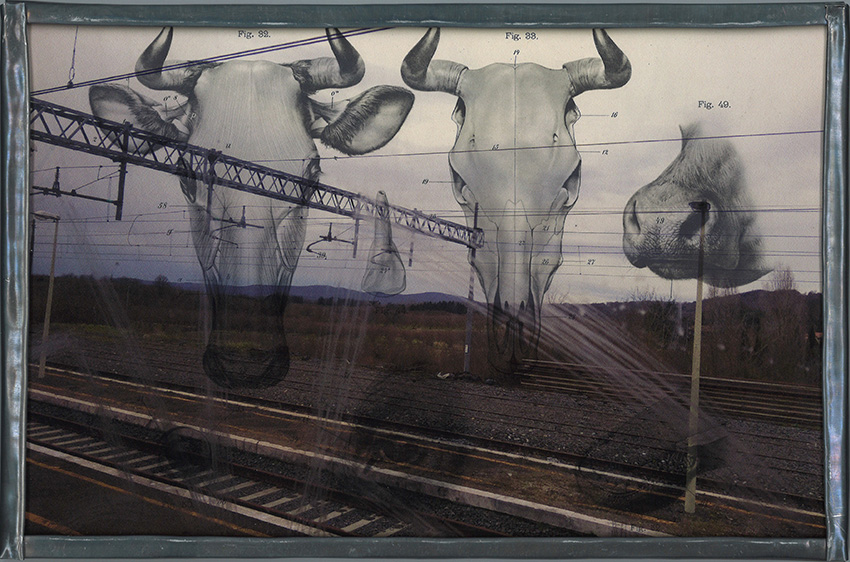
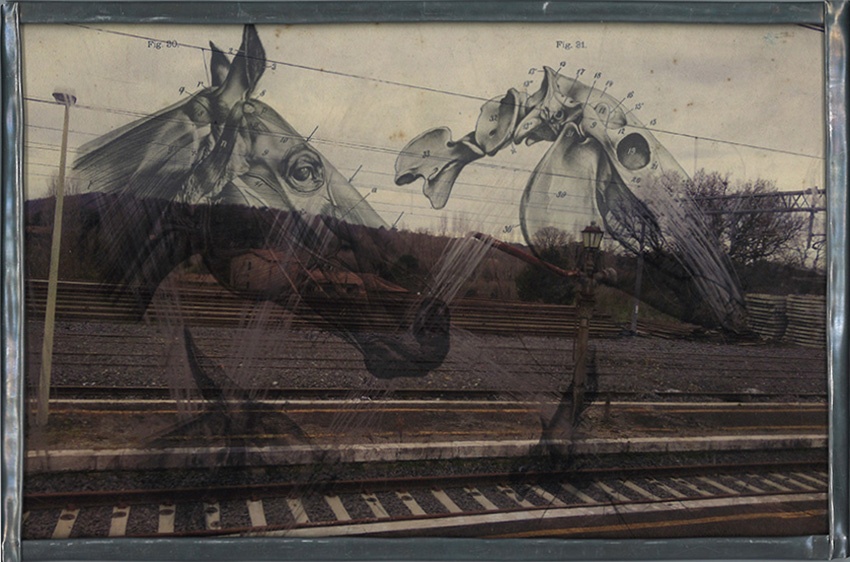
Una fermata più lunga del previsto, alla stazione di Otricoli o di Civita Castellana, non so più, sul treno regionale che mi riportava all’aeroporto di Fiumicino dopo un infruttuoso viaggio in Tuscia alla ricerca di immagini nuove. La bruma di un gennaio particolarmente freddo, le sgraffiature sul vetro del finestrino, la vibrazione sonora dei cavi elettrici, una fattoria disabitata laggiù.


TR 24063 01, 2019, 20×30.

.

TR 24063 02, 2019, 20×30.
.


TR 24063 01, 2019, 20×30.

.

Anatomical and zoological curtains 2000-2018


.

Histoire naturelle 01 et 04, 200×72.

.


Histoire naturelle 03 (private collection). Photos: Emilie Baliff.
.


Leçons d’anatomie 03, 270×70.
.

Leçons d’anatomie 07, 270×70.
.

Leçons d’anatomie 08, 270×70.
.

Leçons d’anatomie 09, 270×70.
.


Installations ” come una quadreria” (1989-2019)

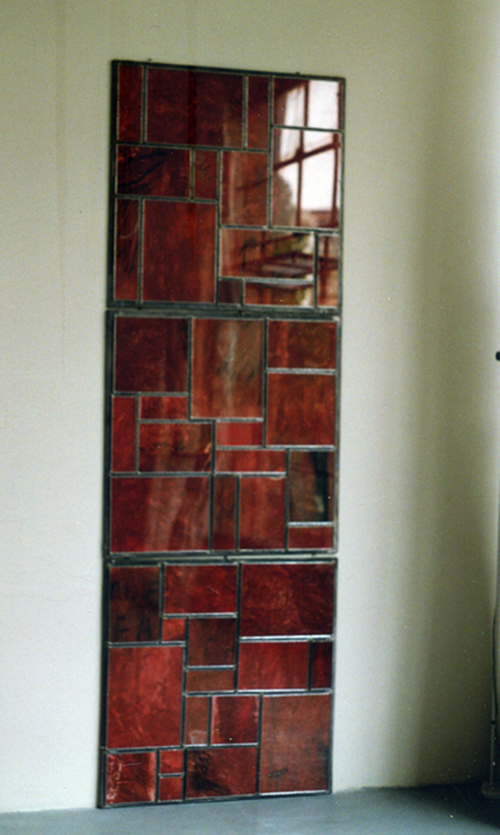
1989 Rosso a

1989 Rosso tot
1989 Rosso 270×90


1992 Aschenglorie 180x460

1992 Aschenglorie detail
1992 Aschenglorie 180×460
.

1998 Antiquarium 200x300
1998 Antiquarium 200×300
.

2004 Inventarium 210x320
2004 Inventarium 210×320
.

2006 Ex voto 200x350

Ex voto 2006 detail
2006 Ex voto 200×350
.

Novecento montage
2019 Mille e novecento montage 140×220
.

Spuglia Ara Poliphili 02

.

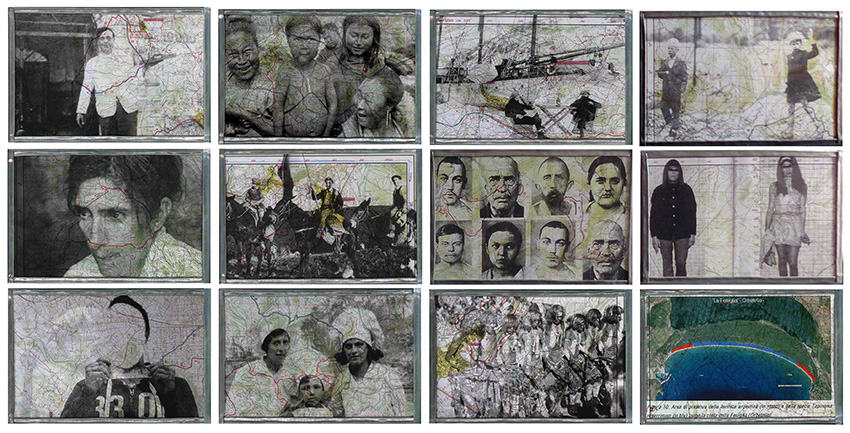
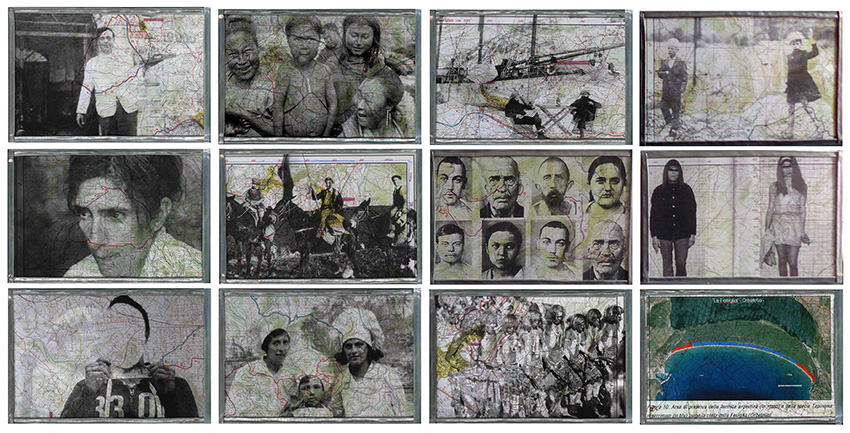
Ordinary humans (2019)

(my pictures)

2019 Ordinary humans 01 20x30

2019 Ordinary humans 02 20x30

2019 Ordinary humans 03 20x30

2019 Ordinary humans 04 20x30

2019 Ordinary humans 05 20x30

2019 Ordinary humans 06 20x30

2019 Ordinary humans 07 20x30

2019 Ordinary humans 08 20x30

2019 Ordinary humans 09 20x30

2019 Ordinary humans 10 20x30

2019 Ordinary humans 11 20x30

2019 Ordinary humans 12 20x30
.

Spuglia Ordinary humans montage
.
Spuglia OH 2019

.
2019 Ordinary humans montage 120x602019 Ordinary humans montage 120x60

RT und RV (2019)

Raubtiere und Raubvögel.
A Twentieth century German manual of Zoology, from which some plates are excerpted and reproduced on glass, and the real illustrations of an animal anatomy book for artists (Leipzig 1898).

2019 RV 01 bis 20x30
RV 01, 2019, 20×30 (private collection).


RV 02, 2019, 20×30.


RT 01, 2019, 20×30.


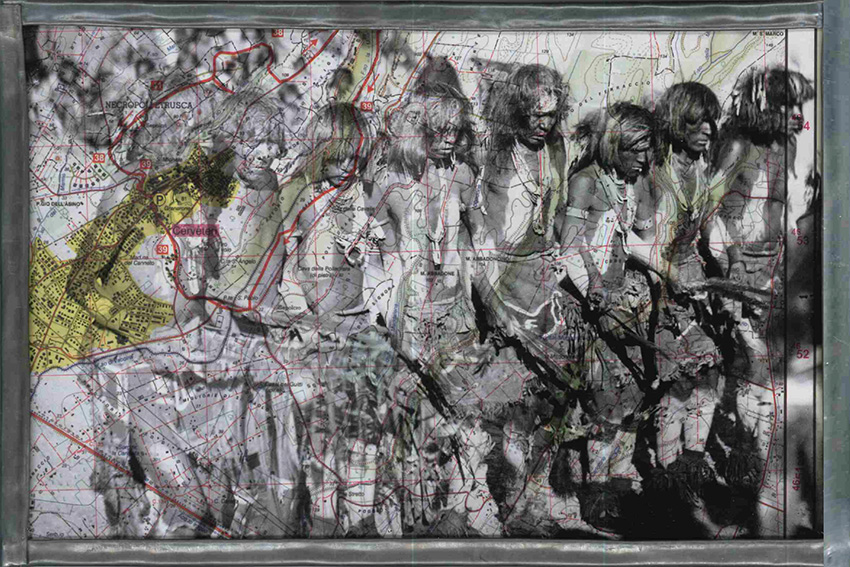
RT 02, 2019, 20×30.
 

.


Eden (2018)

01 Spuglia Eden 09 30x40
Eden 09, 30×40


02 Spuglia Eden 13 40x30
Eden 13, 40×30


03 Spuglia Eden 15 32x50
Eden 15, 32×50


04 Spuglia Eden 16 32x50
Eden 16, 32×50


05 Spuglia Eden 14 40x30
Eden 14, 40×30


Spuglia Eden 11 40x60
Eden 11, 40×60 (photo: Emilie Ballif)


07 Spuglia Eden 10 30x40
Eden 10, 30×40

.


Raubvögel (2018)

Plates from a 1887 German publication on zoology, superimposed on maps of real and imaginary places: the Greek island Cythera and Balnibarbi land from Gulliver’s Travels.


01 Raubvögel Kythira 01
Raubvögel 01, 32,5×42


02 Raubvögel Gulliver 02
Raubvögel 02, 32,5×42


03 Raubvögel Kythira 03
Raubvögel 03, 32,5×42


04 Raubvögel Gulliver 04
Raubvögel 04, 32,5×42


05 Raubvögel Kythira 05
Raubvögel 05, 32,5×42


06 Raubvögel Gulliver 06
Raubvögel 06, 32,5×42.
.

Raubvögel 03 bis, 32×42.
.


.